
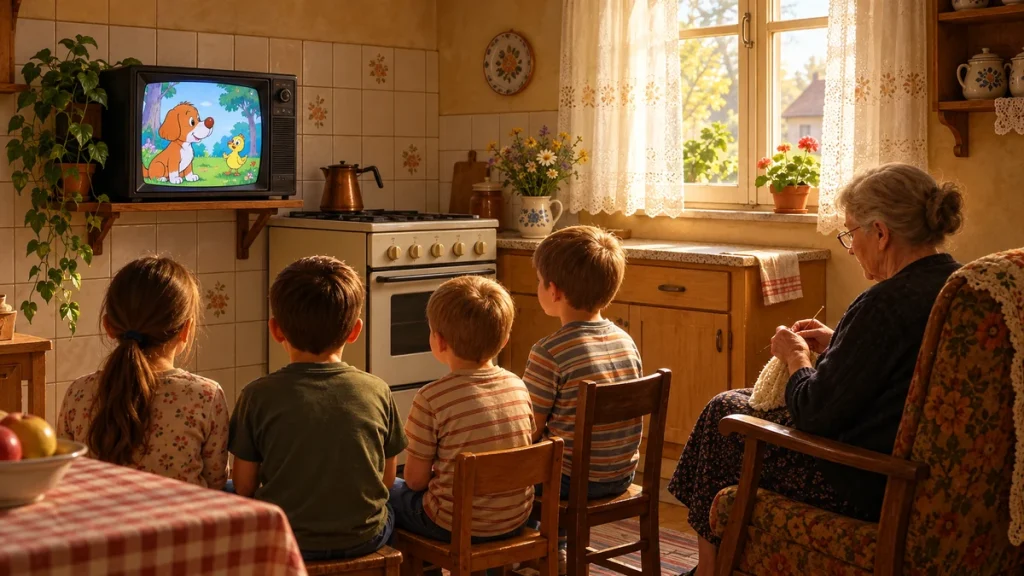
TV mornings of the 90s often began with a small calculation: how much time was left before the cartoons started? On a school day, getting out of bed could take several reminders. At the weekend, a favourite programme sometimes did the job without any help. There was a channel to find, a place to claim and, with luck, enough time to get breakfast before the opening music.
The setting depended on the household. Some children watched from a sofa beneath a blanket. Others pulled a chair towards a small television in the kitchen while someone prepared tea or sliced bread. The cartoons might be the same, but the room, the voices around the table and the morning routine made the memory personal.
How TV Mornings of the 90s Followed the Schedule
A favourite cartoon had a time and a channel. You might find the listing in a newspaper, hear an announcement between programmes or simply remember when it had been on the previous week. Once that slot became familiar, it helped organise the morning. Getting dressed could wait until afterwards; being sent on an errand just before the programme began required some negotiation.
Watching a broadcast meant joining the episode wherever it had reached. Switch on late and you might find the characters already halfway through an adventure. There was no way to rewind the live programme with an ordinary television. A video recorder offered a way around that, provided there was a tape available and someone had remembered to record. Those recordings could turn a scheduled cartoon into something a family watched repeatedly.
Not every channel offered a long run of cartoons. Some showed a short episode between other children's programmes; others put together a longer morning selection. For regular viewers, TV mornings of the 90s followed an order that became useful information. One theme tune meant there was still plenty to watch. Another suggested that the adults would soon want the television back.
Breakfast, Blankets and Negotiating the Channel
Breakfast did not need to be especially memorable on its own. Bread and jam, a sandwich, cereal, milk or whatever was usual at home could become part of the scene simply because it accompanied the programme. In a kitchen, the television shared space with cups, conversation and the sound of someone opening a cupboard. In a living room, the question might be whether food was allowed near the sofa at all.
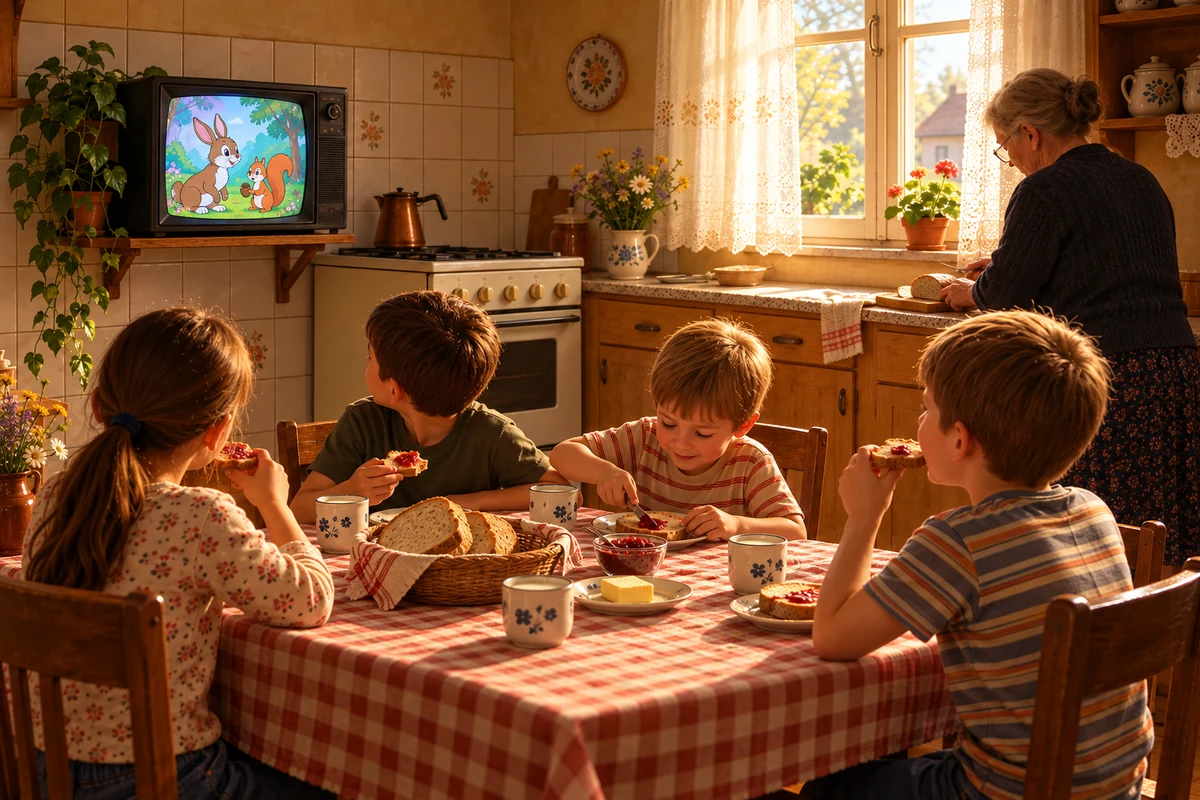
Sharing the screen brought its own arrangements. A younger child might want one cartoon while an older sibling preferred another. If the programmes overlapped on different channels, someone had to give way. Changing channels during a quiet moment could lead to an argument when the original programme returned to an important scene. The person holding the remote did not always have the final say.
The television itself was a familiar part of the room, whether it stood in a cabinet or on a kitchen shelf. We explore that equipment and its picture more closely in our story about watching cartoons on a CRT TV. Here, what matters is the household around it: somebody eating, somebody asking for the volume to be lowered and somebody trying to hear the next line.
Theme Tunes and the Gaps Between Cartoons
The opening music could reach you before the picture did. From another room, a few familiar notes were enough to tell you which programme had begun. An intro introduced the characters and set the mood, but it also served as a practical warning to finish what you were doing and come back. That connection between music and routine is part of the appeal of the cartoon intros we still remember.
What happened between episodes varied too. On some channels, presenters linked cartoons with games, conversations or other children's programmes. Elsewhere, there were brief announcements, station graphics or advertisements. A familiar voice saying what was coming next could persuade children to stay for a show they had not planned to watch.
Commercial breaks, where they appeared, created a short window to fetch a drink or leave the room. Getting back in time was the difficult part. Someone might call out that the cartoon had returned, but that did not guarantee everyone reached their seat before the next joke. Even an interruption could become familiar after enough weekends: the same jingle, the same announcement, then the programme again.
Different Channels, Different Childhoods
There was no single worldwide version of a 90s television morning. Country, broadcaster, household reception and the year all made a difference. Access to cable or satellite could bring a wider selection, while other homes depended on a few terrestrial channels. For some viewers, the cartoons they remember best belonged to an afternoon slot rather than the morning.
If you want to check a remembered British broadcast, the BBC Programme Index offers historical programme listings, including schedules from the 1990s. A listing can help establish the channel and scheduled time, although it cannot tell you who was watching in a particular home.
The decade was not a single moment either. A household's viewing options could change between its beginning and its end. A new channel, a second television or a video recorder might alter a routine that had seemed permanent. Two children living nearby could therefore remember different programmes without either memory being wrong.
Dubbed voices added another local detail. A character known around the world might have a different name or sound quite different from one country to another. Watching an original-language version years later can feel unexpectedly unfamiliar. The voice remembered from childhood belongs to a particular broadcast as much as to the character.
Even the age of the cartoons could be misleading. A series watched during the 1990s might have been made years or decades earlier. To a child encountering it for the first time, it was simply the cartoon that came on after breakfast. The date of production mattered much less than knowing when the next episode would appear.
When the Cartoons Finished and the Day Began
The change to another kind of programme made a natural stopping point. It might be time to get dressed, help at home, visit relatives or see whether friends were outside. Some children carried the cartoons into their games, choosing characters and inventing adventures that only loosely resembled what had happened on screen. Others left the television behind as soon as a ball or a knock at the door offered something else to do.

For those who headed outside, the next part of the day might involve a few friends, an improvised goal or an argument about whose turn it was. Those small arrangements belong to the same childhood world as the games we played before smartphones and the internet. Television could provide the beginning of a weekend without filling the whole of it.
It is easy to make these mornings sound tidier than they were. There were missed episodes, chores, disagreements and programmes nobody wanted to watch. Yet a memory does not need a perfect morning to hold onto one good detail: breakfast beside a grandparent, a sibling laughing at the same scene or the opening tune arriving just as you entered the room.
TV mornings of the 90s had their own rhythm, but being able to choose an episode today makes revisiting old cartoons easier. What a recording cannot supply is the exact morning around the original broadcast. That is the part readers can help preserve: the channel, the breakfast, the people watching and what happened when the television went off.
Which cartoon marked the start of your weekend, and where did you watch it: in the living room, at the kitchen table or somewhere else? Share the country and channel too, if you remember them.