
The games we played before smartphones, tablets and endless online entertainment often began with one simple question that could bring an entire afternoon to life:
“Are you coming outside?”
There was no group chat and nobody shared their location. Someone called from the pavement, knocked on a door or rang the bell. Within minutes, a few children could turn an empty schoolyard, a quiet street or a patch of grass into a complete world.
When I think about the games we played before smartphones and the internet, I do not remember expensive equipment. I remember chalk dust on our hands, a ball that belonged to somebody, pockets filled with marbles, arguments about rules and the promise that we would go home after “one last game”.
My own memories come from growing up in Yugoslavia, and I have written before about life in Yugoslavia before mobile phones and the internet. However, the more childhood stories I hear from other countries, the more familiar they sound.
The names were sometimes different. The rules changed from one neighbourhood to another. Yet children everywhere seemed to know how to create hours of entertainment from almost nothing.
The Games We Played Before Smartphones Needed Very Little
We did not need a specially designed playground. Almost any place could become one.
A tree became home base. A chalk line became a border. A wall became a goal. A garden, pavement or schoolyard could change completely as soon as somebody introduced a ball and announced the rules.
Most games were easy to begin, although finishing them without an argument was another matter.
Hide-and-Seek
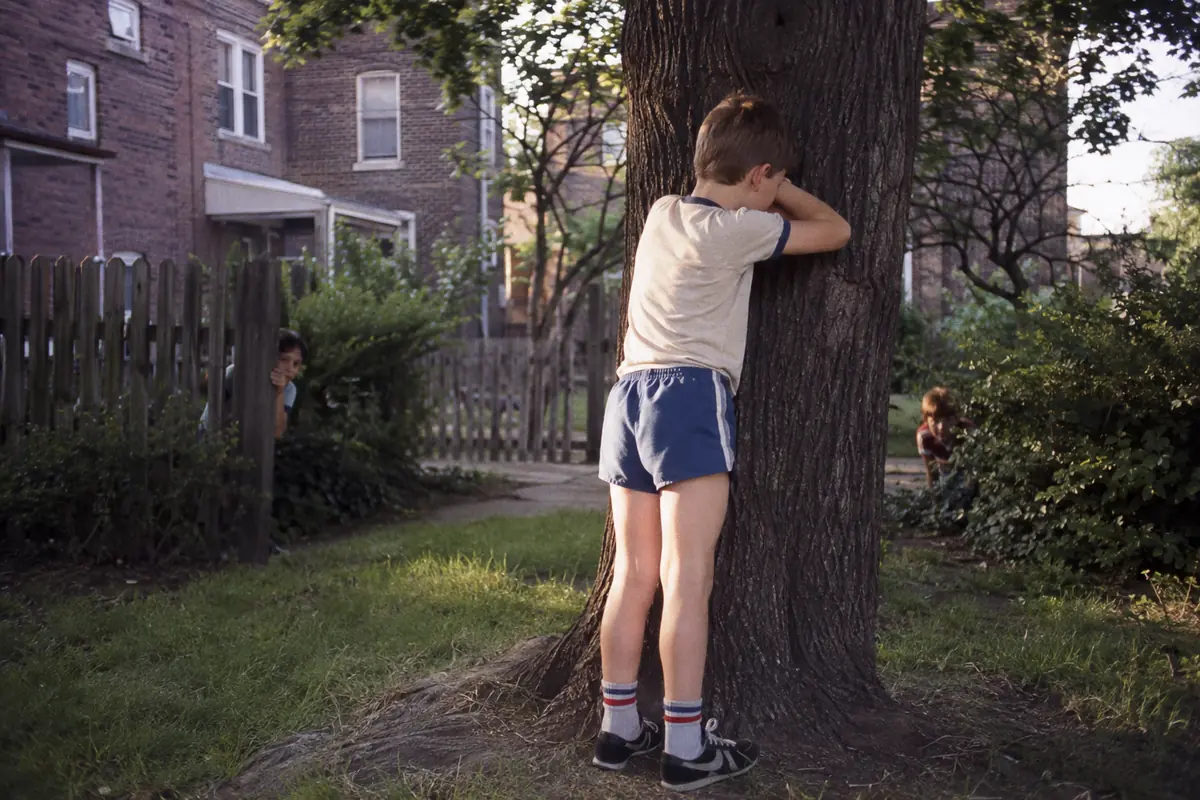
Hide-and-seek was one of the simplest games, but it could produce more suspense than many modern video games.
One child covered their eyes and counted while everyone else ran in different directions. Nobody completely trusted the counting. Someone always counted too quickly, skipped a number or looked before reaching the end.
We remembered the best hiding places for weeks. Behind a shed, beneath a staircase, inside a thick bush or beside a fence that seemed invisible after sunset.
Then came the most exciting moment: trying to reach home base before the seeker noticed you.
Every street had its own version. In some places, reaching the base saved only one player. In others, a successful run could rescue everyone who had already been found.
Tag
Tag needed almost no preparation. One player was “it”, everyone else ran and a single touch changed the roles.
Of course, it was never quite that simple.
Was the tree a safe place? Could someone stay there forever? Did a touch on a jacket count? What if two people were tagged at the same time?
There were also endless variations. Freeze tag made players stand still until someone rescued them. Team versions divided the playground into sides, while other versions added safe zones and new rules invented during the game.
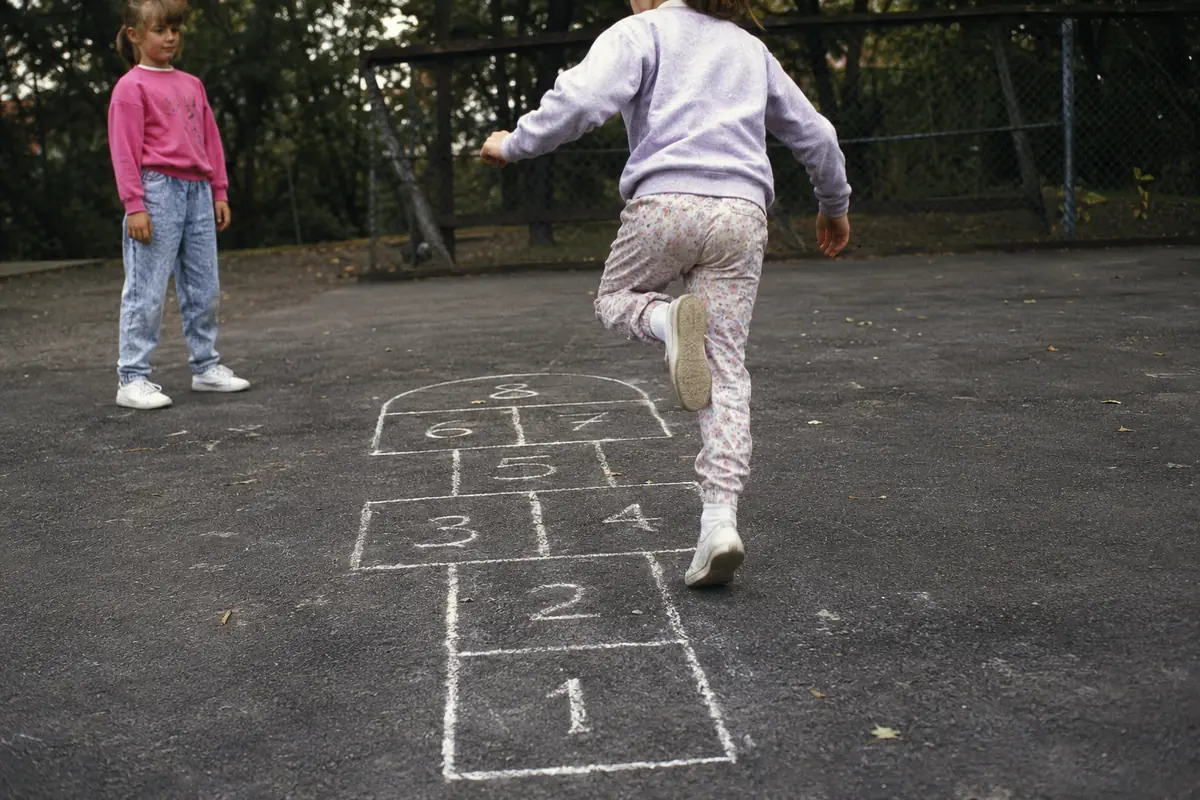
Hopscotch
A piece of chalk and a small stone could turn ordinary pavement into a complete game.
The numbered grid did not have to be perfect. Some squares were too large, others were crooked, and the final number was sometimes squeezed into whatever space remained.
Players threw a marker into one of the squares and then hopped through the grid without stepping on a line. It looked easy until everyone was watching.
Rain could erase the entire court overnight, but drawing a new one was part of the fun.
A Ball, a Can and Two Imaginary Borders
A single ball could keep a group of children occupied for hours. It did not have to be new or perfectly round, and nobody cared whether it matched the game.
If there was no ball, an old can, a stick or almost any harmless object could take its place.
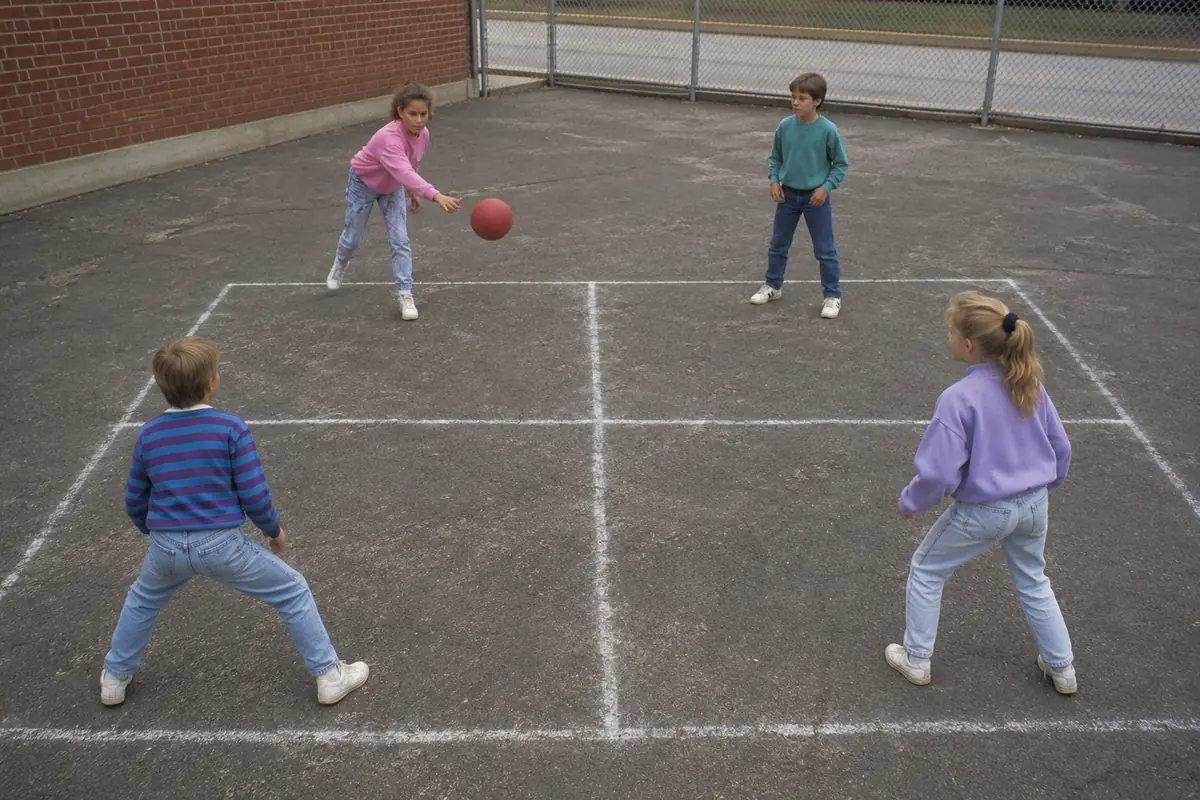
Four Square
Four Square was especially familiar in schoolyards across the United States and several other countries.
The court consisted of four squares drawn on the ground. One player stood in each square and used their hands to send a rubber ball into another player’s area.
That was the basic idea. The complete rules depended on the schoolyard.
Some children allowed powerful shots. Others banned certain moves. The player in the highest square often seemed to remember a surprising number of rules that worked in their favour.
A round could end in seconds, but there was always a line of children waiting for another chance to enter the court.
Kick the Can
Kick the Can combined the hiding of hide-and-seek with the chasing of tag.
One player guarded a can while the others disappeared to hide. The guard searched for them, but also had to protect the can. If another player reached it and kicked it before being caught, a successful kick could release captured players and begin the round again.
A real metal can made a satisfying sound when somebody finally reached it. That noise immediately told every hidden player that something had happened.
As with most childhood games, the exact rules were never universal. Every group believed its version was the correct one.
Capture the Flag
Capture the Flag needed more space and usually a larger group.
Two teams created territories and placed a flag on each side. The flag did not have to be real. A shirt, towel, stick or old piece of cloth worked just as well.
The goal was to enter the opposing territory, take the flag and return without being caught. Some versions included a jail for captured players, which added rescue missions and even more arguments about who had tagged whom.
For a short time, an ordinary field became enemy territory filled with guards, scouts and secret plans.
Small Objects Became Treasures
The games we played before smartphones were not all about running.
Some of the most serious competitions took place while children sat or crouched on the ground, completely focused on a handful of small objects.
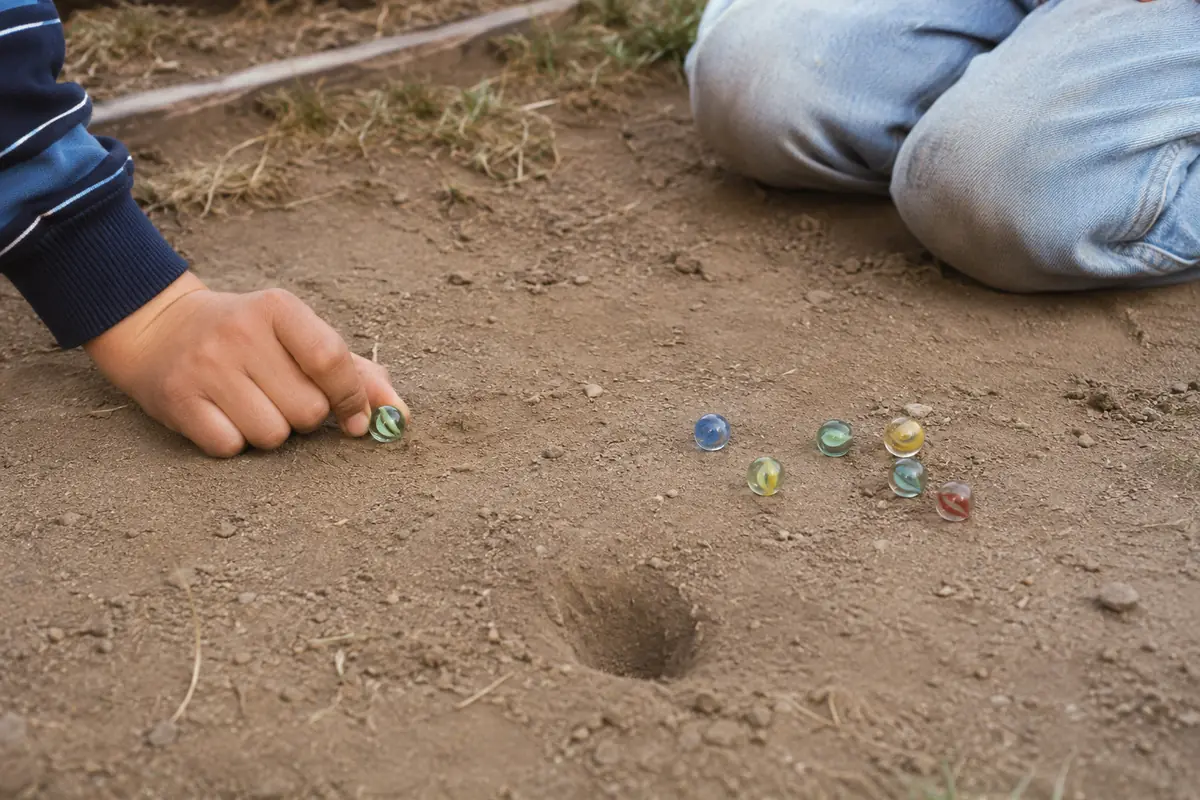
Marbles
Glass marbles were more than toys. They could become treasures, prizes and the centre of very serious negotiations.
Some were clear, some contained twisting colours and others looked so unusual that nobody wanted to risk losing them. Children compared collections, traded favourites and carried the best ones in pockets or small bags.
Depending on local rules, players aimed at a small hole, tried to knock marbles out of a circle or competed to reach a target. Some groups played friendly games, while others played “for keeps”, meaning that the winner could take the defeated marble.
That could turn a simple game into a very important event.
Jacks
Jacks required a small bouncing ball, a set of metal or plastic pieces and good coordination.
The player bounced the ball, picked up one jack and caught the ball before it touched the ground again. Later rounds required picking up two, three or more pieces at once.
The game became increasingly difficult, especially when it was played on an uneven surface. A bad bounce could end a perfect round in a second.
It was quiet compared with tag or Capture the Flag, but the concentration was just as intense.
Conkers
For generations of children in Britain and Ireland, autumn brought the season of conkers.
Children collected horse chestnuts, carefully chose the strongest ones and threaded them onto strings. Players took turns striking an opponent’s conker until one of them broke.
Finding the right chestnut was part of the experience. Everyone had a theory about what made a champion conker. Some searched for the largest one, while others believed smaller and harder chestnuts were stronger.
To children elsewhere, the game may have sounded unusual. To those who grew up playing it, a good conker could be a small seasonal treasure.
Rhythm, Commands and Trying Not to Move
Some games needed no equipment at all. They relied on songs, commands, timing and the difficult challenge of standing completely still while everyone watched.
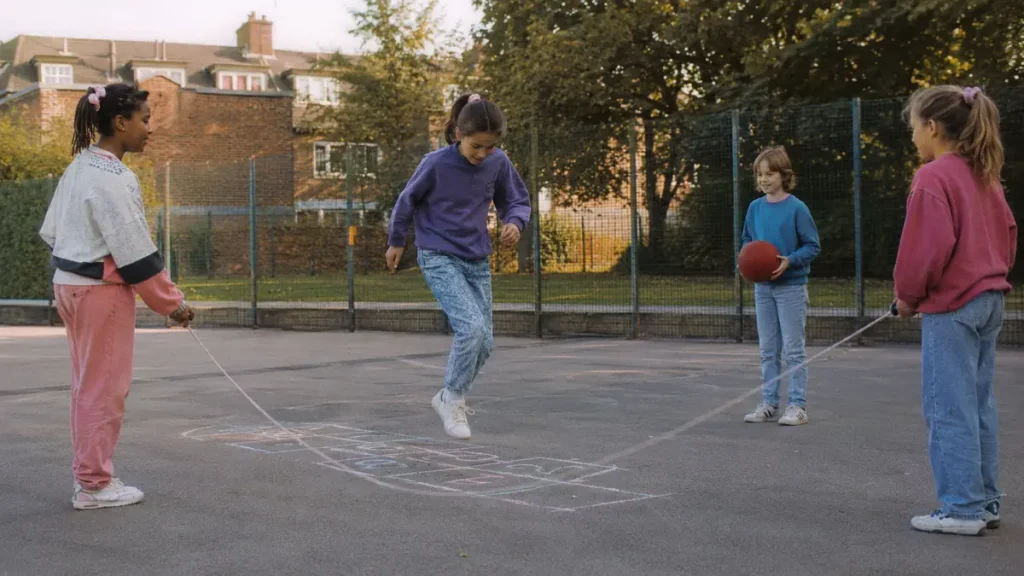
Jump Rope or Skipping
Children in the United States usually called it jump rope. In Britain and many other countries, children often called it skipping.
It could be played alone with a short rope or in a group with a long rope turned by two people. The rhythm mattered as much as the jumping.
Children added songs, rhymes, counting challenges and increasingly difficult moves. Double Dutch, played with two ropes turning in opposite directions, required even more coordination.
A missed jump ended the turn, but there was always another attempt waiting.
Mother, May I?
In Mother, May I?, one child stood at the finish line and gave instructions to the others.
“Take three giant steps.”
“Take five baby steps.”
“Move forward like a frog.”
Before following the instruction, the player had to ask, “Mother, may I?” Forgetting those words could cost valuable progress or send the player back.
The game was simple, but it mixed memory, patience and the hope that the leader would give you a useful command.
What’s the Time, Mr. Wolf?
What’s the Time, Mr. Wolf? was familiar to many children in Britain, Ireland, Australia and other countries.
The players stood behind the wolf and asked:
“What’s the time, Mr. Wolf?”
If the answer was “three o’clock”, everyone moved three steps closer. The questions continued until the wolf suddenly answered:
“Dinner time!”
At that moment, the slow counting game became a chase. Everyone ran while the wolf tried to catch the next player.
Red Light, Green Light
Red Light, Green Light followed a similar idea.
Players moved while the leader called “green light” and had to freeze immediately at “red light”. The leader could send anyone caught moving back to the beginning.
Different versions of this game appeared around the world under many names. The words and rules changed, but the challenge remained the same: move quickly and then become completely still.
There was always one player who insisted they had stopped in time.
The Rules Belonged to Us
The games we played before smartphones came without instruction screens. Children passed most rules from one player to another.
New players learned by watching, asking questions and sometimes making mistakes. If a child arrived from another neighbourhood or school, they might introduce a completely different version of a familiar game.
That was how games changed.
Children added, removed and argued about rules. Safe zones appeared. Boundaries moved. The group could invent a new challenge in the middle of a round.
Not every moment was perfect. Children argued, cheated, became upset and occasionally went home early. However, the next afternoon, most of them returned and played together again.
The Day Ended When Someone Called Your Name
We did not receive a notification telling us that playtime was over.
Sometimes the streetlights came on. Sometimes it became too dark to see the ball. More often, a parent called from a window or stood at the door and announced that dinner was ready.
We usually asked for five more minutes.
Those five minutes could easily become another complete game. Eventually, we returned home with dirty trainers, grass stains, dusty hands and stories that sounded far more dramatic than anything that had actually happened.
Later in the evening, many of us sat in the living room, often watching cartoons on a CRT television. Outside games and television were not competing for every minute of our attention. Each had its own part of the day.
What Those Games Quietly Taught Us
The games we played before smartphones never felt like lessons. We played because they were fun and because our friends were already outside.
Still, those afternoons taught us how to wait for a turn, explain a rule, join a group and accept that we could not always win.
We did not know it at the time, but UNICEF explains that free play can support creativity, independence and problem-solving skills.
We learned how to organise teams without adults, solve disagreements and adjust a game when another child arrived. We discovered who was fast, who could hide almost anywhere, who always changed the rules and who remained calm when everyone else started arguing.
Children learned these small social skills face to face, usually without anyone noticing.
Why We Still Remember These Games
Smartphones and the internet are not the villains of this story. They connect people, provide information and offer forms of entertainment that children of earlier generations could hardly have imagined.
However, the games we played before smartphones remind us of something valuable.
We did not always need someone else to prepare our entertainment. Sometimes we created it ourselves from chalk, a rope, a rubber ball or an old can.
Those games have not completely disappeared. Children still play many of them today. Perhaps that is why seeing a hopscotch grid or hearing a ball bounce across a schoolyard can bring back memories so quickly.
We remember the game, but we also remember the people, the place and the feeling that the afternoon might last forever.
Which of these games did you play? What was it called in your country, and did your neighbourhood have its own special rules?
Share your memories in the comments. The name may be different, but someone on the other side of the world may recognise the same childhood.
You can also explore more childhood memories and retro stories on Good Old Cartoons.