
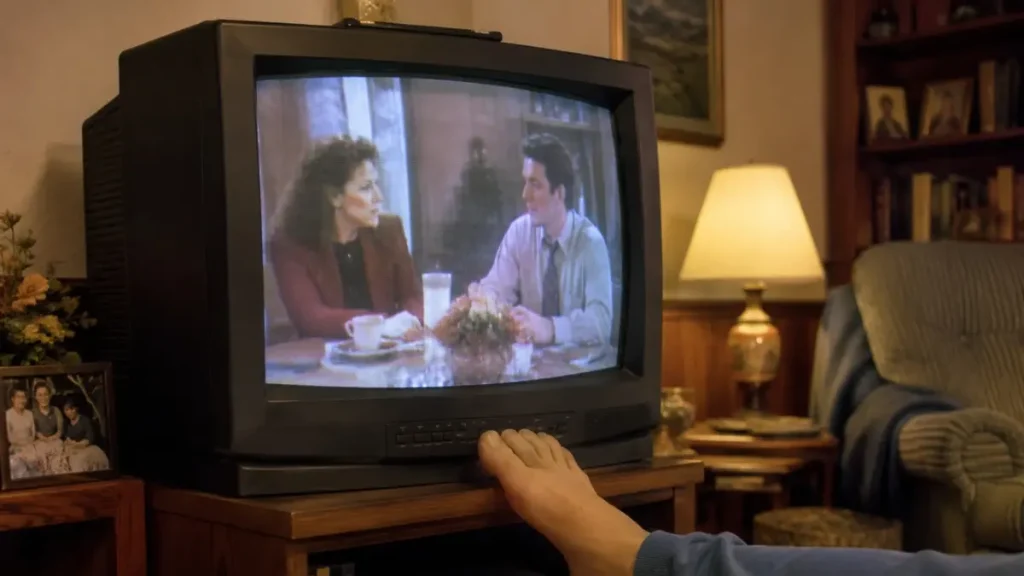
The remote control had disappeared again, just when someone wanted to change the channel. Nobody had moved it, nobody remembered using it last, and everyone was certain it had been on the coffee table only a minute earlier.
The television was on, a programme was about to begin, and changing the channel had suddenly become a family problem. Cushions were lifted, blankets were shaken and the space beneath the sofa was checked. If the remote still did not appear, someone had to walk over to the television. Unless, of course, it was close enough to change the channel with your foot.
The remote usually hid between the sofa cushions
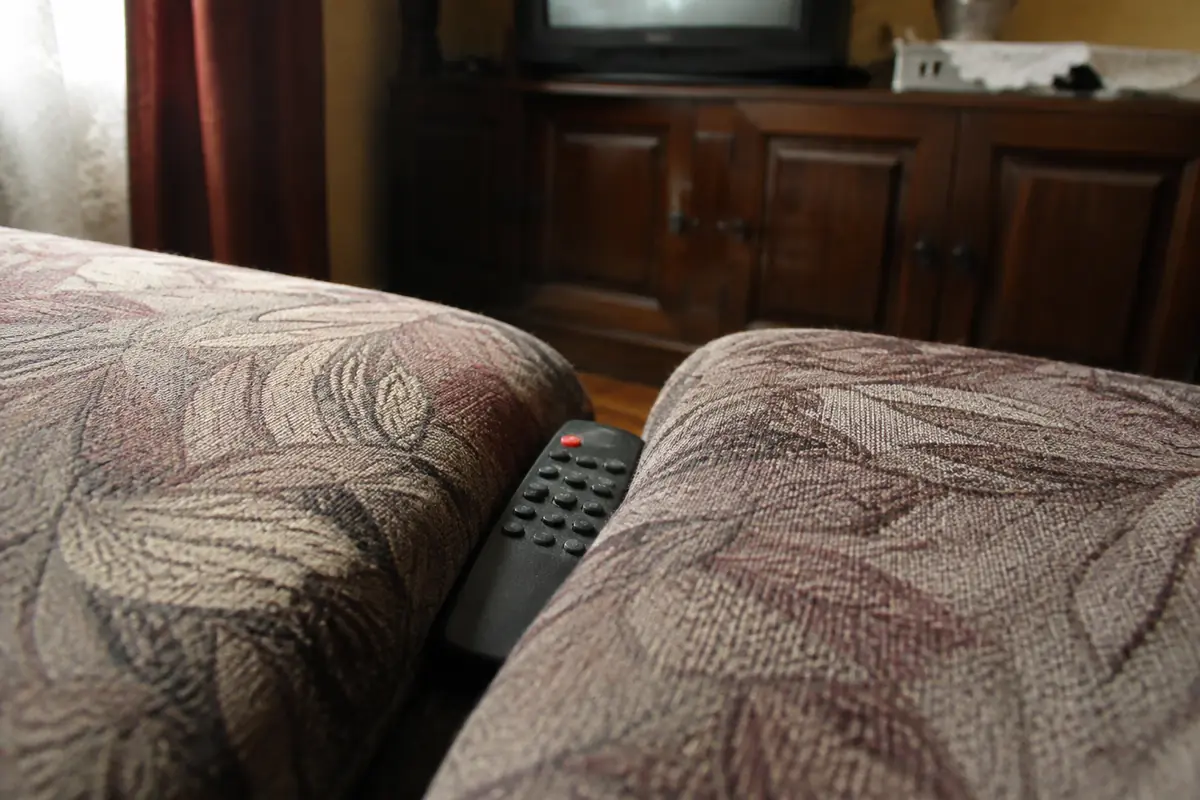
The remote often vanished beneath a newspaper, behind a cushion or somewhere that had already been checked twice. Sometimes, the person who insisted they had not touched it was sitting on it. The search usually began with the same question: “Who had it last?” Somehow, nobody ever knew.
One person searched under the table, another checked beside the television, while someone else carried on watching as though the mystery had nothing to do with them. It was one of those everyday situations that fitted naturally into the 90s living room before streaming.
And when the remote finally turned up, it was often somewhere obvious. By then, someone had usually found another way to change the channel.
90s TV memories: changing channels with your foot
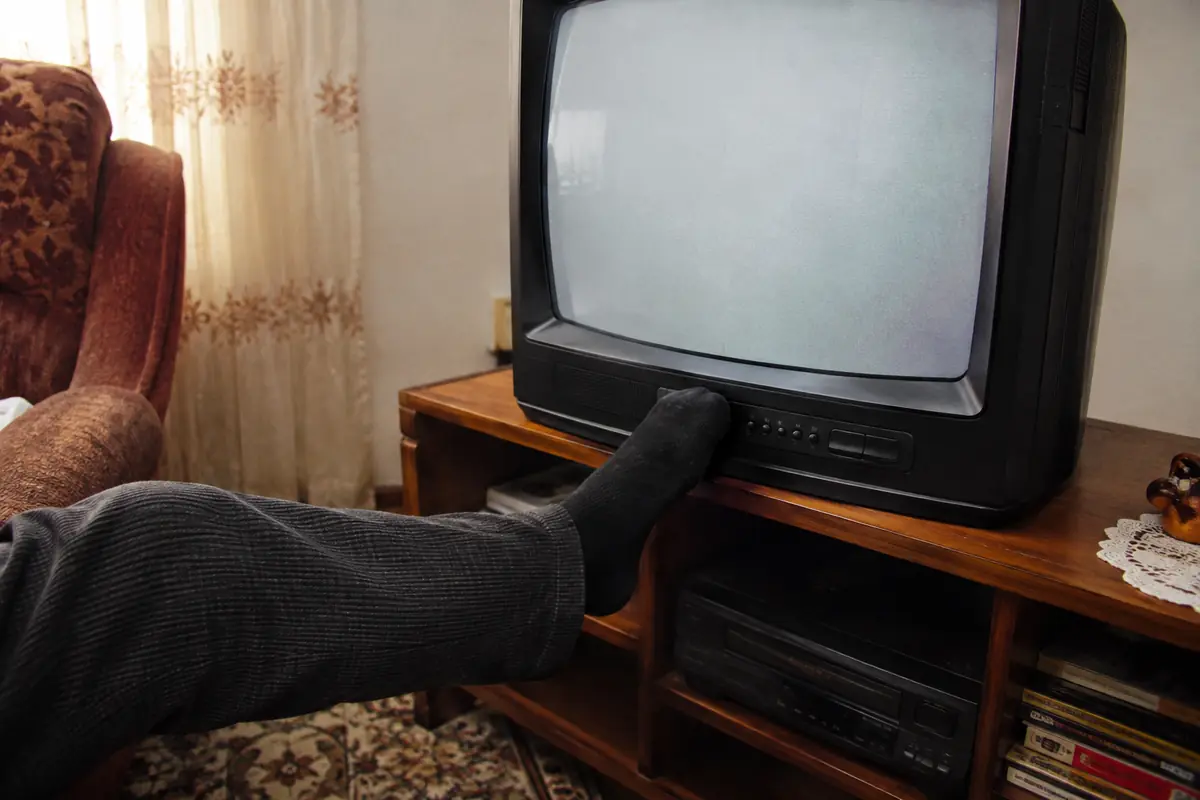
If the television stood close enough to the sofa, getting up became optional. You moved towards the edge, stretched out one leg and carefully pressed the channel button with your big toe. Changing the programme was manageable. Adjusting the volume required considerably more precision.
One wrong press could make the television louder instead of moving to the next channel. Then you had to move your foot slightly and try again. The method was hardly elegant, but it worked.
Many old CRT televisions had buttons on the front, making them fairly easy to reach when the set stood on a low cabinet. Those physical controls were part of what it was like watching cartoons on a CRT TV. You could change channels without a remote, provided you were close enough.
Of course, the method had its limits. Switching through several channels meant repeated presses, and a television standing just a little too far away could put an end to the whole idea. At that point, getting up was unavoidable. Unless someone else could do it for you.
The youngest family member became the “human remote”
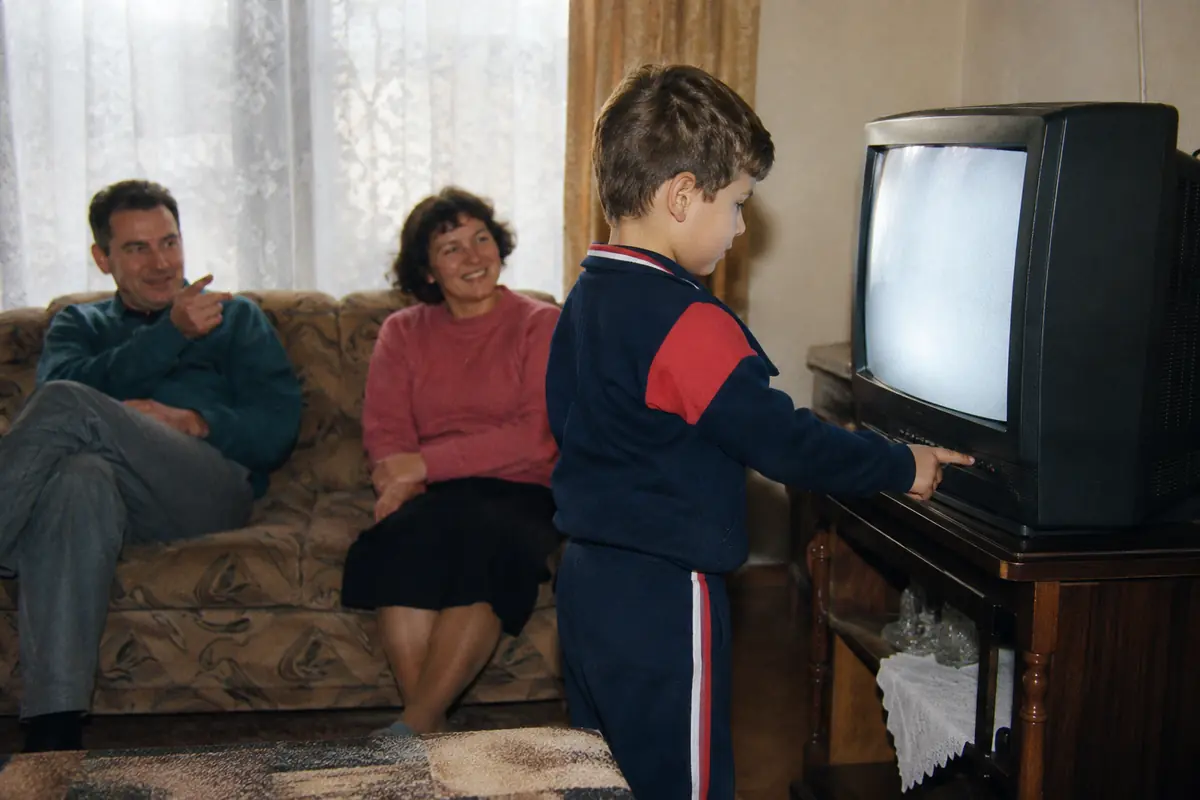
When the television was too far away for the foot method, the youngest person in the room often received a simple instruction: “Change the channel, please.” Once the child reached the television, more directions usually followed. “Turn it down a little. Not that much. Go back one.”
It was a household version of voice control, except that someone actually had to walk over and press the buttons. And unlike a smart device, this particular “remote” could complain, ask why nobody else was getting up or deliberately switch one channel too far.
It was especially annoying when the child had already made themselves comfortable on the sofa. They had barely sat down when another request arrived. If they selected the wrong channel, there was another trip to the television.
The remote might have been missing, but that was rarely enough to stop anyone from watching.
One television meant choosing together
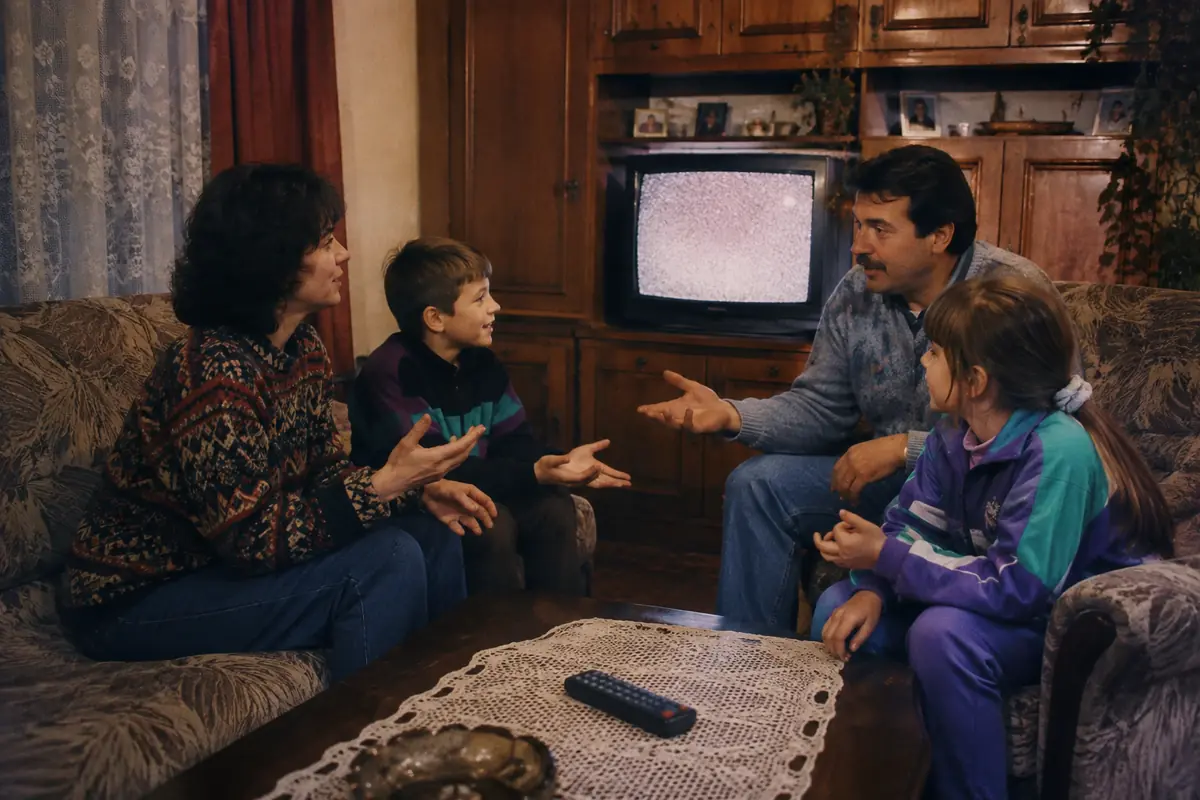
Many households had one main television, so choosing a programme was not always an individual decision. Children wanted cartoons. Adults waited for the news, a film, a sports match or a favourite series. Whoever held the remote had a certain advantage in the discussion.
There were no streaming catalogues offering thousands of programmes on demand. Television followed a schedule, and if you missed the beginning of something, you could not simply rewind the broadcast. Families with a VCR could record programmes onto VHS tapes, but that required planning ahead.
Children often knew exactly when their favourite cartoons would begin. They also knew which seat offered the best view of the television and how long they might be allowed to keep watching before an adult wanted something else. Those familiar routines were part of TV mornings in the 90s.
There may have been fewer channels to choose from, but that did not mean everyone agreed on what to watch. Sometimes the discussion ended peacefully. Other times, someone would promise: “We'll change it when this is over.”
Unfortunately, “when this is over” could take much longer than expected.
And if somebody changed the channel just before a cartoon finished, complaints were almost guaranteed. There was no quick way to replay the scene you had missed.
A familiar scene across the former Yugoslavia
This was familiar in Serbia and other parts of the former Yugoslavia too. A heavy CRT television often stood in the main living room, where family members gathered to watch their preferred programmes. Children waited for cartoons at scheduled times, while adults might want the evening news, a football match, a film or a series.
Local programmes added their own details to these memories. In Serbia, for example, Loto, the televised lottery draw, was another familiar part of television viewing. The channels and schedules varied from place to place, but the problem of a missing remote needed very little explanation.
For readers who grew up in the region, those details may also bring to mind the everyday routines described in our story about an ordinary childhood day in 1990s Yugoslavia.
Weak batteries worked only from the right angle
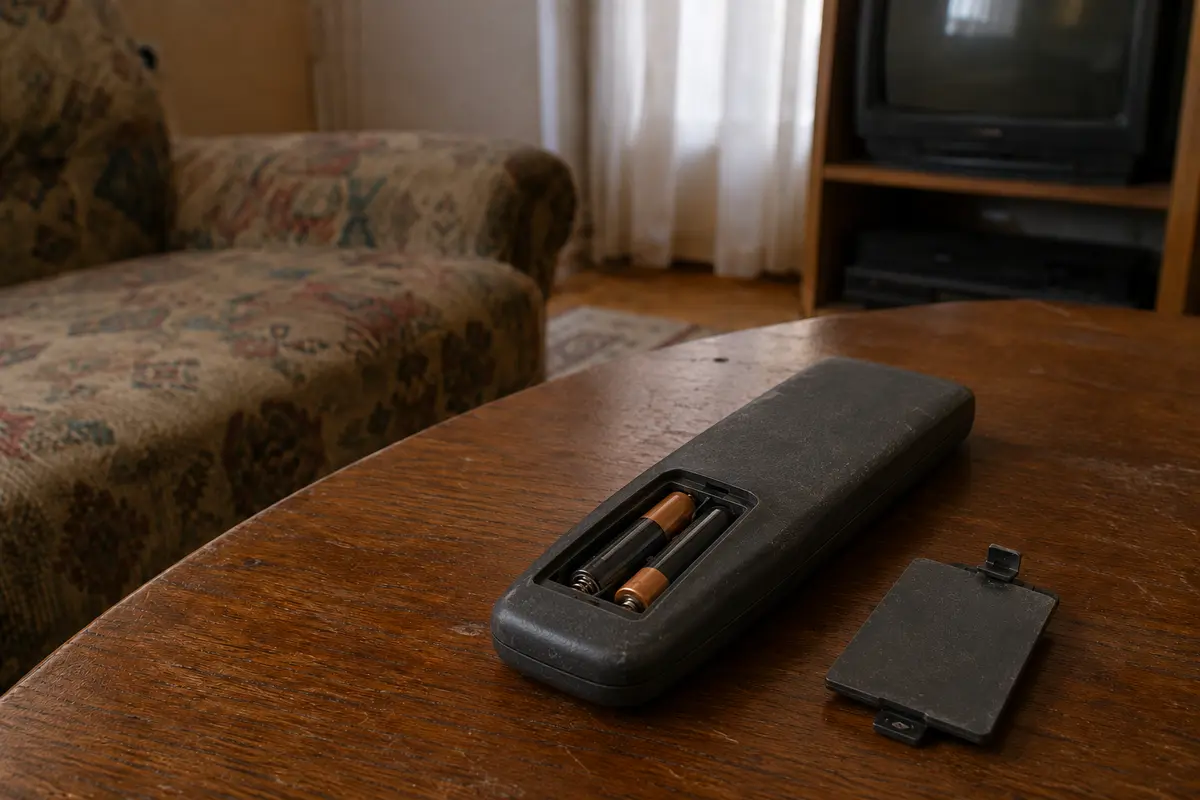
Finding the remote did not always solve the problem. You pressed a button, but nothing happened. Then you pressed harder, aimed it directly at the television and tried again. Finally, you tested the mysterious angle that had somehow worked the day before.
If that failed, someone removed the battery cover. The batteries were checked and put back in place, sometimes followed by a light tap against the palm. Occasionally, the remote would respond to one more determined press.
There were times when it worked just long enough to change one channel, only to stop responding again a moment later. New batteries usually became the obvious answer once none of these attempts helped.
Remote-control technology was already several decades old by the time these scenes became familiar in the 1990s. According to Zenith's history of the television remote, the company developed the wired Lazy Bones remote in 1950. Its Flash-Matic, introduced in 1955, was the first wireless television remote and used a directed beam of light. Zenith followed it with the ultrasonic Space Command in 1956.
By the 1990s, the remote had become such an ordinary part of the living room that people rarely thought about it until it disappeared or stopped working. Fortunately, the buttons on the television itself were still there when everything else failed.
Smart televisions arrived, but remotes still disappear
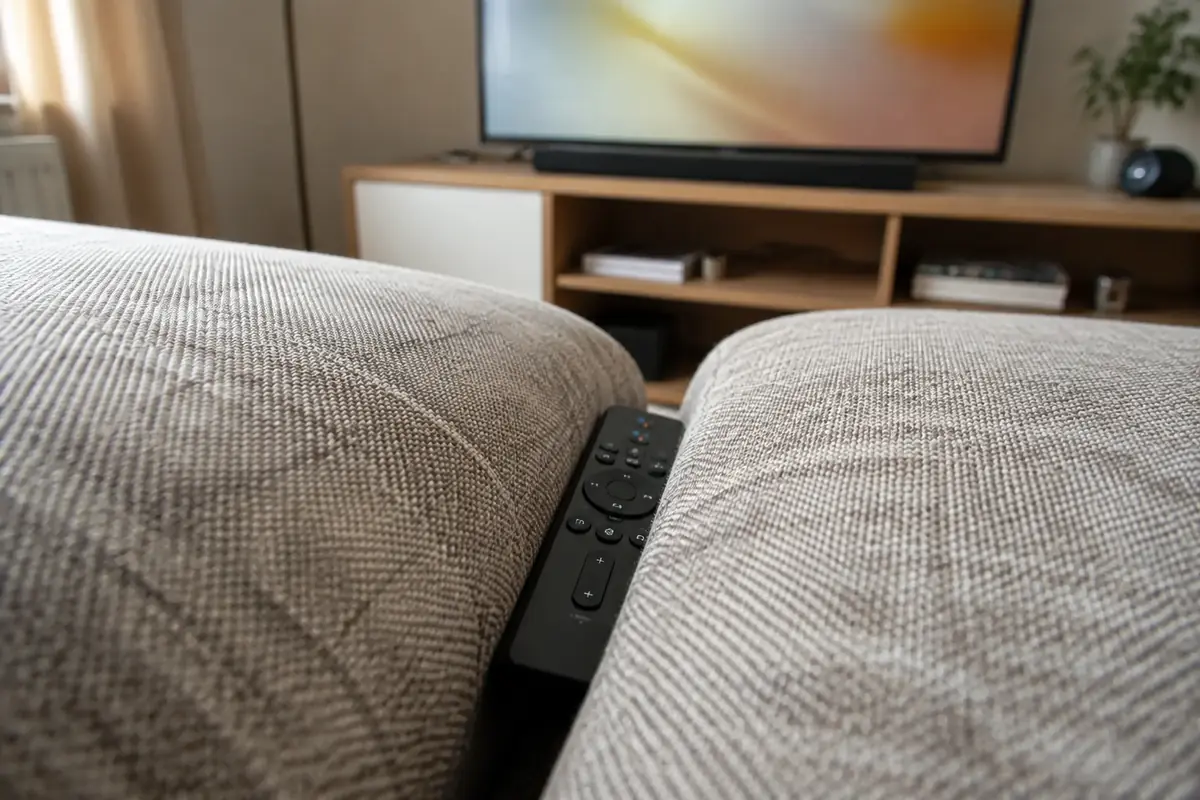
Today, televisions offer apps, voice control and more content than anyone could realistically watch. A mobile phone can even replace the remote. Screens, channels and viewing habits have changed, but one thing remains familiar: the remote still finds its way between the cushions.
Years ago, losing it meant walking a few steps to the television, asking somebody else to change the channel or, with the right furniture arrangement, using your foot. Today, we search the sofa, check the table and ask everyone in the room before remembering that a phone might do the job.
And quite often, the missing remote turns up just when we no longer need it.
What happened in your home when the remote went missing — did you change channels with your foot, call the youngest family member or actually get up?