
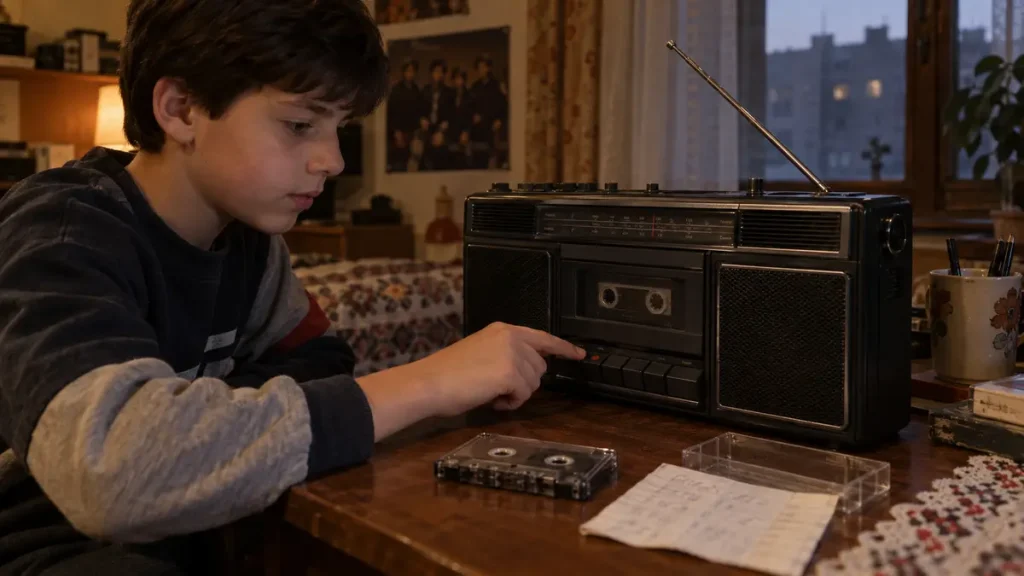
There was a time when recording music from the radio onto cassette tapes was one of the few ways to build a personal music collection. There was no YouTube, no streaming service and no phone where you could type the name of a song and hear it immediately.
If you wanted to save a song, you first had to hear it on the radio. Then you had to be quick enough, have a cassette ready and hope the radio presenter would not start talking over the intro.
We sat beside the radio cassette recorder with a finger close to the record button. The moment we recognised those first few notes, we pressed REC and PLAY and hoped we had not missed the beginning.
It sounds complicated today. Back then, it was simply part of listening to music.
Why Recording Music from the Radio Took Patience
Today, millions of songs are available whenever we want them. We can pause them, start again, skip ahead or add them to a playlist in seconds. During the 1980s and 1990s, radio was one of the main ways many people discovered new music.
Sometimes you knew the name of the song and the artist. Other times, you only recognised the melody or remembered a few words from the chorus. You waited for the song to appear again and hoped the presenter would finally tell you who performed it.
Once you found a song you really liked, the next challenge was recording it. A blank cassette might already be inside the recorder, positioned at an empty section of tape. All that remained was to keep listening and wait.
There was no warning that your song would begin in a few seconds. It might play in five minutes, an hour or on another day. That was why hearing a familiar intro could suddenly turn a quiet afternoon into a small emergency.
This was only one part of life with cassette tapes. Our wider look back at the lost era of cassette tapes also remembers portable players, computer games loaded from tape, car stereos and the familiar pencil trick.
Recording Songs from the Radio with a Finger on REC
On many mechanical cassette recorders, pressing one button was not enough. Recording started by pushing REC and PLAY together. The large plastic buttons offered real resistance, and you could feel the mechanism engage beneath your fingers.
Later machines sometimes made the process easier, but the tension remained the same. You listened for the opening notes, reacted as quickly as possible and hoped the tape had started moving at the right moment.
The best recordings began just before the first note. More often, the opening second or two disappeared while we recognised the song and reached for the buttons. That did not necessarily mean the recording was useless. If you had waited days to hear that song, you usually kept the version you managed to capture.
Another danger was reaching the end of the tape. Everything could appear to be working perfectly until the cassette stopped halfway through the final chorus. The search for the song then began all over again.
Radio cassette recorders, stacks of tapes and handwritten labels were familiar parts of many bedrooms and family rooms. They belonged to the same slower domestic world remembered in our story about the 90s living room before streaming.
When the Radio DJ Talked Over the Song
A radio presenter or DJ could spoil an almost perfect recording in a few seconds.
The song would begin, we would start recording at exactly the right moment and think everything had gone perfectly. Then the presenter’s voice would continue over the intro, finishing an announcement, naming the station or adding one final comment.
Sometimes the beginning survived, but the ending did not. The DJ might begin introducing the next track before the final note had faded. A station jingle, advertisement or fragment of another song could also become part of the recording.
The result was not perfect, but it usually stayed on the cassette. We did not know when the same song would be played again, so a version with a voice over the intro was still better than no version at all.
Years later, those interruptions can be the most interesting part. An old station ident or forgotten voice does more than bring back a song. It brings back the exact period in which the tape was made.
C60, C90 and the Space Left on the Tape
Cassettes came in different lengths, but 60-minute and 90-minute tapes were among the most familiar. A C60 offered approximately 30 minutes on each side, while a C90 provided around 45 minutes on Side A and another 45 minutes on Side B.
When recording music from the radio, every remaining minute of tape mattered. If too little space remained, the next song would be cut off before the end. If we left too much blank tape, we lost space that might have held one more short track.
The compact cassette itself dated back to the 1960s. According to the official Philips archive, the company introduced its first compact cassette recorder at the Berlin Radio Exhibition in August 1963. By the 1980s and 1990s, the format had become an ordinary part of everyday listening in homes around the world.
Side A and Side B
Every cassette had two sides. When Side A ended, you removed the cassette, turned it over and continued with Side B. After listening often enough, the order of the songs became so familiar that you barely needed the written list.
You knew which song opened the tape, which one appeared near the end of the first side and what would begin after you turned it over. A favourite compilation could remain in your memory for years simply because its running order never changed.
Would the Whole Song Fit?
Cassette recorders generally did not show exactly how many minutes remained. Some included a small mechanical counter, but it was mainly useful for marking approximate positions rather than displaying the time left on the tape.
We often had to guess. You looked through the cassette window, checked how much tape remained on the reel and tried to decide whether another song would fit. Sometimes the estimate was perfect. Sometimes the tape stopped only a few seconds before the end.
Rewinding and Finding the Right Place
You could not tap a screen and jump directly to a song. You pressed fast-forward or rewind, waited, stopped the tape and listened for a few seconds. If you had gone too far, you reversed direction and tried again.
This process could be repeated several times while searching for the beginning of a track or an empty section of tape. A little forward, a little back, a quick listen and then more rewinding.
Portable cassette players added another concern: batteries. Rewinding used power, so an ordinary pencil became a useful tool. Insert it into one of the cassette reels and turn it by hand until the tape reaches approximately the right place.
The pencil also helped when the tape became loose. What seems like a strange trick today was once common knowledge passed between friends, siblings and classmates.
Handwritten Track Lists Were Our Playlists
A cassette was not truly finished when the last song had been recorded. The paper insert still had to be completed.
We wrote down what was on Side A and what was on Side B. If we knew the song title and artist, we added them carefully. If we did not, we might write part of the chorus, a guessed title or any short description that would help us recognise the song later.
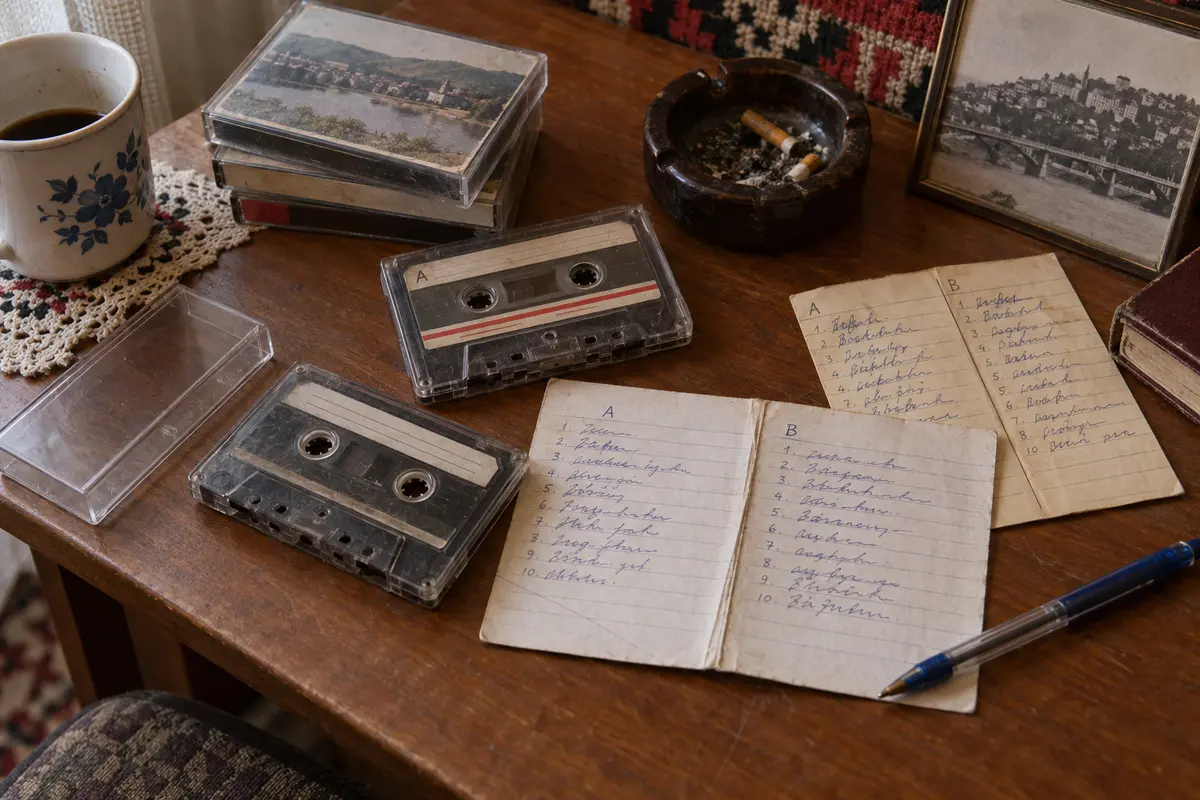
Some inserts were neat, numbered and divided into clear columns. Others were filled with crossed-out titles, arrows and songs added later. When something was recorded over, the old title was crossed out and a new one appeared beside it.
Labels often carried simple names such as “Rock Mix,” “Love Songs,” “Summer,” “For the Car,” “New Music” or just “Mixtape.” The title might not have meant much to anyone else, but the owner usually knew exactly what was inside.
How Radio Songs Became Personal Mixtapes
A digital playlist can be created in minutes. A cassette mixtape developed much more slowly.
Recording music from the radio meant adding one song at a time. A tape might be completed in a day, but it could also take several weeks. One track came from the radio, another was copied from a friend’s cassette and a third had to wait until it appeared again on a favourite programme.
Different tapes served different purposes. There could be one for travelling, one for quiet evenings, one filled with slow songs and another holding the newest hits. The tracks did not always belong to the same genre. They only had to belong together in the mind of the person making the tape.
The order mattered as well. The opening song had to start the cassette properly, while the final track on each side needed to fit into whatever space remained.
A mixtape was more than a collection of recordings. It contained choices, patience and time. Perhaps that is why we often listened to those limited collections more carefully than we listen to digital playlists containing hundreds of songs today.
When Owning a Dual-Cassette Deck Made You the Coolest Kid Around
If you had a stereo system with two cassette decks, you had something special.
A dual-cassette deck made copying music much easier. You placed a borrowed tape into one deck and a blank cassette into the other. One side played while the second deck recorded, and then you waited.
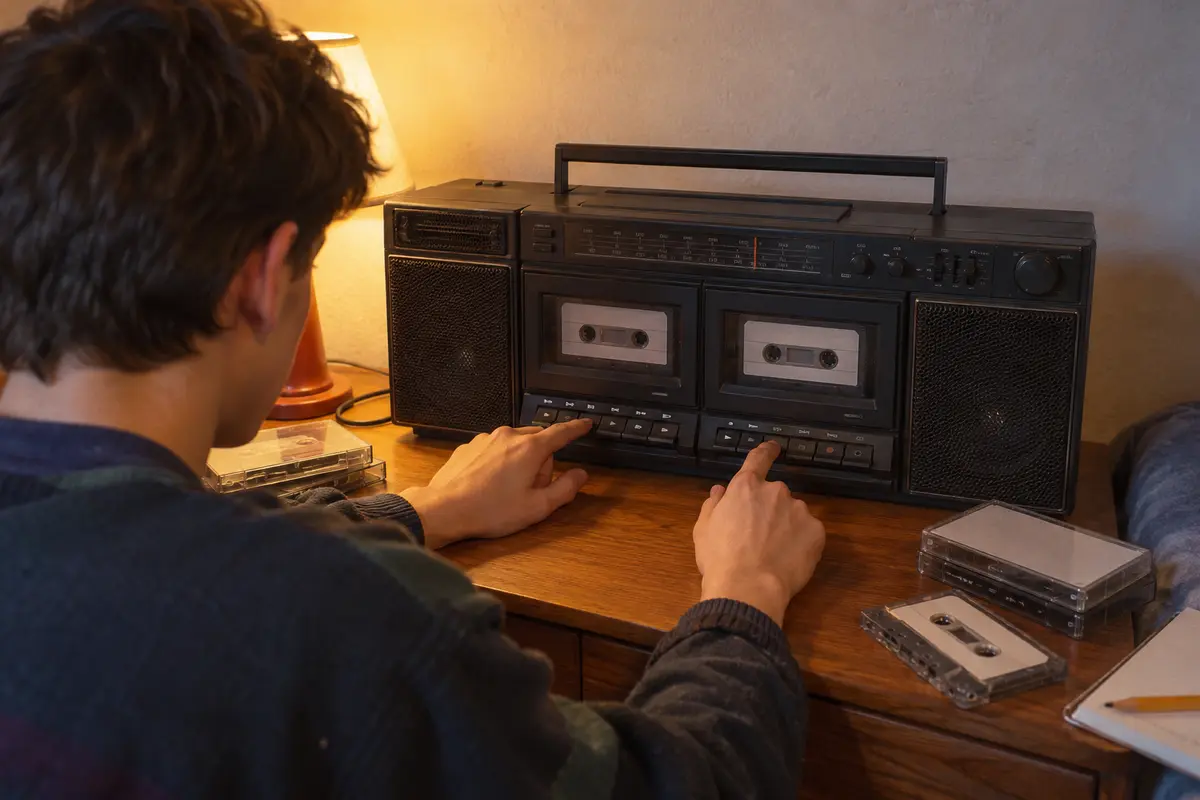
Normal-speed dubbing took as long as the music itself. If one side lasted 45 minutes, you waited for 45 minutes. When it ended, you turned over both tapes and continued with Side B.
Some systems included a high-speed dubbing option. It reduced the waiting time, although the result still depended on the quality of the equipment and the condition of both tapes.
An analogue copy did not always sound exactly like its source. It might be quieter or carry more background hiss. If the borrowed tape was already a copy of another copy, every new generation could lose a little more clarity.
That rarely stopped anyone. Having the music mattered more than having a technically perfect recording.
Trading Tapes Meant Discovering New Music
Cassettes passed between friends at school, in neighbourhoods, at birthday parties and during visits. Someone found a new album or made a great compilation, and soon other people wanted to hear it.
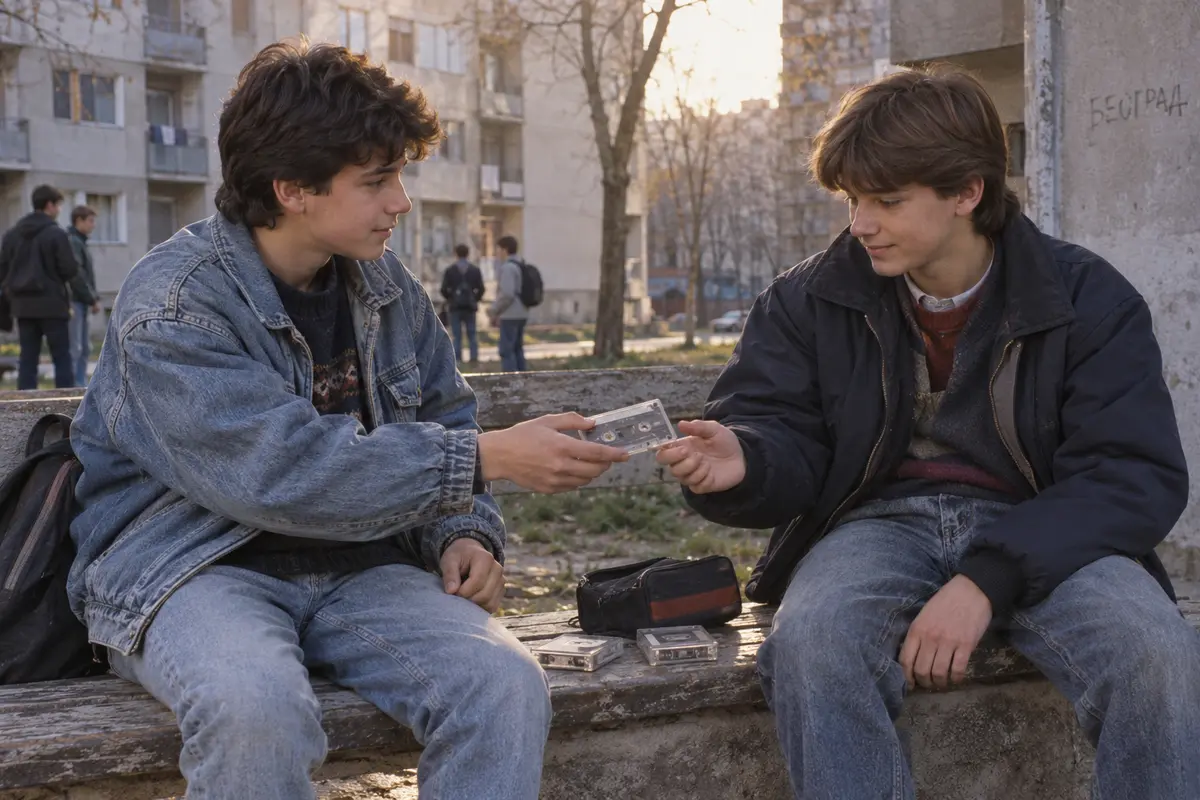
You borrowed a cassette, took it home, listened to it and made a copy if you could. Then you returned it and perhaps offered one from your own collection in exchange.
That was how many people discovered music beyond what they heard on their usual radio station. There was no algorithm studying listening habits. Instead, there was a friend saying, “You need to hear this.”
Sometimes you loved the entire tape. Sometimes only one song stood out, and that track eventually found a place on your own compilation.
Mixtapes made for a particular person carried even more meaning. The selection and order of the songs could express something that was difficult to say directly. Someone had chosen every track, written the list by hand and imagined what the other person would feel after pressing PLAY.
From Cassette Mixtapes to Burned CDs
Computers, MP3 files and blank CDs eventually changed the process. Music no longer had to be copied from one cassette to another in real time, and individual songs became easier to arrange.
The habit of creating personal music collections did not disappear. It simply moved to a new format. Handwritten cassette inserts gave way to MP3 folders, Winamp playlists and blank discs labelled with a marker.
That became the next chapter in the way many people collected and shared music. Our article about burning music CDs in the 2000s remembers blank discs, carefully arranged track lists and the nervous wait for the burning process to finish successfully.
Why Do We Still Remember Those Imperfect Recordings?
Songs recorded from the radio were rarely perfect. Some were missing the first few seconds. A presenter spoke over others, while a few ended just before the final note.
But they were ours.
We waited for them, recorded them, rewound them and carefully arranged them across two sides of a cassette. We wrote the titles by hand, lent the tapes to friends and listened so many times that we knew which song would come next before it began.
Today, we have access to more music than we could once have imagined. Listening is easier, faster and more convenient. Even so, it is difficult to reproduce the excitement of hearing a song you had been waiting for all week and managing to press REC at exactly the right moment.
If you still have an old cassette recorded from the radio, look at its faded handwritten insert. A few crossed-out titles and one imperfect recording may be enough to bring back an entire part of your life.
That is why recording music from the radio still feels like such a personal memory.
Which song did you wait the longest to record from the radio? And did you own a dual-cassette deck, or did you have to visit the friend who had one?