
Some classic cartoon episodes that scared us as kids did not need a monster in every scene. They simply changed the rules for a few minutes. A familiar chase grew unexpectedly serious. An empty theatre seemed to have a mind of its own. A funny character wandered into a place where even the silence felt wrong.
These four stories do that in different ways. One is an episode of Scooby-Doo, Where Are You!; the others began as animated theatrical shorts before becoming familiar to television viewers. I am not ranking them by how frightening they are. What interests me is the precise moment when each one makes a world built for laughter feel uncertain.
Scooby-Doo: “The Backstage Rage” (1969) and the fear of unseen hands
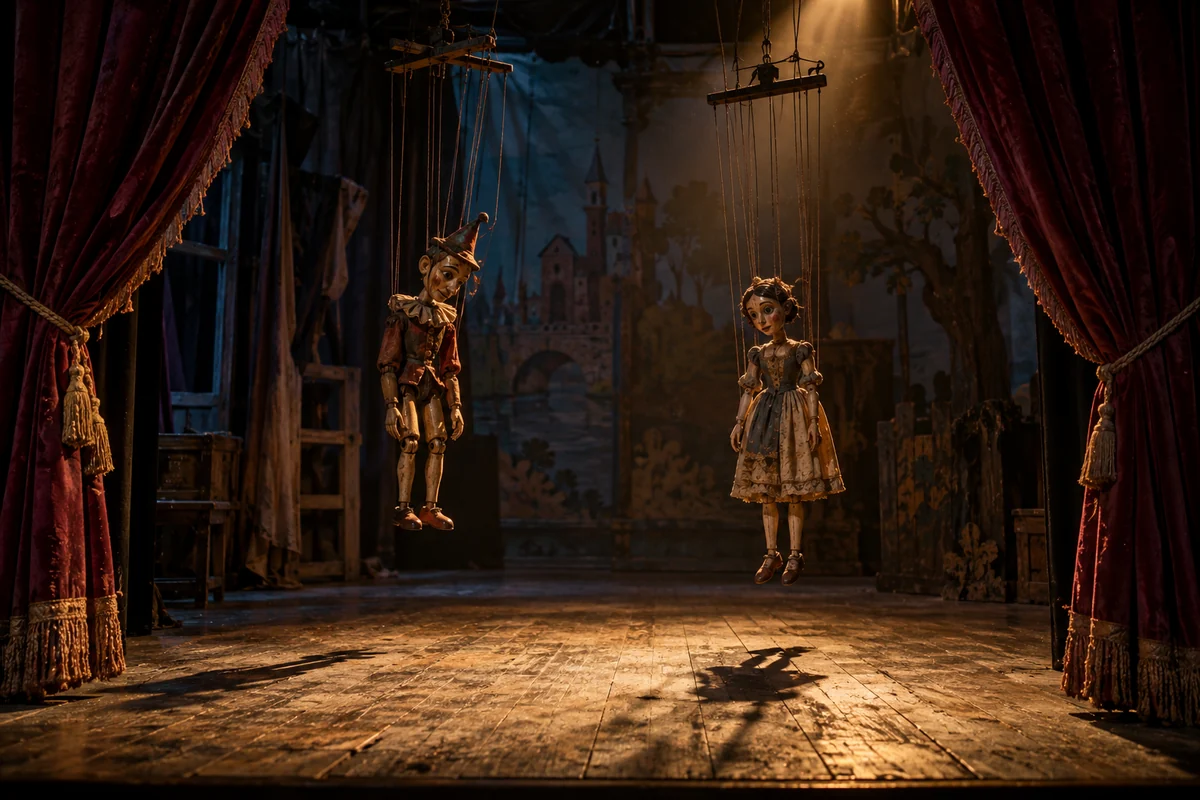
The ninth episode of the original show's first season sends the gang into a theatre troubled by a mysterious puppet master. There is a counterfeiting case to solve, but long before the explanation arrives, the setting does much of the work: deserted stage space, scenery that conceals people, and puppets whose movements seem to come from nowhere.
A puppet is supposed to move when someone pulls its strings. Take the puppeteer out of sight, and an ordinary stage prop becomes unsettling. That is what works for me here. I know the original Scooby-Doo mysteries tend to lead to human explanations, yet that knowledge does not make the wait in an empty theatre entirely comfortable.
There is more about the series' blend of mystery and humour in our Scooby-Doo facts and memories.
Tom and Jerry: “Heavenly Puss” (1949) and a chase with consequences
The short in which Tom dreams of trying to enter heaven is Heavenly Puss. After a piano crushes him, he is told that Jerry must sign an apology for him to be admitted. The alternative is much darker, and suddenly the familiar pursuit has a deadline and a consequence. The ending reveals that Tom has been dreaming.
The title matters because The Flying Cat is a different Tom and Jerry short, from 1952, involving Jerry and a canary. It is not the story with the piano and the imagined journey to heaven.
Usually, the pair can survive almost anything and be ready for another gag seconds later. Heavenly Puss briefly asks what it would feel like if Tom could not simply bounce back. That shift is more unsettling to me than a loud scare. The film remains funny, but it lets guilt, fear and an attempt at reconciliation interrupt the usual rhythm.
For a wider look at their timing, music and changing appeal as we grow older, see our Tom and Jerry article.
The Pink Panther: “Pink Panic” (1967) and an empty town that is not empty
A storm brings the Pink Panther to an abandoned Western town, where he takes shelter in a hotel. He encounters a ghost and a skeleton there. Pink Panic is still a comedy, complete with visual gags, but the deserted setting gives those gags an unusual edge.
The Panther can tell a story with movement and very few words. Here, that leaves room to notice the quiet street, the hotel rooms and the pause before something else moves. Another viewer might see only a playful haunted-house story. I enjoy the way the short allows the same moment to be silly and slightly eerie at once.
That visual storytelling is part of the character's appeal. We explored it further in our article on the Pink Panther's beginnings.
Mickey Mouse: “The Mad Doctor” (1933) and a nightmare in a castle
In this black-and-white Disney short, a sinister scientist takes Pluto to an old castle. Mickey goes after him, facing bats, skeletons and a giant skeletal spider. Just as a buzz saw seems about to reach Mickey, he wakes up. The ordeal was a nightmare, and Pluto is safe.
Knowing the ending does not make the earlier imagery any less striking. Mickey is trying to rescue a friend, while the castle keeps placing strange shapes and new threats in his path. Disney's D23 archive records that a British film censor at the time considered the short too frightening for some audiences. That is a documented reaction; my own impression is simply that its shadows and dream logic feel far removed from the cheerful Mickey I usually expect.
Why do cartoon episodes that scared us as kids stay with us?
Each one disturbs a different expectation. Scooby's puppets move before we understand who controls them. Tom's usual slapstick suddenly seems to matter. The Pink Panther finds himself alone in a place that is not quite deserted. Mickey cannot wake from his nightmare until the danger is almost upon him.
How we first encountered a cartoon could also affect its impact. Choosing a familiar short to stream today is different from finding it unexpectedly in a television line-up. If that part of the memory interests you, we have written about watching cartoons on a CRT television.
I have left Hair-Raising Hare out of the main selection because its spooky castle and monster already appear in our Bugs Bunny episode guide. It is worth a look if you prefer your cartoon scares with a fourth-wall joke.
For me, cartoon episodes that scared us as kids stand out when they change a familiar character's world for just a few minutes. Which cartoon unsettled you when you were young, even if you see it differently now? Tell me in the comments.