
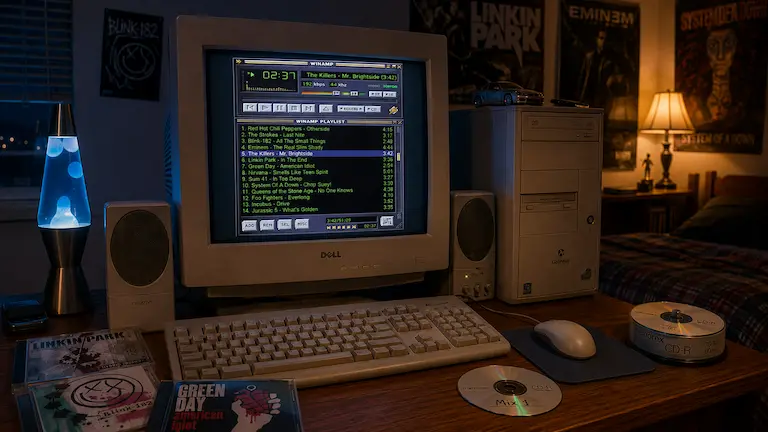
When Winamp Was the Soundtrack of the Early 2000s
Before Spotify, Apple Music, YouTube playlists, and smartphones full of songs, music on a computer felt much more personal. For many people in the United States during the late 1990s and early 2000s, one small program became the center of that world: Winamp.
It sat on the desktop while people chatted on AIM, browsed MySpace, downloaded songs from Napster or LimeWire, played PC games, or burned mix CDs for the car. It was not just a media player. It was part of the whole early internet experience.
Back then, music was not instantly waiting inside an app. You had to find it, download it, organize it, rename it, and save it somewhere on your hard drive. When Winamp opened and the playlist started playing, your computer suddenly felt like your own personal radio station.
Before streaming took over, Winamp made digital music feel personal.
For anyone who lived through that era, the old Winamp interface can still bring back the feeling of a bedroom PC, a glowing monitor, cheap speakers, and a folder full of MP3s.
Napster, LimeWire, and the Hunt for MP3 Files
For many Americans, the Winamp era was also the Napster, Kazaa, Morpheus, and LimeWire era. Finding music online felt like a treasure hunt. You searched for a song, waited for the download, hoped the file was real, and then dragged it into your growing MP3 collection.
Sometimes the file name was messy. Sometimes the song title was wrong. Sometimes the quality was terrible. But if the track played, it was good enough for the playlist.
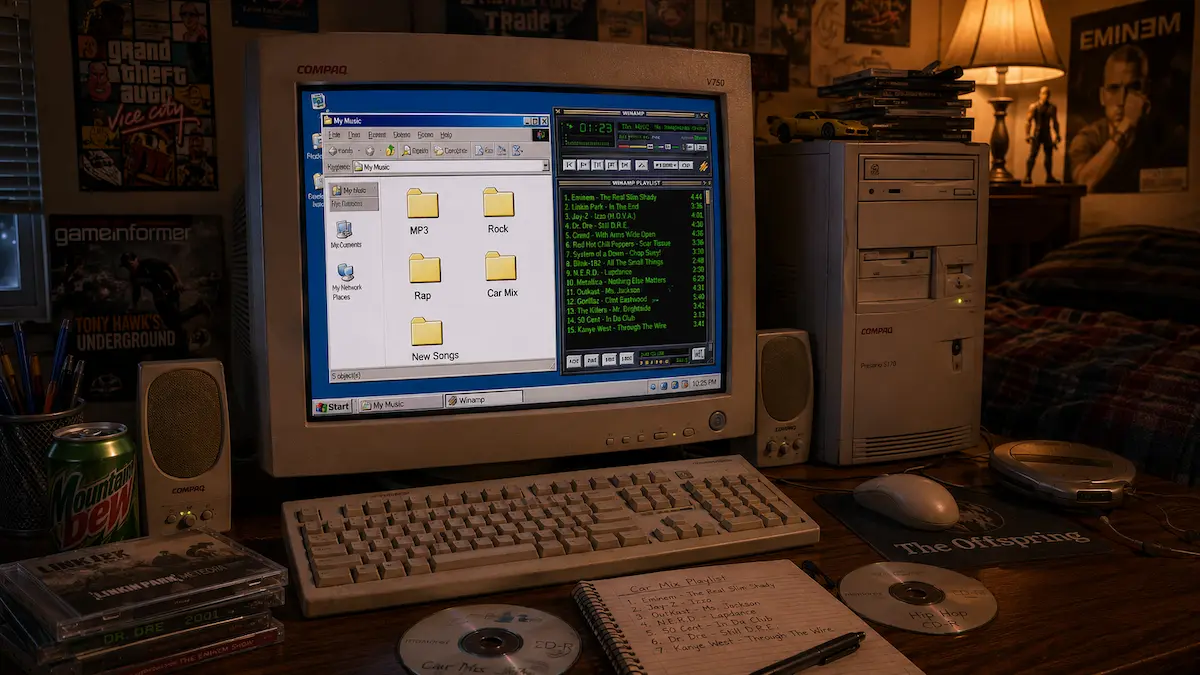
People built folders with names like “Rock,” “Rap,” “Party Mix,” “Car CD,” “New Songs,” or simply “MP3.” Some collections were carefully organized. Others were complete chaos. Still, every folder felt like something you created yourself.
Winamp made those folders come alive. You could load hundreds of songs, hit shuffle, and suddenly rediscover tracks you had forgotten. No algorithm was choosing for you. The collection was yours.
Winamp Skins Made Every Desktop Feel Different
One of the best things about Winamp was how customizable it felt. You did not have to use the same plain music player as everyone else. You could change the entire look with skins.
Some people used dark metallic skins. Others liked futuristic designs, glowing buttons, neon colors, or wild early-2000s layouts that looked like they belonged in a science-fiction movie. Your Winamp skin said something about your personality.
This was before every app looked clean, simple, and almost identical. Winamp felt creative, strange, messy, and fun. It could match your gaming setup, your music taste, or the general chaos of your desktop.
In a dorm room, bedroom, or family computer room, Winamp made the computer feel less like a machine and more like your own little music station.
Visualizations Turned Music Into a Light Show
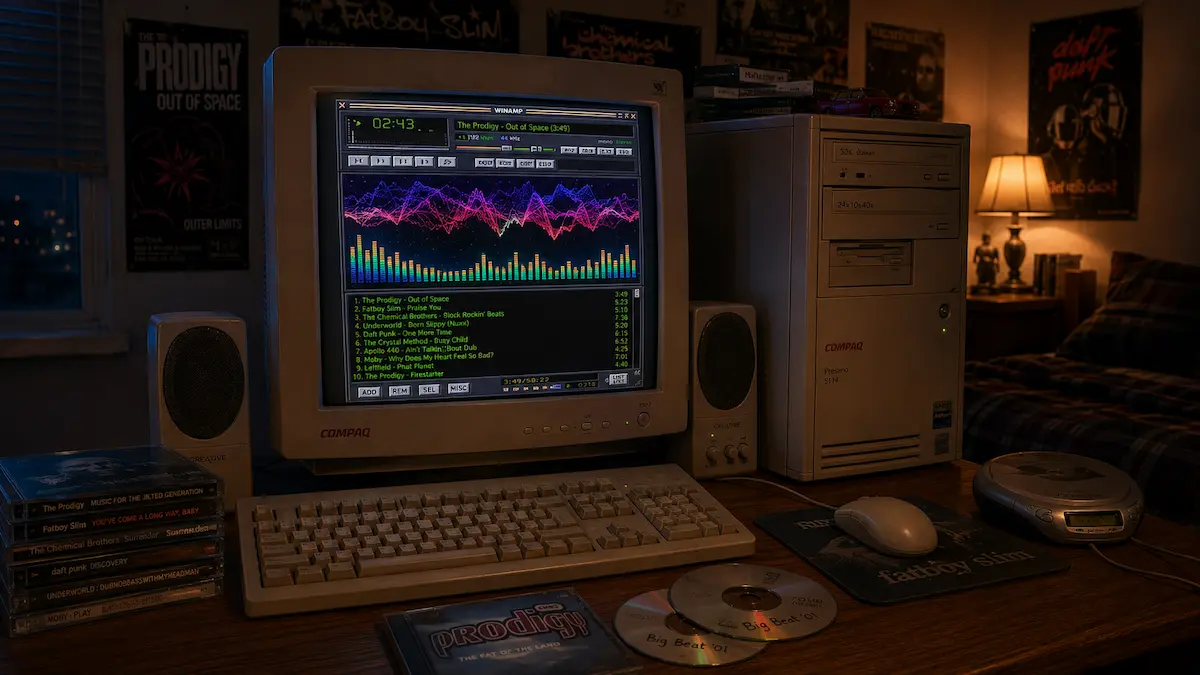
Winamp visualizations were another big part of the experience. You could play a song, turn off the lights, and watch colors, waves, lines, and shapes move with the beat.
For many people, this was the first time music on a computer felt visual. A CRT monitor glowing in a dark room, speakers buzzing, and Winamp reacting to the beat created a very specific early-2000s mood.
It was simple, but it felt amazing at the time. You did not need LED strips, a smart TV, or expensive equipment. You just needed Winamp, a folder full of songs, and enough free time to stare at the screen for a while.
Modern music apps may look cleaner, but they rarely feel as strangely personal as those old Winamp visualizations.
AIM Away Messages, MySpace, and Music in the Background
Winamp was often running while the rest of the early internet was happening. People chatted on AIM, changed away messages, checked buddy lists, updated MySpace profiles, browsed forums, and played browser games while music played in the background.
AIM was especially important in American online life. Your screen name, away message, and profile felt like small pieces of your identity. Music often shaped that mood. One song could become part of how you felt that night.
In the MySpace era, music became even more personal. Profiles had songs, bands mattered, and people discovered new music through friends, pages, and shared files. Winamp was still there in the background, playing the tracks people collected one by one.
Today, music follows us everywhere. Back then, you usually had to sit down at the computer, open your player, load your songs, and decide what kind of night it was going to be.
Winamp, Nero Burning ROM, and Car Mix CDs
Winamp also belonged to the burned CD era. Before Bluetooth and streaming in cars, people made mix CDs for road trips, parties, school, work, and late-night drives.
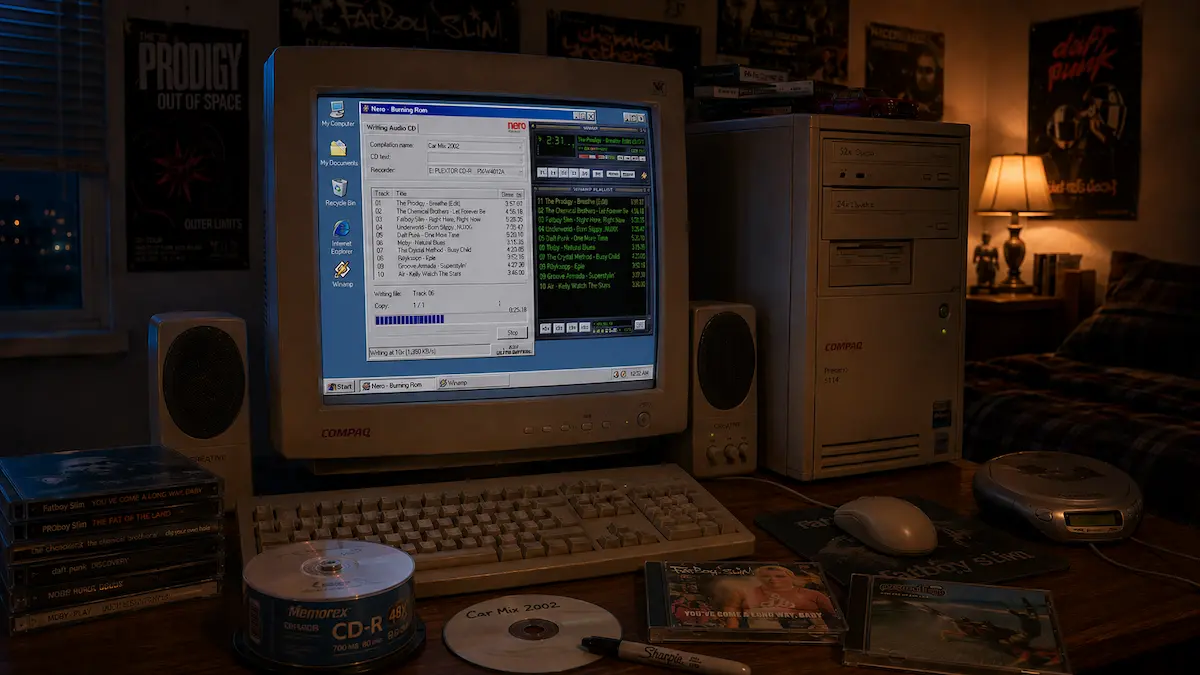
The process had its own ritual. First, you built the playlist in Winamp. Then you listened through it, removed weaker songs, changed the order, and made sure everything fit. After that, you opened a CD-burning program such as Nero Burning ROM and hoped the burn finished without an error.
CD-R spindles, jewel cases, permanent markers, and handwritten labels were all part of the culture. A good car mix had to start strong. The middle had to keep the mood going. The final track had to feel right.
If that kind of nostalgia brings back memories, you might also enjoy our look back at burning music CDs in the 2000s.
Why Winamp Still Feels So Nostalgic
Winamp feels nostalgic because music felt more personal back then. You did not have every song in the world available instantly. You had the songs you found, saved, copied, renamed, organized, and played yourself.
Every MP3 folder had a story. Some songs came from friends. Some came from old hard drives. Some came from Napster, LimeWire, or burned CDs. Some had strange file names that somehow became part of the memory.
Today, music is easier to access than ever. The sound quality is better, the apps are smoother, and playlists can follow us everywhere. However, something changed when music stopped feeling like a personal collection and started feeling like an endless feed.
That same early computer feeling also lives in memories of installing software from floppy disks, old desktop computers, and late nights spent in front of glowing screens.
You can also read more about the history of Winamp on Wikipedia.
Winamp as Part of Growing Up Online
For people who grew up with early home computers, Winamp was more than software. It was part of the soundtrack of growing up online.
It played while people chatted on AIM, checked MySpace, downloaded songs, played PC games, wrote school papers, burned CDs, and stayed up too late at the computer.
Winamp skins, visualizations, MP3 folders, CD-R discs, messy playlists, and old speakers all belonged to the same era. It was a time before music disappeared into the cloud.
Today, we can listen to almost anything instantly. But that old feeling of opening Winamp, loading a playlist, and hearing music come from a beige computer in a quiet room still feels special.
For many people, Winamp was not just a music player.
It was the sound of the early 2000s.