
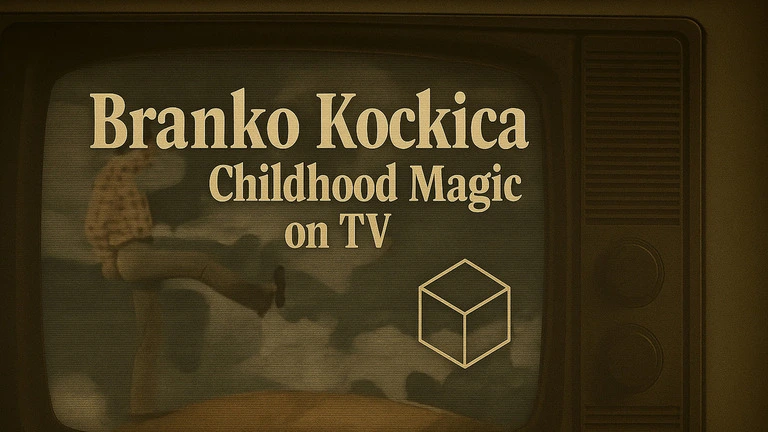
Source: Radio Television of Serbia (RTS).
The Magic of a Simple Smile
There was a man who wasn’t a cartoon superhero, yet he meant more to us than any cape or mask ever could.
His name was Branko Milićević, known to every child as Branko Kockica.
For generations across former Yugoslavia, he embodied warmth, joy, and trust that flowed straight from the TV into our homes.
Back then, television had only a few channels.
So when Branko appeared, the next thirty minutes were guaranteed to bring laughter, music, and gentle lessons about kindness.
A Universe of Imagination
His show, “Kocka, kocka, kockica”, was not just another children’s program.
It was a tiny universe of imagination.
Branko explained the world in a way that felt simple but meaningful.
He talked about friendship, honesty, and helping others.
At the same time, he reminded us that everyday life could be magical.
Children watched with wide, trusting eyes.
To them, Branko wasn’t only a TV host.
He was a teacher, a buddy, and a friend.
In addition, each episode carried a special moment of warmth.
For example, the camera would catch a child smiling while Branko said,
“It’s not important to be perfect, it’s important to be good.”
That line became the heart of his message.
It was about the real magic of childhood on TV — learning simple values without feeling like it was a lesson.
Lessons That Last Forever
Today, when everything is measured by clicks and algorithms,
Kocka, kocka, kockica feels like a lullaby from a calmer time.
However, that is exactly why it matters.
It reminds us that empathy, kindness, and a genuine smile are timeless trends that never go out of style.
As a result, hearing the old tune —
“Kocka, kocka, kockica, every cube hides some knowledge…” —
can instantly bring back childhood memories.
It was the first lesson in loving life, learning, and people.
And it reminds us of Branko Kockica —
the man who proved that television can be a school, not just entertainment.