
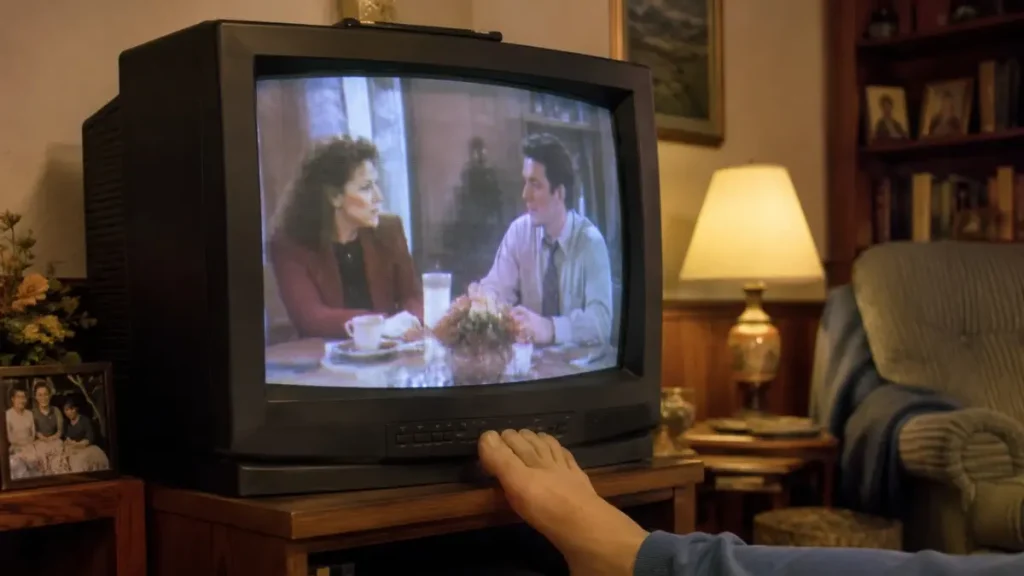
Some 90s TV memories begin with a favourite programme. Others begin with a remote control that has disappeared again. Nobody had moved it, and nobody remembered using it last. Everyone believed it had been on the coffee table only a minute earlier.
The television was on, and a favourite show was about to begin. Suddenly, changing the channel with your foot seemed easier than searching the whole room. Everyone lifted cushions, shook blankets and checked beside the sofa. If the remote still did not appear, two dependable solutions remained. Someone could walk over to the television, or the person sitting closest could press the button.
The remote usually hid between the sofa cushions
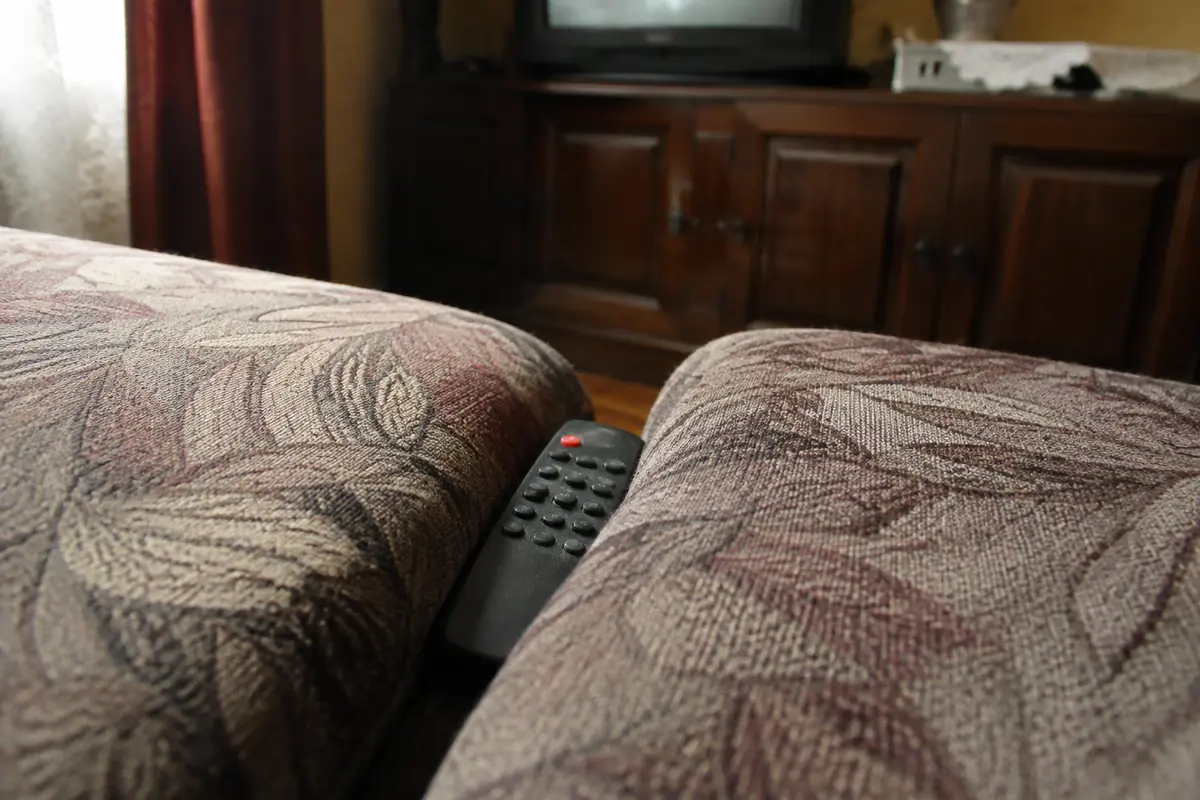
The remote often vanished beneath a newspaper or behind a cushion. Sometimes, the person who denied touching it was sitting on it. The search usually began with the same question: “Who had it last?” Somehow, nobody ever knew.
That small plastic device could send an entire household into action. One person searched under the table. Another checked beside the television. Someone else kept watching as though the mystery had nothing to do with them. These small rituals belonged naturally to the 90s living room before streaming.
90s TV memories: changing channels with your foot
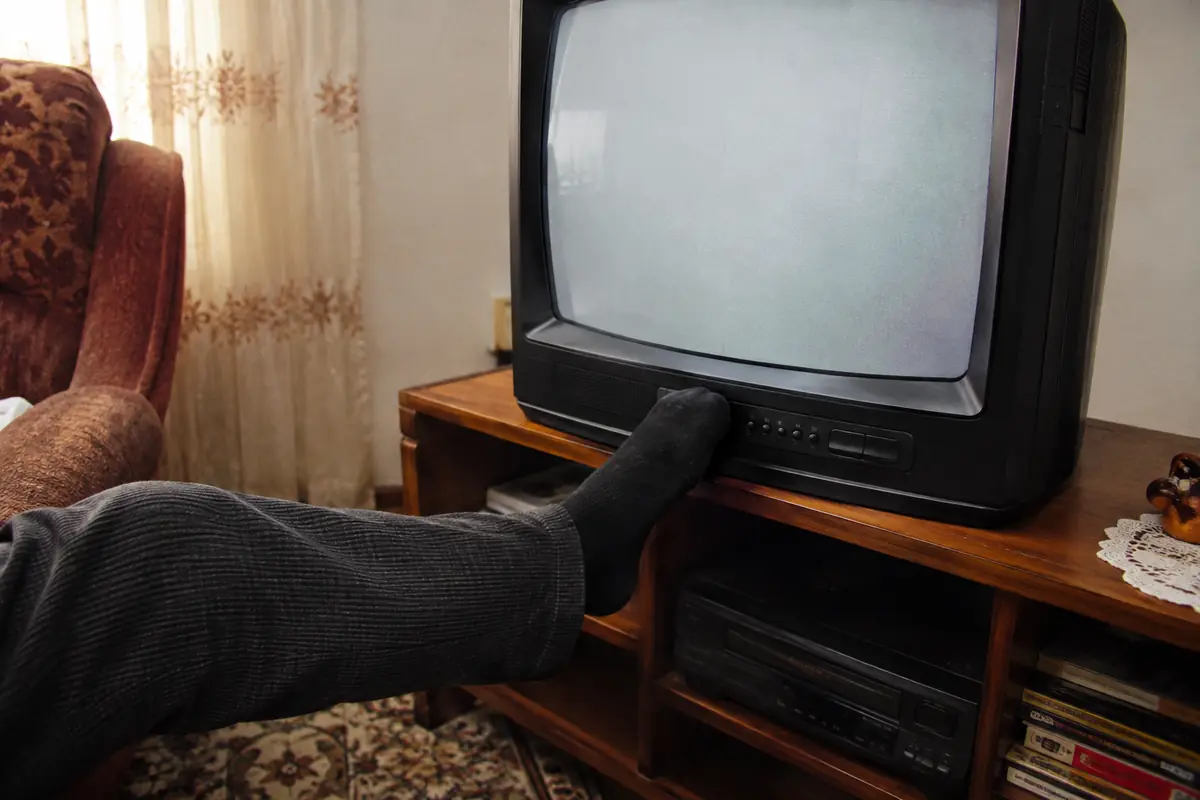
If the television stood close enough to the sofa, getting up became optional. You moved towards the edge, stretched out one leg and pressed the channel button with your toes. Changing the programme was manageable. Adjusting the volume required much more precision.
One wrong press could make the television louder instead of moving to the next channel. The method lacked elegance, but it worked. Many old CRT sets had large buttons on the front. A low television stand placed them at exactly the right height. That physical routine formed part of what it was like watching cartoons on a CRT TV.
The youngest family member became the “human remote”
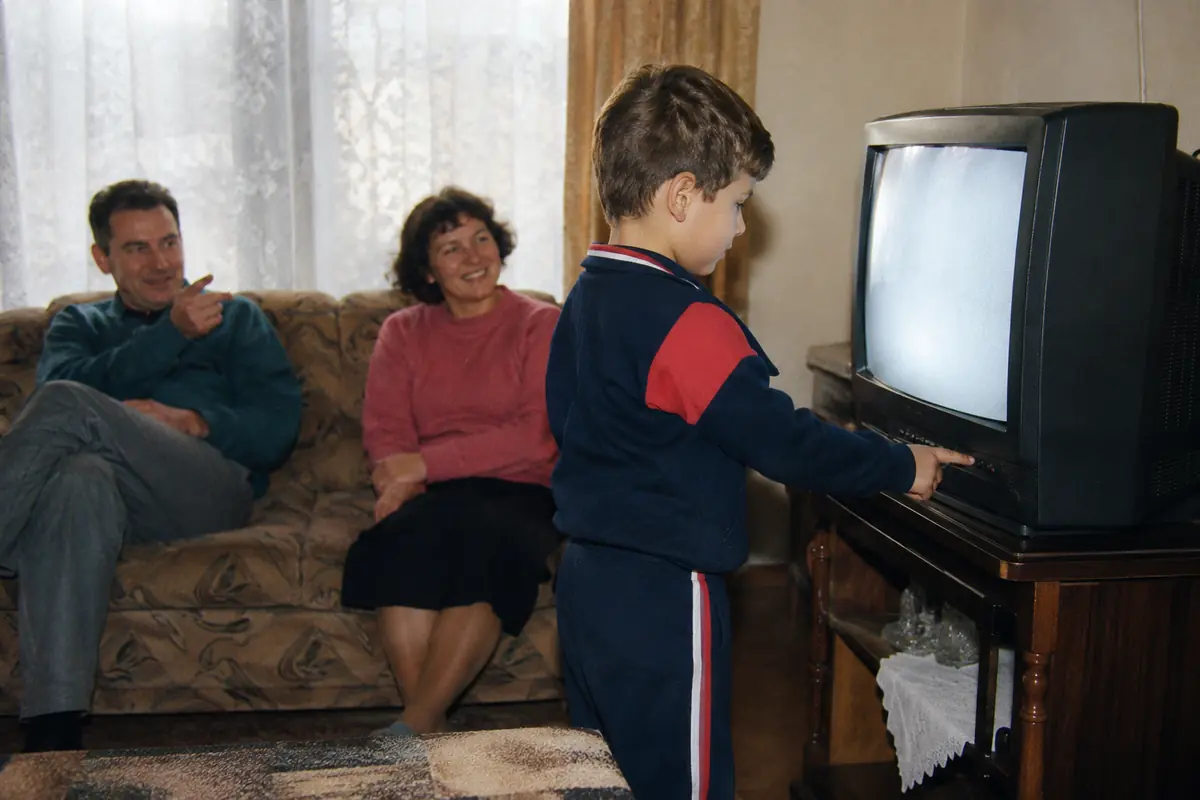
When the television was too far away for the foot method, the youngest person often received a simple instruction: “Change the channel, please.” Once the child reached the television, more directions followed. “Turn it down a little. Not that much. Go back one.”
This was household voice control long before smart devices. Adults gave a command, the child pressed a button and the television responded. However, this system could also complain or ask why nobody else could get up. It might even move one channel too far on purpose.
One television meant choosing together
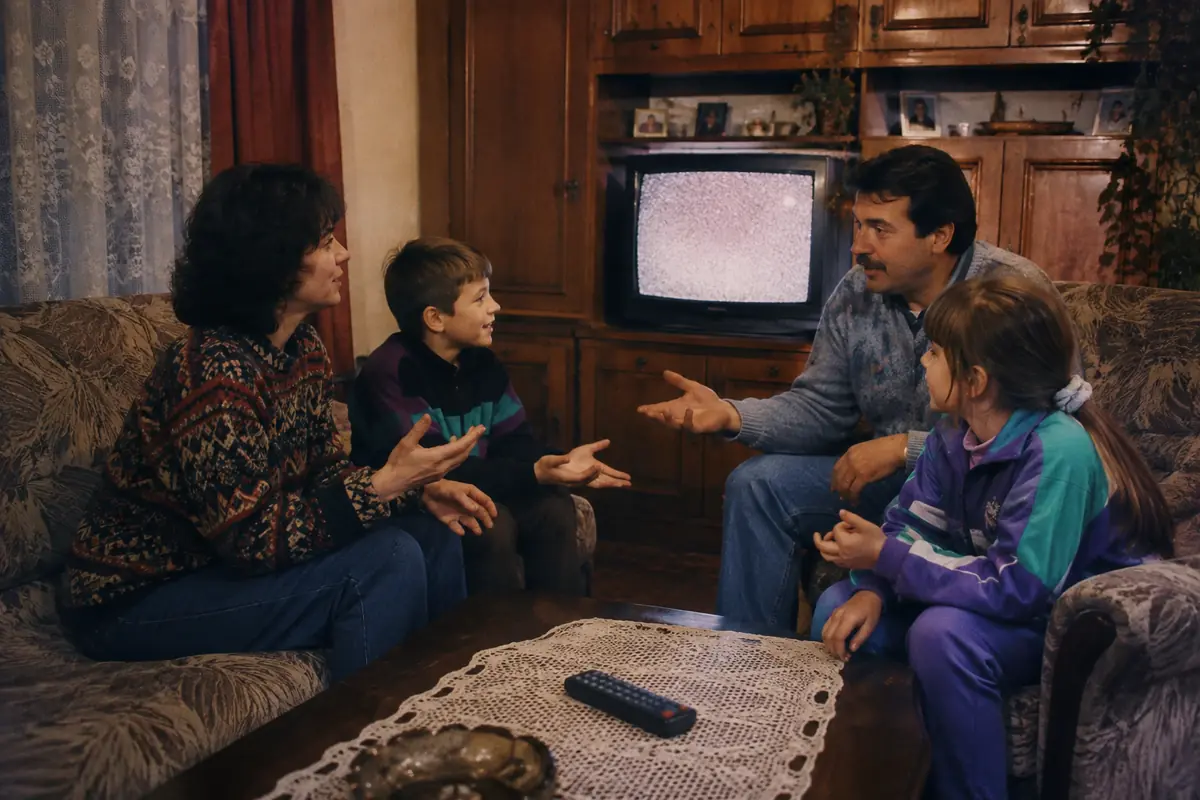
Many homes had one main television, so choosing a programme became a family decision. Children wanted cartoons. Adults waited for the news, a film, a sports match or a favourite series. Whoever held the remote briefly controlled the room.
Streaming catalogues did not exist, and programmes followed a fixed schedule. If you missed the beginning, you could not rewind. That is why TV mornings of the 90s had such a clear rhythm. Children knew when cartoons started and who had claimed the best place. They also knew how long the adults might let them keep the channel.
There may have been fewer options, but families negotiated every choice. “We will change it when this is over” was a familiar promise. Of course, “when this is over” often lasted longer than expected. These shared routines still shape many 90s TV memories.
A familiar scene across the former Yugoslavia
Families in Serbia and across the former Yugoslavia remember the same basic scene. A heavy CRT television stood in a shared living room. Children waited for cartoons at a fixed time. Later, the evening programme moved to the news, a sports match, a film or Loto. Meanwhile, the remote passed between generations or disappeared into the sofa.
For many readers from the region, these 90s TV memories also carry familiar local details. The channels and programmes differed, but the household rituals felt universal. They belong to the same world described in our story about an ordinary childhood day in 1990s Yugoslavia.
Weak batteries worked only from the right angle
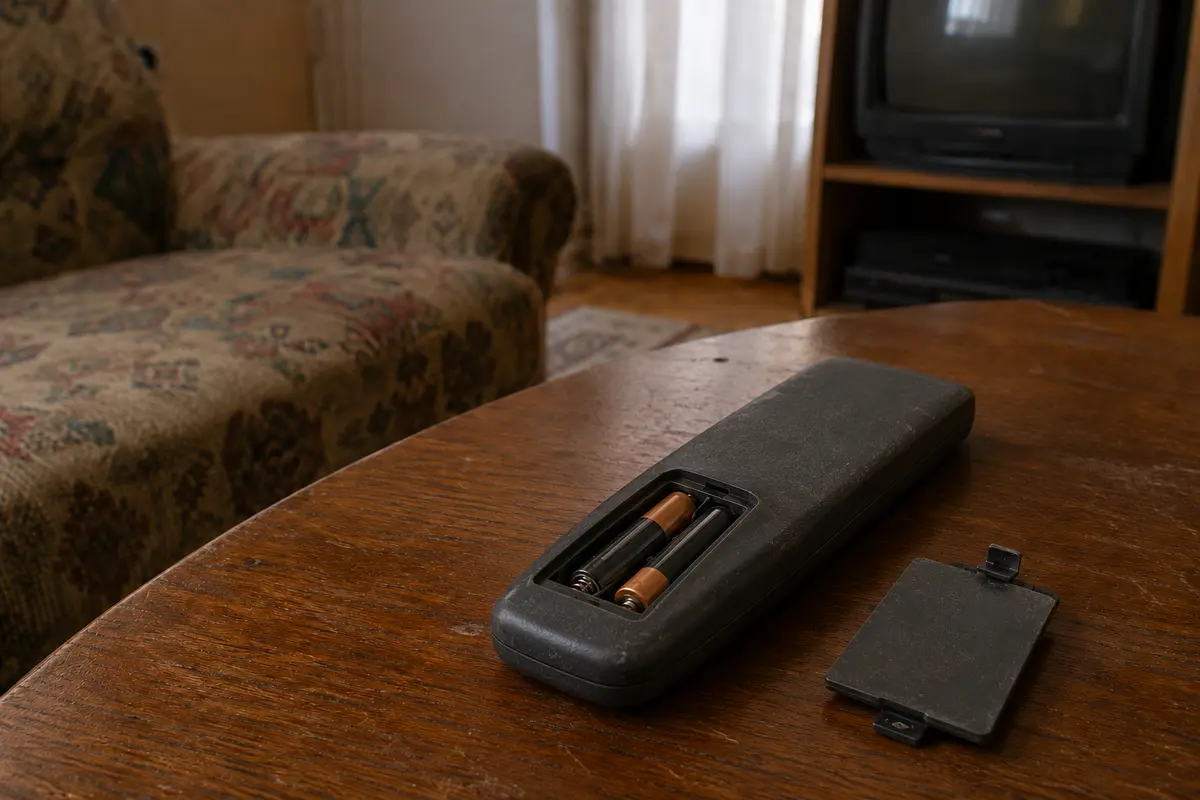
Finding the remote did not always solve the problem. You pressed a button, but nothing happened. Then you pressed harder, aimed it directly at the television and tried again. Finally, you tested the mysterious angle that had worked the day before.
If that failed, someone removed the battery cover. They rolled the batteries, turned them around and put them back in place. A light tap against the palm sometimes helped. Most families bought new batteries only after every household trick had stopped working.
Remote-control technology predated these 1990s scenes by decades. According to Zenith’s history of the TV remote, the company introduced a wired model in 1950. It followed with the wireless Flash-Matic in 1955. By the 1990s, the remote had become an ordinary part of family life. People noticed its importance mostly when it vanished.
Smart televisions arrived, but remotes still disappear
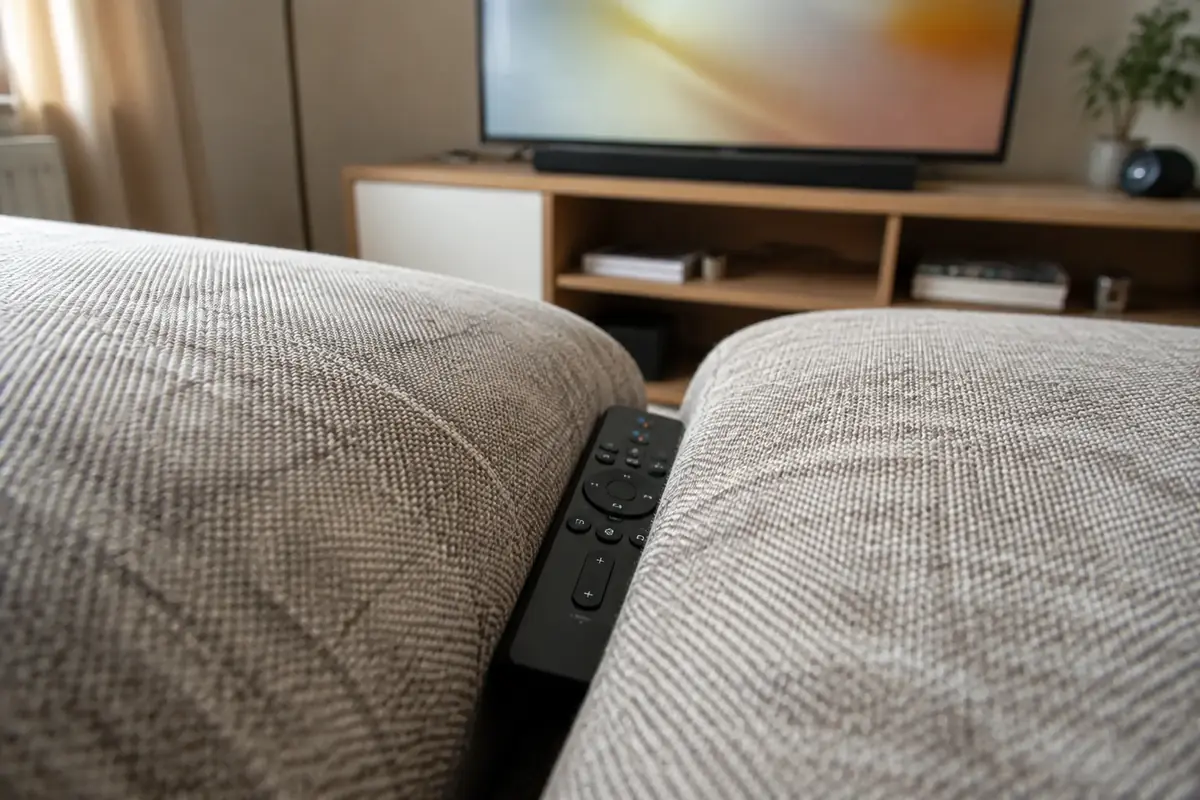
Today, televisions offer apps, voice control and more content than anyone could watch. A phone can replace the remote in seconds. Screens, channels and viewing habits have changed. Yet the remote still slips between the cushions.
In the 1990s, we walked a few steps to the television. Today, we search the sofa, check the table and question everyone in the room. Only then do we reach for a phone. Our 90s TV memories may belong to older screens, but the lost-remote ritual survives.
What happened in your home when the remote went missing—did you use your foot, call the youngest person or actually get up?