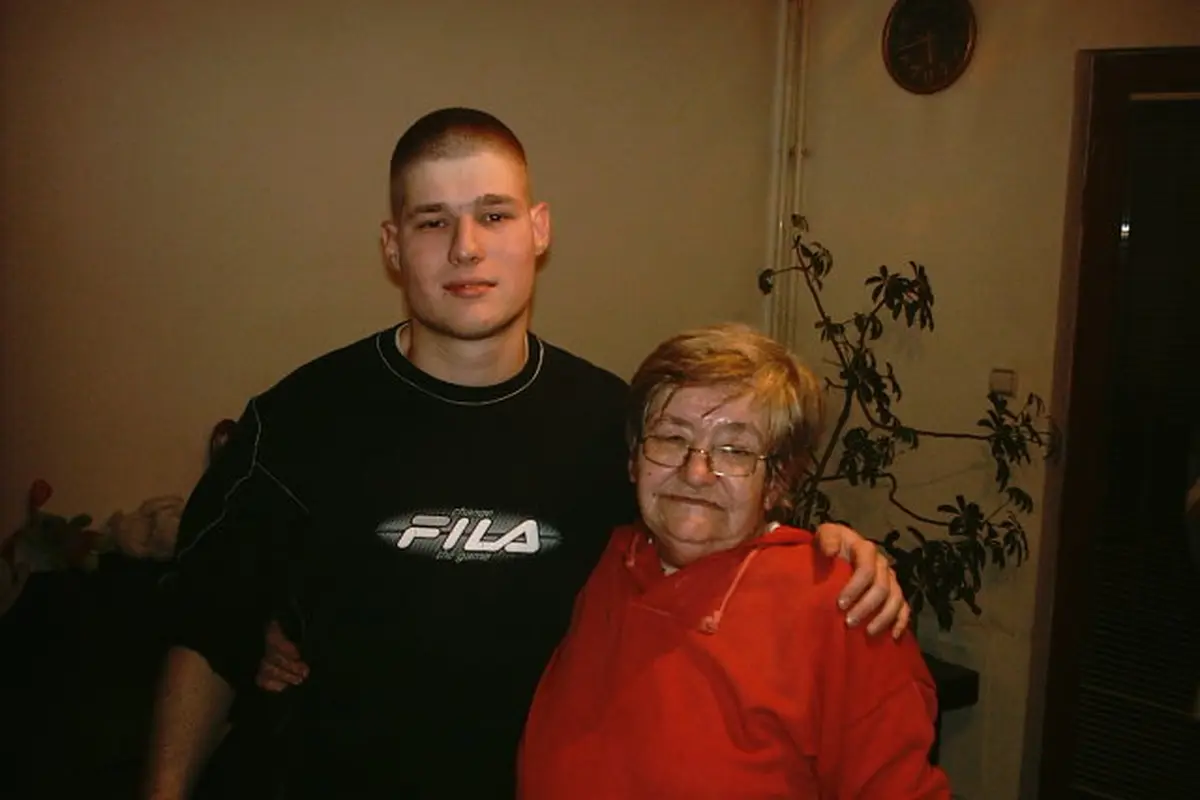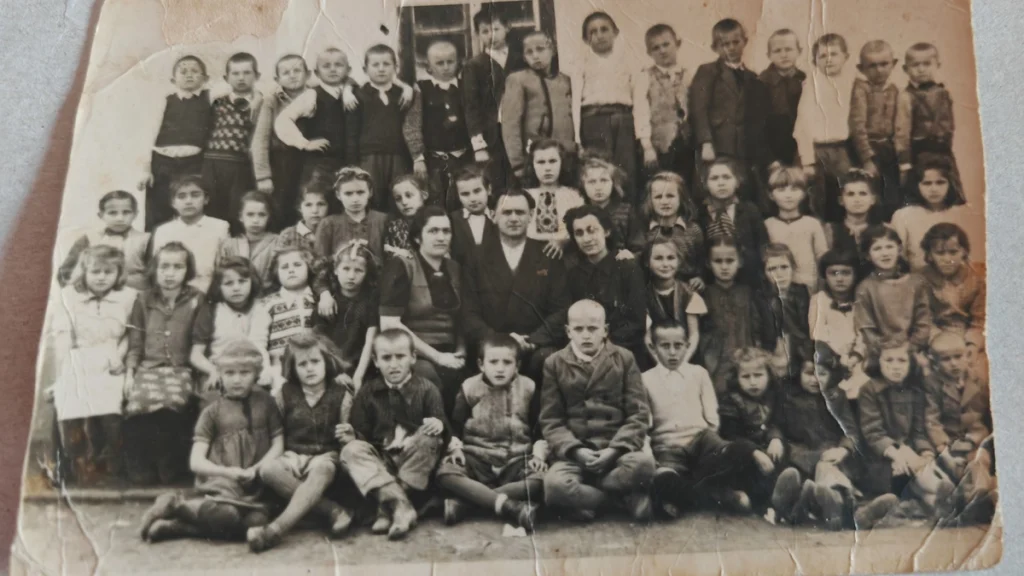
My grandmother Slobodanka was a child of war and a pilot’s daughter. In the story that follows, my mother Slavica tells us about her life.
This article was written at the request of my mother, Slavica. She wanted to preserve the story of her mother, Slobodanka Tasić, née Bosiljčić—my grandmother—a woman who endured a difficult childhood, family losses, and years of silence, yet gave her children love, honesty, and dignity.
On this website, I have previously written about life in Yugoslavia in the 1990s through the eyes of a child and about how memories were once preserved in objects and family photographs, often in a living room filled with old belongings. This article is different and far more personal. It is not merely a glimpse into the past, but a part of my family’s history.
My mother entrusted me with her memories and gave me permission to publish them on this website. I present her story in the first person, as she told it, with only essential editorial changes. Some events come from family accounts and reflect her personal memories and understanding, while the dates of births and deaths are supported by preserved family documents.
From this point on, I will let my mother Slavica tell the story in her own words.
How a Family Secret Was Revealed
My name is Slavica, and I was born in Belgrade in 1965. I want to tell the story of my mother, the woman to whom I owe immeasurable gratitude for everything she gave me in life. Her life was extraordinarily difficult, filled with pain, loss, and secrets that she carried within her for years. When I was about six years old, my mother Slobodanka and I went shopping at Kalenić Market in Belgrade, which at the time was the best-stocked market in the city. As we walked between the stalls, a tall, elderly lady in a blue dress, with her hair beautifully arranged, passed beside us. My mother paused for a moment, looked at her, and quietly said to me, “That is my grandmother.”
As a child, I could not understand what that meant. If this woman was her grandmother, how was it possible that I knew nothing about her? So I naturally asked, “Then why don’t you say hello to her?” My mother gave only a brief reply: “Oh, leave it... I will explain one day.”
Photographs and Documents from an Old Wardrobe
Her answer made no sense to me then, but I remembered it. I learned the truth only when I was fourteen. Out of curiosity, I searched the drawers of a wardrobe and found carefully wrapped old photographs and yellowed documents in one of them. Time had left its mark on them, and even then I understood that I was holding something very old and important.
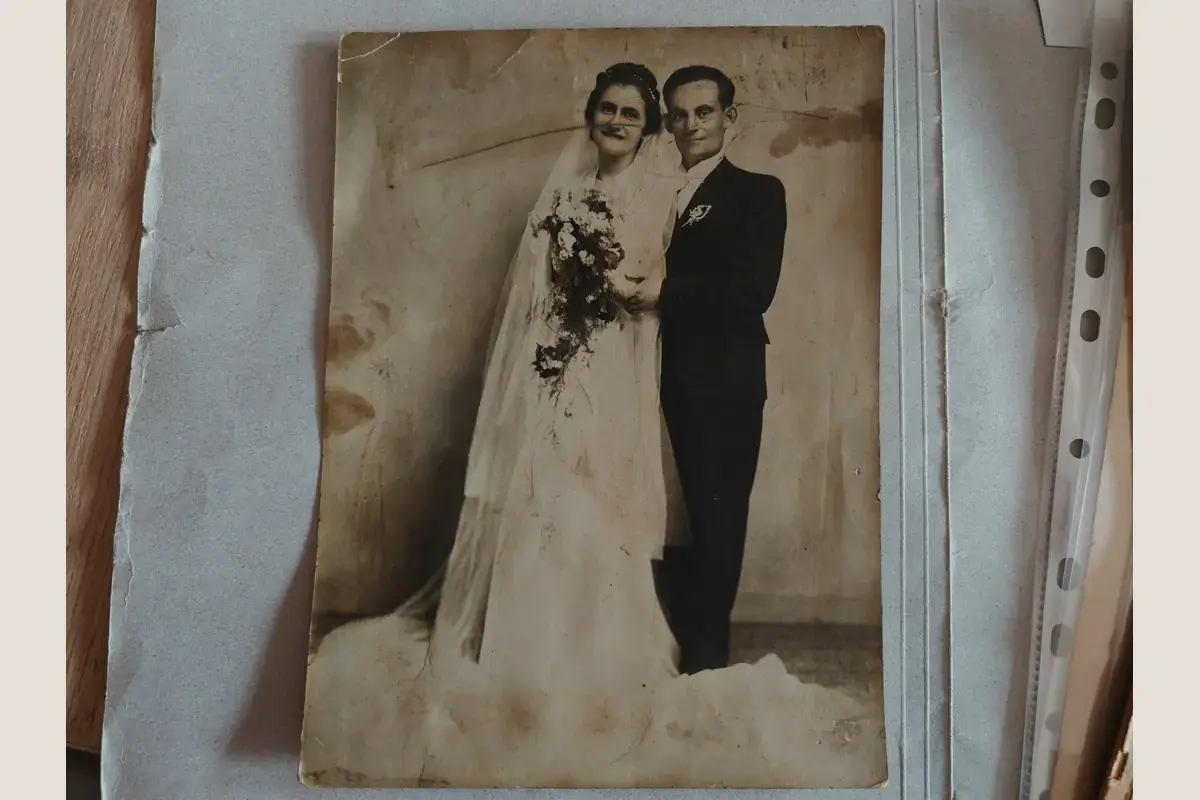
One photograph in particular caught my attention: a bride in a long white wedding dress and veil, with a groom standing beside her. I immediately called my mother and asked, “Who are these people?” She looked at the photograph and quietly replied, “They are my mother and father.”
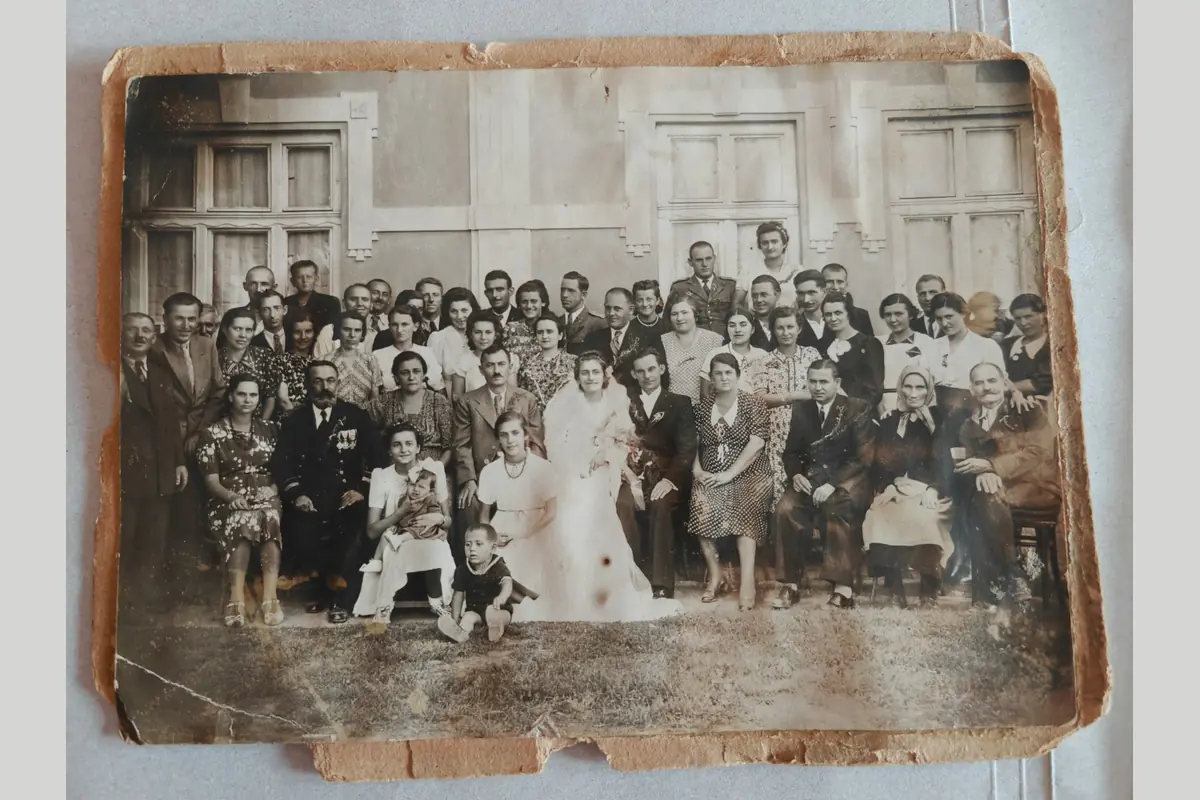
I was astonished. Until that moment, I had believed that my mother had no one because she had always said that she was an orphan. I learned that her mother, Nada, or Nadežda, and her father, Budimir, had married in Pančevo in 1939 and later had my mother. This was only the beginning of a family story I had never known.
Slobodanka’s Birth
My mother Slobodanka was born in Pančevo on 8 February 1941, less than two months before the Second World War reached this region. Her arrival should have marked the beginning of a happy family life, but historical events soon changed the fate of the entire family.
When I learned at fourteen who her parents had been and saw their wedding photograph for the first time, I began to understand that my mother had carried a burden throughout her life that she had never spoken about. Little by little, the story of her childhood, the war, and a family torn apart almost overnight began to unfold before me.
At the time, I did not yet know how far into the past that story would take me or how much later I would come to understand why my mother so often said that she was an orphan.
The War Took Everything
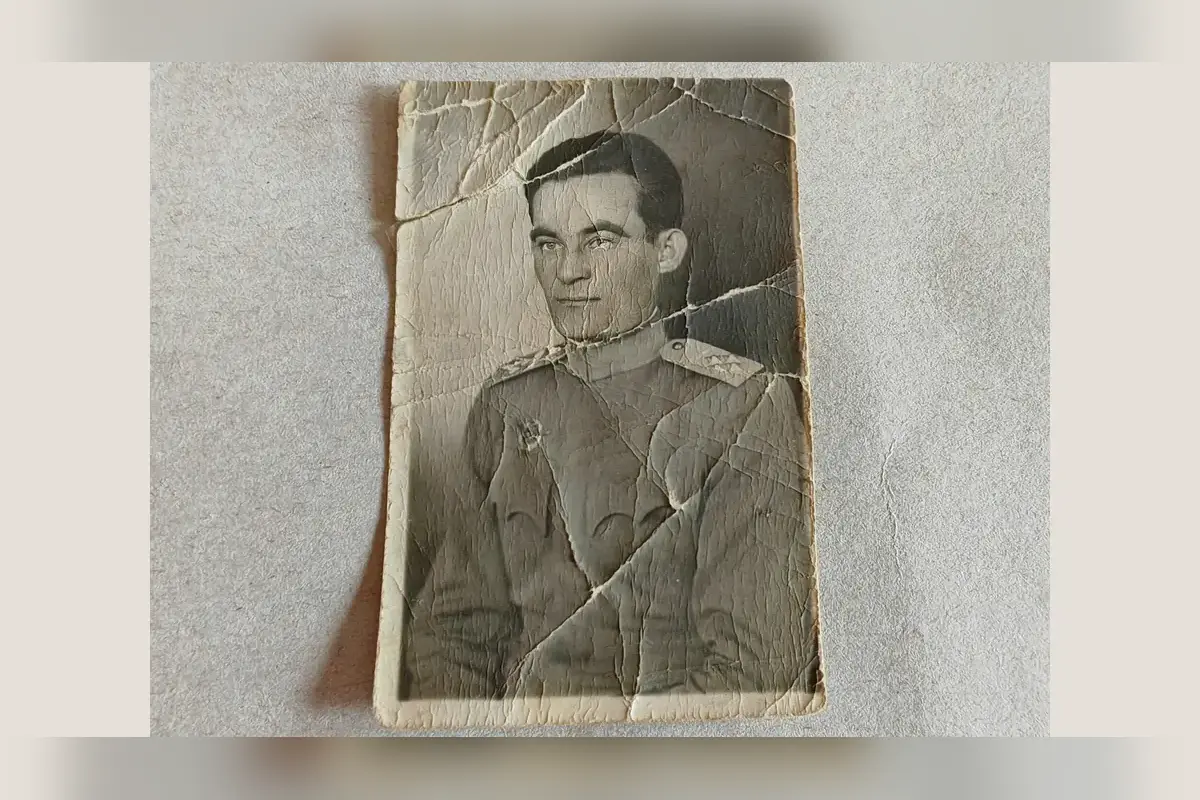
My mother’s father, Budimir Bosiljčić, was a military pilot in the Royal Yugoslav Air Force. From his military service book, I learned that he had completed flight school in Novi Sad and served at the Pančevo airfield as a fighter pilot. I have documents that confirm this.
Our family remembered him as an exceptional pilot and aerobatic flyer. According to a story passed down in the family, he once flew an aircraft beneath King Alexander Bridge over the Sava River in Belgrade—an achievement people spoke about for a long time.
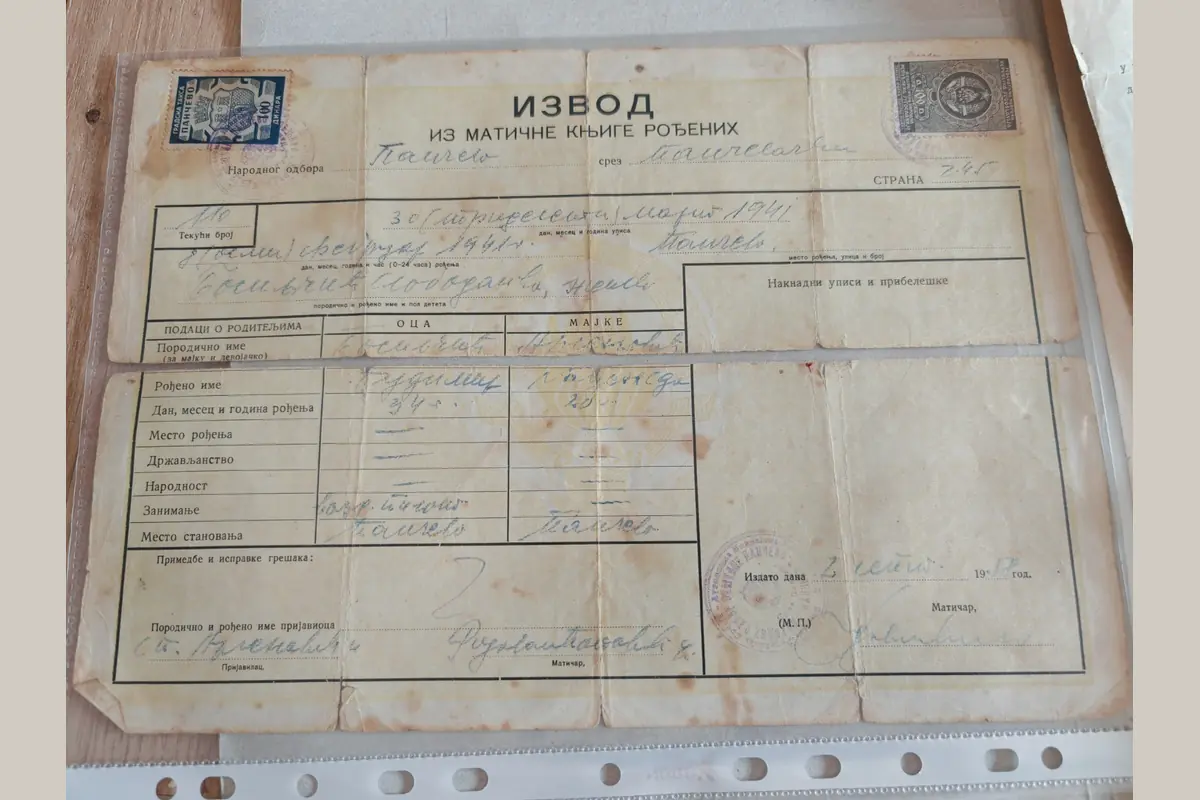
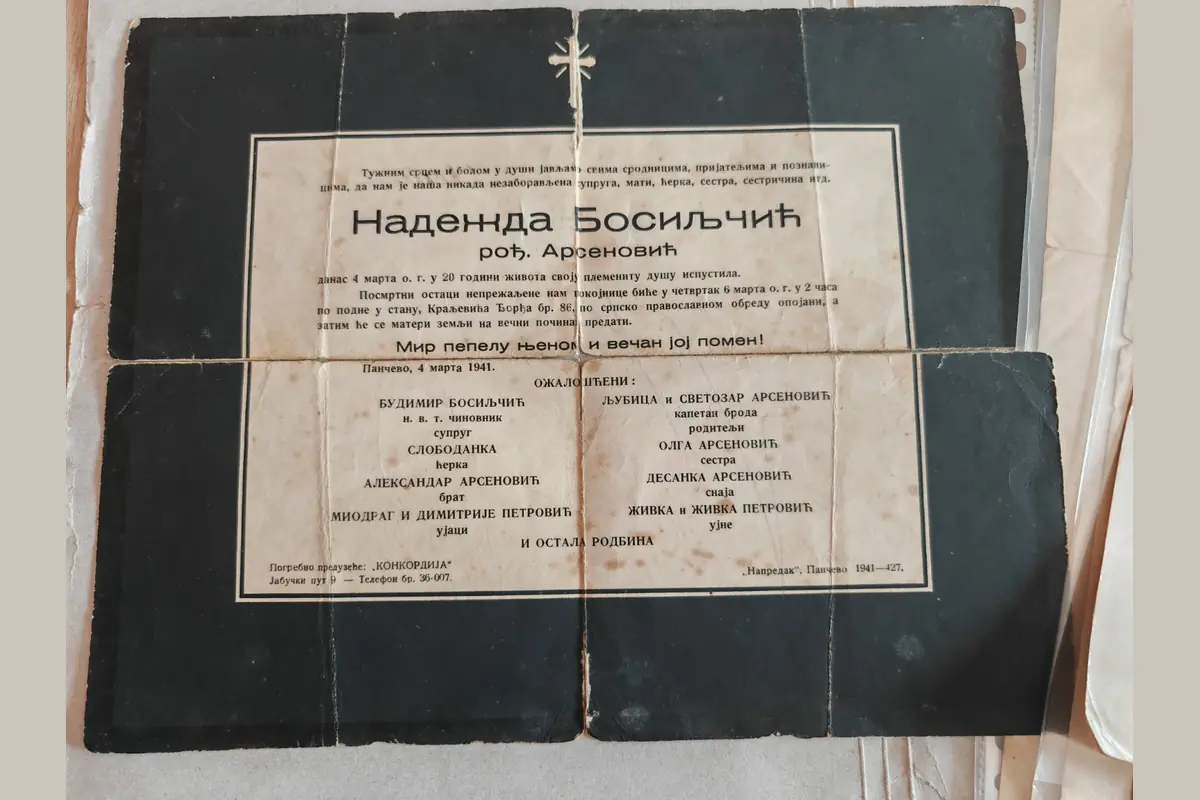
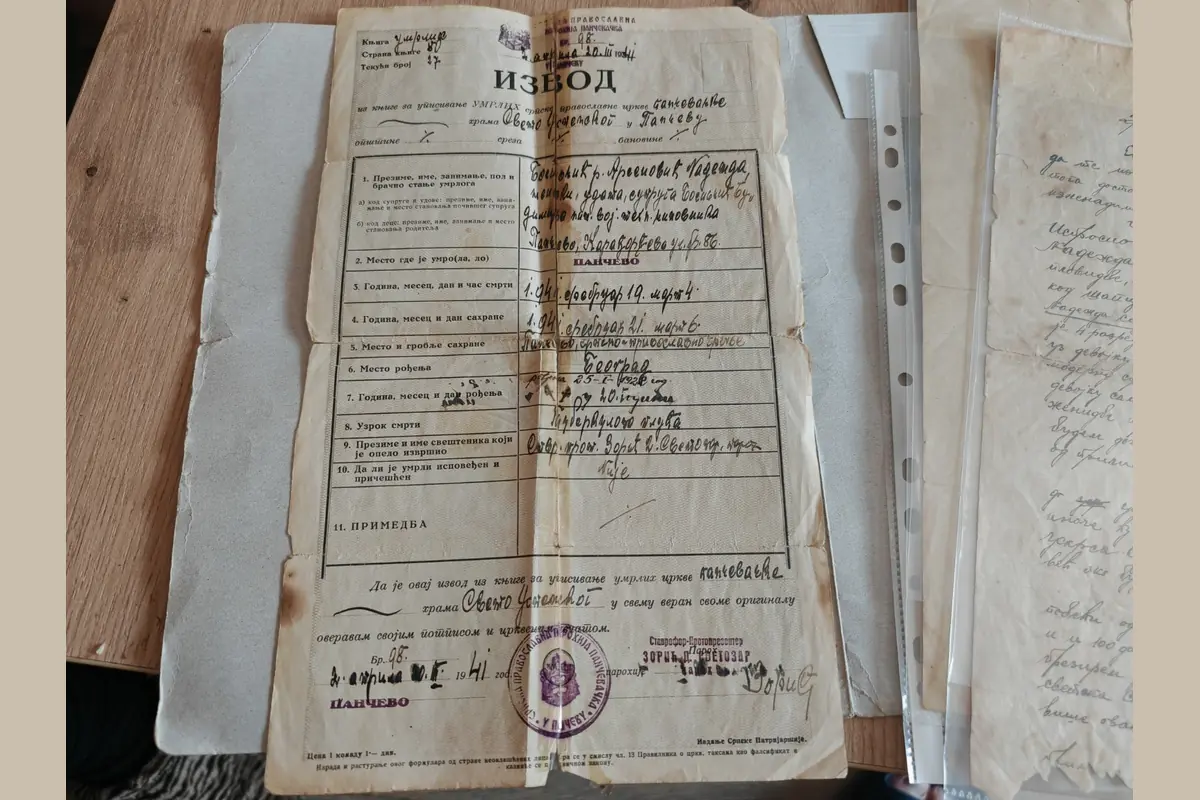
My mother Slobodanka was born on 8 February 1941. Less than a month later, she lost her mother. My grandmother Nada, or Nadežda, died of pulmonary tuberculosis. I still keep her death notice as a record of that tragic event.
When the war and the German bombing began in April 1941, Budimir took his two-month-old daughter to his native village of Banjani near Ub and placed her in the care of his mother, Hristina Bosiljčić.
Budimir’s Wartime Fate
His military service book also showed that in 1940 he was assigned to the Sixth Aviation Depot. I reconstructed what happened to him during the war by reading numerous historical books and documents. Historical literature states that he was a commander in the Ub area and that many knew him as a Chetnik voivode. In the same sources, I found information that the Partisans killed his brother, Momir Bosiljčić, in 1941. According to one of those sources, Budimir then obtained an aircraft from the Germans and carried out an attack on a Partisan detachment. I found this claim in historical literature while researching my grandfather’s fate. All I know with certainty is that he was alive until 1945. To this day, I have been unable to discover what happened after that.
Growing Up Without Parents
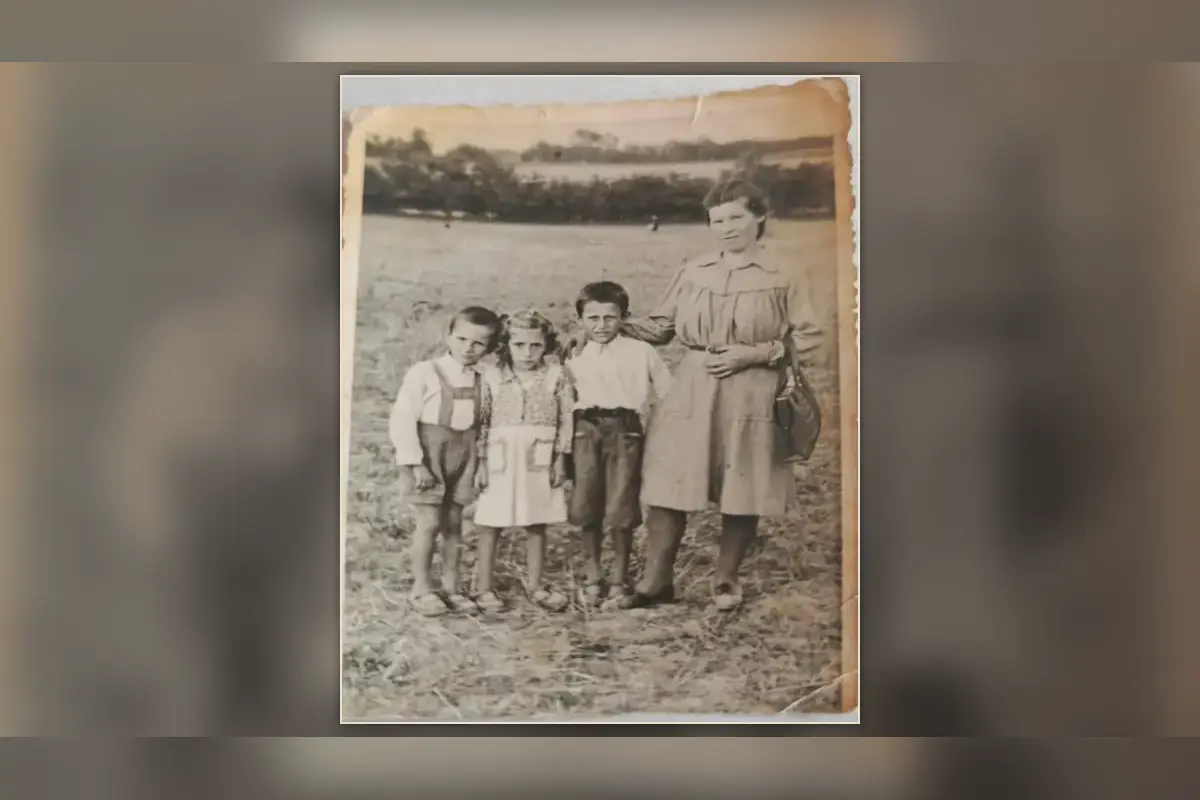
During that time, my mother grew up with her grandmother Hristina. Hristina lost two sons in the war, while her only surviving daughter was Vukosava, whose married surname was Stojadinović. Hristina carried the responsibility of caring for four young grandchildren on her shoulders.
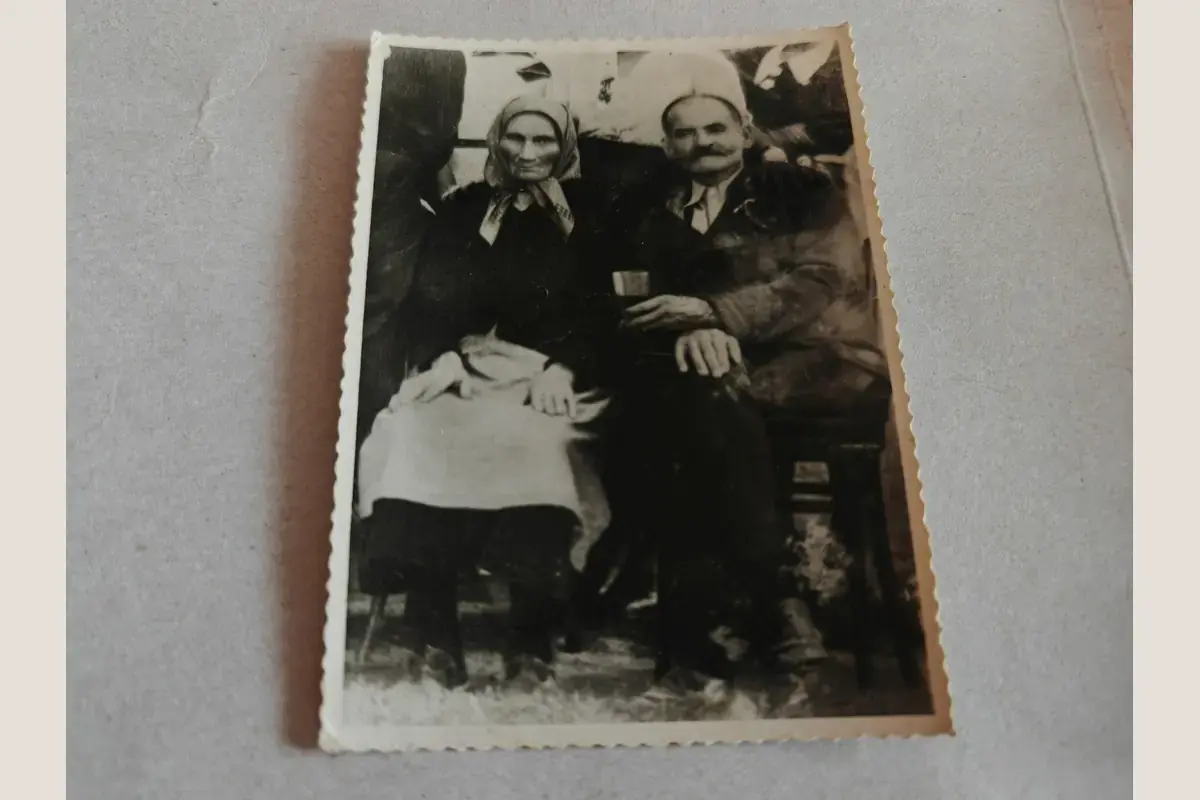
One of my mother’s stories still affects me deeply. After the war, members of the new authorities came to Banjani looking for Budimir. As my mother told me, they lined up Hristina, Vukosava, and the four children, threatening to shoot them if they did not reveal where he was.
In a book by historian Bojan Dimitrijević, I read that Partisans once saw Budimir in Banjani speaking with his sister Vukosava. Soon afterwards, Vukosava was arrested and spent three years in an OZNA prison.
While Vukosava was in prison, Hristina cared for the children alone. She had only one cow, but it was confiscated with the explanation that it was “for the needs of the people.”
She cried and begged them to leave it, explaining that the cow fed her four grandchildren, but no one showed any understanding. When Vukosava was released from prison after three years, she took my mother to Belgrade to stay with Mrs Ljubica—the same woman in the blue dress whom I had seen at Kalenić Market as a little girl. She asked Ljubica to take Slobodanka in, send her to school, and help her begin a life of her own. Ljubica refused. Several years later, Vukosava tried again. This time, Ljubica said that she would accept the girl only if she gave up the Bosiljčić surname, because her father had meanwhile been declared a war criminal and sentenced in absentia. My mother would not agree. Even as a child, she refused to give up her father’s surname. She returned to Banjani, where she lived until she was fifteen.
An Independent Life in Belgrade
She then came to Belgrade alone. She worked as a domestic servant, cleaning houses and helping in the homes of wealthier people, including doctors. After several years, she could no longer live that way. Every day, newspaper in hand, she went from one job listing to another. There were no telephones or internet.
People walked from address to address, hoping someone would give them a chance. One day, she entered a glass-cutting shop. The owner, Dimitrije, looked at her and asked, “Where are you from?” “Banjani, near Ub.” “And who is Budimir Bosiljčić to you?” My mother hesitated. At the time, merely mentioning that name could bring trouble. Quietly, she replied, “He is my father.”
Dimitrije looked at her and said, “Bring your employment record book. You start work tomorrow. I saw your father fly his aircraft beneath the bridge.” After so many years of fear, rejection, and humiliation, these were the first words that restored my mother’s faith that she was not alone.
From Fear to Pride
When my mother told me who my grandfather had been, I did not feel proud. Today, I regret that.
At the time, however, I was a child growing up in a different era. At school, we were taught one version of history. Chetniks were presented exclusively as serious criminals, while the Partisans were portrayed as the only heroes of the war. As pupils, it never occurred to us to ask questions or consider that history might be more complex than our textbooks suggested. Every morning when I entered the school, a large portrait of Tito greeted me. His portrait hung above the blackboard in every classroom. It was also displayed in the head teacher’s office, the staff room, and other rooms. It was part of everyday life, and no one questioned it.
That is why I never dared to tell anyone that my grandfather had been a Chetnik voivode. Merely mentioning this fact caused fear. I grew up feeling that I had to hide something that was part of my family’s history.
Only many years later did I begin reading archival material, historical books, and documents. I then realised how complex the history of the Second World War in Yugoslavia was, how many human stories had been left untold, and how important it is to search for facts.
Today, I feel no shame. I am proud that I found the strength to explore my family’s past and preserve the memory of my ancestors. Not because I believe they were without fault, but because I believe every family deserves to have its story told and heard.
Thank You, Mother
Today, my greatest regret is that I did not understand my mother well enough as a child, or later as a young woman.
I did not understand what it meant to grow up without a mother. I did not understand what it meant to be an orphan. I did not understand how deeply war, hunger, fear, and rejection had marked her soul.
Only now, when I look back on her entire life, do I understand how brave she was.
She married my father, Velibor. She gave birth to me and my sister Dragana. Despite everything she had endured, she did everything in her power to guide us along the right path and raise us to be good and honest people.
Her life was never easy. She carried her illnesses, her sorrows, her unfulfilled wishes, and many tears that often no one saw.
Today, I wish I could have understood her better. I wish I had given her more hugs, more patience, and more love. I wish I had told her more often how much I loved her and how grateful I was.
We cannot turn back time. But we can preserve memories.
This story is my way of preserving the memory of my mother Slobodanka—her difficult life, her strength, and her love. I want it to be recorded that, despite everything life took from her, she still managed to give her children what mattered most: love, honesty, and dignity.
Thank you, Mother, for every sacrifice you made, every tear you hid, every word of encouragement you gave me, and all the love you gave us.
Only now do I truly understand what an extraordinary woman you were.
I love you. And I will always be proud to be your daughter.
My mother Slobodanka died on 31 December 2007.
I still dream of her. Even now, I sometimes find myself wanting to call her, as if she were still here. I miss her every day.
The Search for the Truth About Budimir
Questions remain for which I have been unable to find answers. The greatest of them is this: what happened to my grandfather, Budimir Bosiljčić?
For years, I have searched for any trace of him. I read books and archival material, speak with people, and record family memories. One of our relatives, a military officer who researched the fate of Budimir Bosiljčić, told me that after the war, during 1946, mass executions took place in Belgrade of people whom the new authorities considered undesirable. He also told me what he had learned about possible locations of mass graves.
His account affected me deeply. Nevertheless, I am aware that historians are still researching these questions, that interpretations differ, and that there are still no definitive, documented answers for many individual fates.
That is why I continue searching for the truth about my grandfather. I am not seeking revenge. I am not asking for anyone else’s suffering to be diminished.
I simply want to know what happened.
I believe every family has the right to know where their loved ones ended up, and that every victim—regardless of the side to which they belonged—deserves to have their fate investigated and commemorated with dignity.
Perhaps I will never learn what happened to Budimir Bosiljčić.
But as long as there is hope that the truth can be found, I will continue searching.
I owe that to my grandfather.
I owe that to my mother.
And I owe it to my family.
A Meeting After Half a Century
One day, when I was already married and had two children, I again asked my mother something that had troubled me for years.
“Why do you always tell me about your father, but never about your mother’s family?”
Reluctantly, she replied:
“Oh, leave it...”
But I did not give up.
I asked where they had lived, whether her aunt was still alive, what her name was, and whom she had married.
After a long silence, she said only:
“I know they lived in Krunska Street.”
She also gave me the building number.
That was enough.
I went to the street with my two sons. At the time, Krunska Street was called Proleterskih Brigada Street. I asked an elderly lady where Krunska Street was.
She smiled and said:
“My dear, it is called Proleterskih Brigada Street now.”
She explained how to get there.
The Door in Krunska Street
When I reached the number my mother had given me, I saw the surname of my mother’s aunt and her husband on the nameplate beside the entrance.
My heart was pounding.
I went upstairs, rang the bell, and waited.
An elderly lady opened the door.
I was speechless.
She looked so much like my mother that, for a moment, I thought I was looking at her reflection in a mirror, only much older.
I gathered my courage and asked:
“Is your name Olga?”
She looked at me in surprise.
“Yes... And who are you?”
I could not speak at first.
After a few moments of silence, I asked:
“Did you have a sister named Nadežda who died in 1941?”
She was now visibly emotional.
“Yes... I did. And who are you?”
Then I said quietly:
“I am her granddaughter.”
For several seconds, we looked at each other without saying a word.
It was as if we were both trying to understand what had just happened.
Then she said softly:
“Come in.”
Her husband, a retired officer of the Yugoslav People’s Army, was also in the flat.
They seated us at the table.
They offered me coffee and my sons cakes.
Olga looked at my children for a long time, then smiled and, as if speaking to herself, said:
“So... I am a grandmother...”
She paused for a moment.
“No... I am a great-aunt...”
It did not matter what she called our relationship.
After so many decades, a family separated by war was once again sitting at the same table.
A Legacy That Did Not Disappear
As we sat in her flat, I listened to the story of Nadežda and Budimir as she remembered it.
I was glad finally to hear something about my grandmother’s family, but at the same time it hurt to hear how disparagingly she spoke about my grandfather Budimir.
I did not argue with her.
It was her memory, her experience, and her right to carry it as she had lived it.
But I could not understand how so much bitterness could still remain after all those years.
I wondered whether it was possible for time to bring no peace at all. Is it possible that some wounds never heal?
I now possess a letter that my grandmother Nadežda wrote to her husband Budimir. When I read it, I can feel how much they loved each other. Every word is filled with tenderness, longing, and love. To me, this letter is one of our most precious family documents.
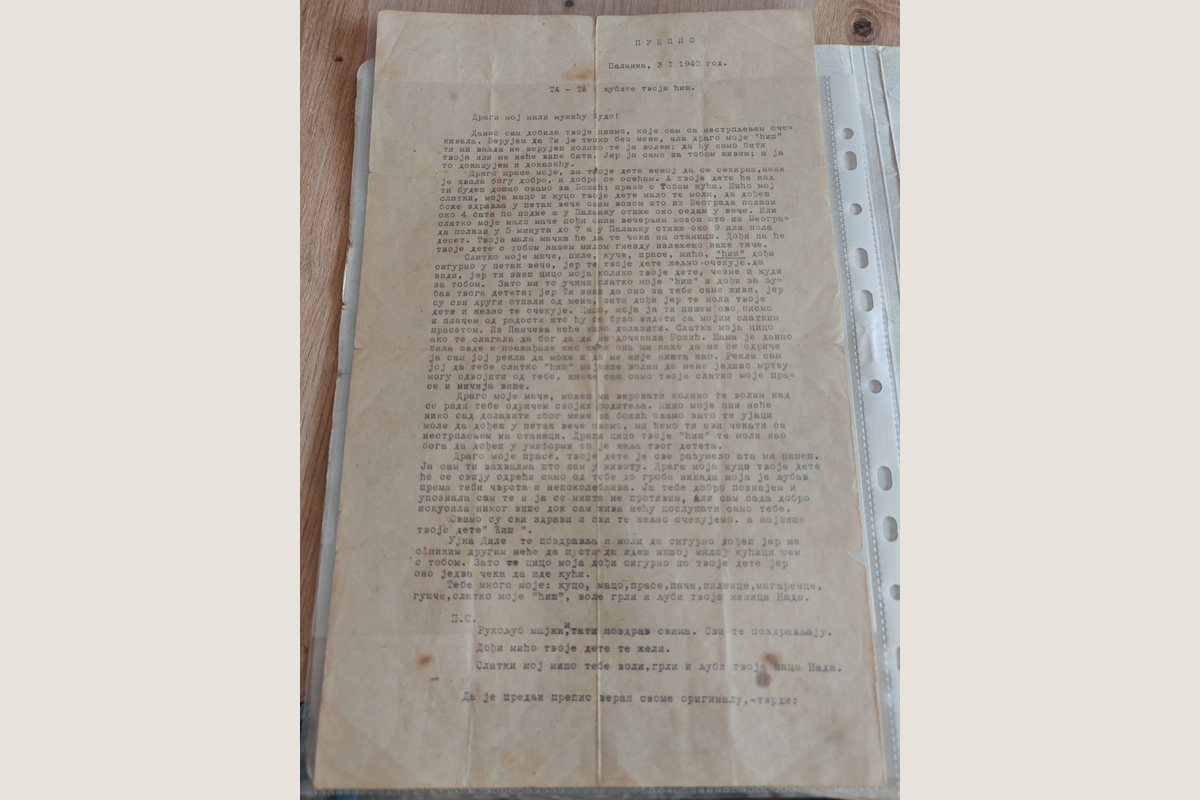
That made it even harder to listen to words that showed not a trace of understanding for Budimir.
Objects That Preserve Memories
We also spoke about the old family objects I had preserved. I told her that I had a small wooden serving tray, carved and painted by hand, as well as several old containers for coffee, sugar, and salt.
She listened carefully and then, to my surprise, described their colours and appearance.
She stood up, went to a cupboard, and brought out two trays.
One was larger, and the other was medium-sized.
They were exactly like mine.
At that moment, I could not hold back my tears.
She said quietly:
“Yes... They belonged to Nada.”
At that moment, I felt that I was not merely holding old objects in my hands.
I was holding a part of my grandmother’s life, the life of a woman I had never met.
Yet before we parted, she said something that hurt me deeply.
She said that she never wanted anyone from the Bosiljčić family to contact or visit her again.
I then understood that, even after all those years, she did not want to see my mother either.
I have never been able to understand that.
The wars may have ended long ago.
But sometimes their consequences continue to live in people’s hearts far longer than the armed conflicts themselves.
And that may be the saddest part of this family story.