
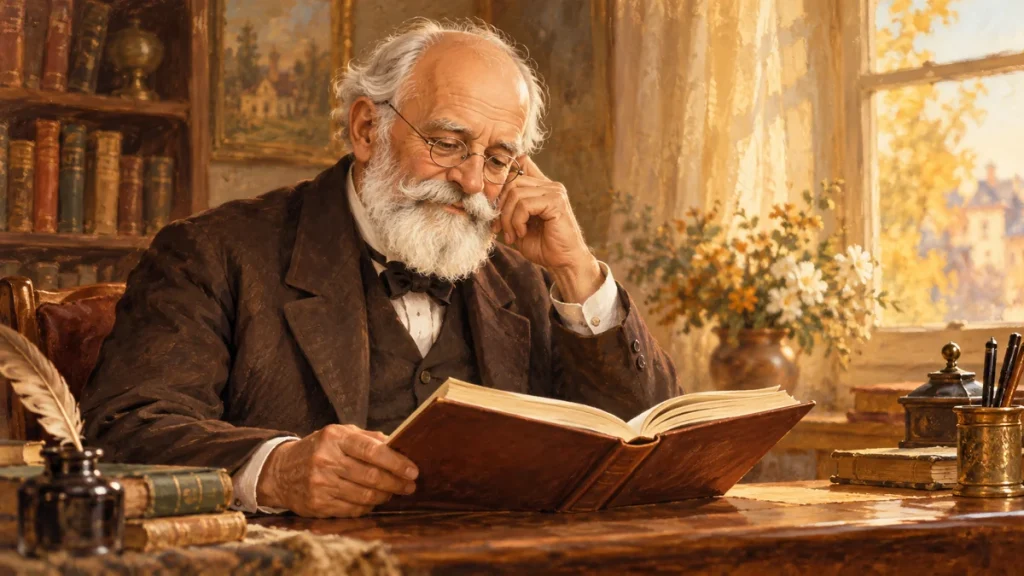
The poems of Jovan Jovanović Zmaj have stayed in the memories of generations of readers, alongside old schoolbooks, classroom performances and the familiar voice of someone reading aloud. Some remember the ducklings in their unusual classroom, others a frog reading a newspaper, or a little rider who turns ordinary household objects into everything he needs for an adventure.
These poems gave children a chance to imagine a scene, follow a playful rhythm and laugh at an unexpected ending. When we return to them as adults, we sometimes notice details that escaped us when we were young. That is one reason why it is worth opening an old book again and discovering what still feels alive in its pages.
Who Was Jovan Jovanović Zmaj?
Jovan Jovanović Zmaj was born in 1833 in Novi Sad and died in 1904 in Sremska Kamenica, both located in present-day Serbia. He was a physician, poet, translator and editor. His famous nickname, Zmaj, meaning "dragon" in Serbian, was connected to a satirical magazine of the same name that he founded.
He wrote romantic, patriotic and satirical poetry, as well as poems for children. One of his most important contributions to children's literature was Neven, a magazine he edited from 1880 until his death. Through its pages, his stories and verses reached young readers and became part of their early encounters with literature.
Three Poems by Jovan Jovanović Zmaj Worth Revisiting
The humour and imagination in Zmaj's poetry are easiest to appreciate through individual works. These three poems show how he could turn a classroom, an animal or a child's game into a memorable little story, complete with recognisable characters and an amusing ending.
Pačija škola (The Duck School): A Serious Teacher and Some Unusual Pupils
In Pačija škola, an old drake takes on the role of a teacher. He puts on his glasses, calls the names of his pupils and tries to teach them something useful. Unfortunately, despite all his effort, the young ducklings never progress beyond their familiar quacking.
The humour comes from the contrast between a serious classroom routine and pupils who, after all, are still ducks. It is easy to picture the teacher expecting improvement while his class continues to respond in exactly the same way. Repetition gives the poem its rhythm, and the ending brings the whole scene together.
The poem also mentions a stick used for discipline, reflecting an older view of strict schooling. When reading it with children today, this detail deserves a brief explanation. It belongs to a past approach to discipline and should not be treated as an example to follow.
Žaba čita novine (The Frog Reads a Newspaper): News from a Frog's Point of View
A frog sits on a water lily leaf, reading a newspaper. But unlike a human reader, she is interested in one particular question that matters greatly to frogs: when will the storks finally leave?
An ordinary human activity, reading the news, becomes a funny scene from the animal world.
What makes the poem especially charming is that the frog has a perfectly understandable reason to worry. Readers can laugh at her behaviour while also recognising why that particular piece of news matters so much to her.
Although it is a short poem, it creates an opportunity to talk with children about perspective. The same event can mean something completely different depending on who is experiencing it.
Mali konjanik (The Little Horseman): An Adventure Made from Everyday Objects
In Mali konjanik, a scarf becomes a saddle, a piece of rope serves as a bridle, and a child imagines himself as a rider ready for a distant journey. When his makeshift horse refuses to move as he wishes, the little rider simply continues the adventure on his own.
It is easy to recognise the way children give ordinary objects entirely new purposes. An adventure does not require expensive toys or elaborate equipment. Sometimes all it takes is an idea, a little movement and a few things found around the house.
Even readers who grew up long after the poem was written may recognise something familiar in that kind of imaginative play.
All three poems can be read in their original Serbian in the digital collection Zmajeva pevanija, available through Project Rastko.
How Zmaj's Poems Became School and Family Memories
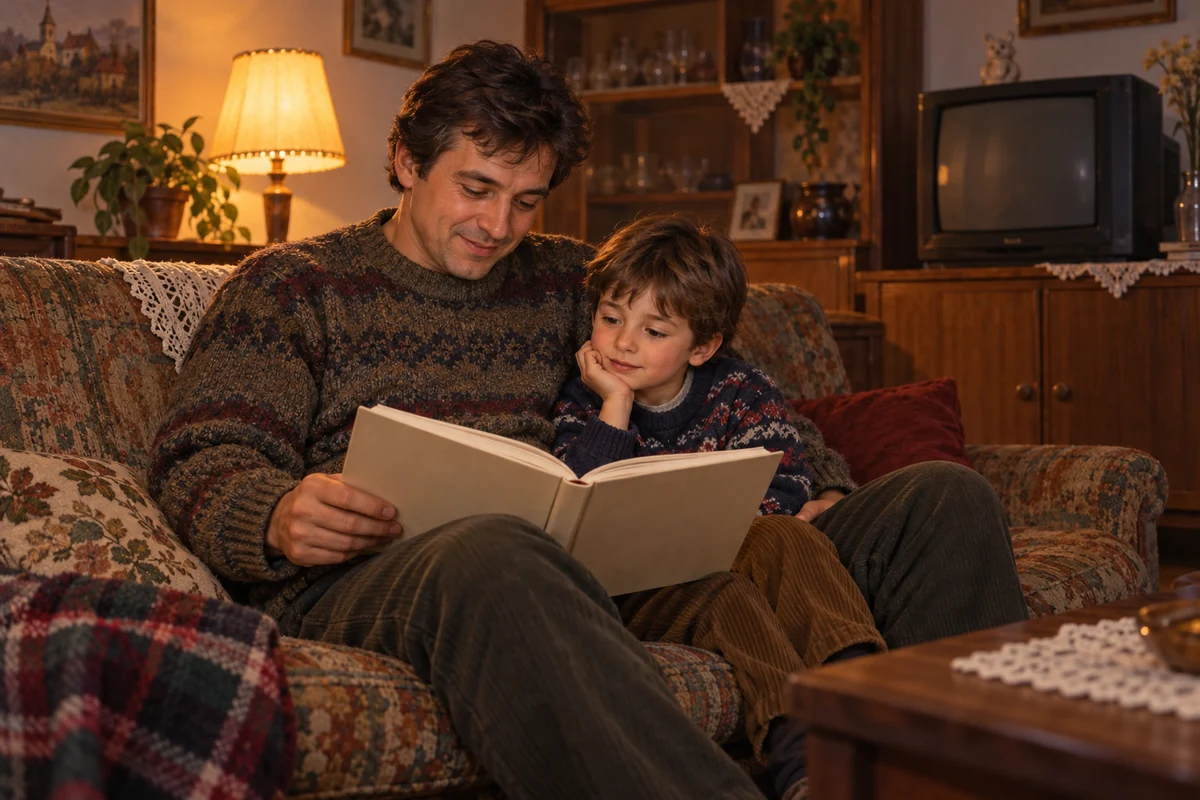
For many people who grew up in Serbia and across the former Yugoslavia, Zmaj's poems are closely connected to learning verses by heart. The memory might include feeling nervous before a school performance, waiting for a turn to recite, or practising at home while a parent listened patiently.
Reading these poems aloud gives them a different kind of life. The teacher in Pačija škola can sound wonderfully serious, the newspaper-reading frog genuinely worried, and the little horseman full of impatience and excitement.
A change of voice and a few simple gestures are enough to bring the characters to life, almost like a small performance in the family living room.
Books shared their place in the home with toys, cassette tapes and television sets. That is why the memory of a favourite poem can become part of a much larger picture of childhood.
It may bring back the atmosphere of a 1990s living room, where families gathered to read, play, watch television and spend time together. These ordinary moments often become the memories we treasure years later.
From a Children's Magazine to Television: Zmaj and Neven
Jovan Jovanović Zmaj also has an interesting connection to classic television. The children's television series Neven, created during the 1970s, brought the world of his magazine to the screen.
The character of Čika Jova, or Uncle Jova, was portrayed by actor Mića Tomić. Another important figure behind the programme was Timothy John Byford, the British-born television director who became well known for his work on children's programming in Yugoslavia.
The series combined acting, music, humour and riddles. Segments such as Čika Jovina pošta (Uncle Jova's Mail) showed how the literary world of the magazine could be transformed into playful television entertainment.
Through Neven, the poet gained a recognisable face on television, surrounded by a colourful collection of characters and their everyday adventures.
For anyone interested in childhood television memories, Neven makes an interesting companion to the classic cartoons of the 1980s and 1990s. They were different kinds of programmes, but together they remind us how varied children's television could be before the age of streaming.
More information about the programme and its cast is available in the Radio Television of Serbia's presentation of Neven, published in Serbian.
How to Read Jovan Jovanović Zmaj's Poems with Children Today
Introducing these poems to children does not require a large collection or a carefully prepared lesson. Choosing just one poem, reading it slowly and allowing time for questions can be enough.
- Start with a scene children can imagine. Ducklings sitting in a classroom or a frog reading a newspaper can easily become the starting point for a drawing, a little performance or a conversation.
- Explain unfamiliar words. The language of older poetry may sound unusual to modern readers. A short explanation can help children follow the story without interrupting its rhythm too much.
- Ask what they found funny or surprising. After reading Žaba čita novine, for example, you might ask why the frog is so interested in news about storks.
- Leave room for their own imagination. After Mali konjanik, children could invent an adventure of their own or draw a picture of where they would like to travel.
It is also worth remembering that these poems were written in a very different society. Some expressions, customs and attitudes towards raising children may need explaining today. Reading together offers an opportunity to discuss those differences while still enjoying the humour and imagination of the stories.
The poems of Jovan Jovanović Zmaj can still bring different generations together. For adults, they may revive memories of schooldays, old books and familiar family voices. For children hearing them for the first time, they offer a chance to discover memorable characters and find a favourite poem of their own.
In this way, the same old book can find a new place in family life.
Do you remember any poems by Jovan Jovanović Zmaj? Did you first hear them at school, during a family reading session or through the television series Neven? Share your memories in the comments.