
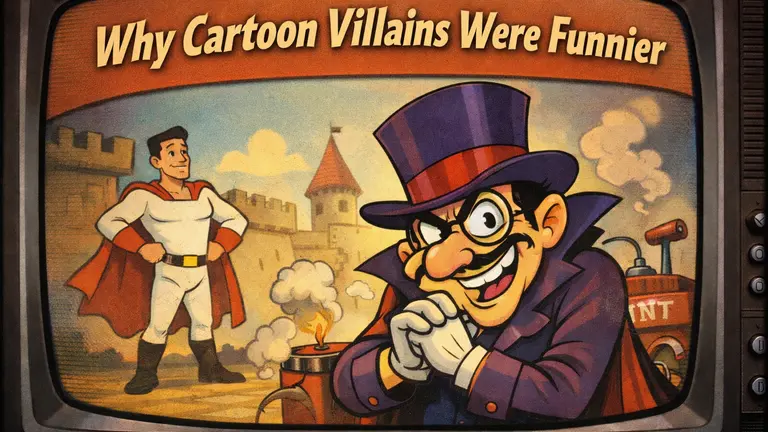
The villains we secretly loved
When we look back at classic cartoons, we often notice something interesting – even though heroes were meant to be the “good guys,” it was the villains who stayed in our memories the longest. Not because they were frightening, but because they were funny, clumsy, and surprisingly human. Their mistakes, exaggerated ambitions, and endless failures made them far more entertaining than flawless heroes.
In the world of classic animation, the villain was often the driving force of the story – and the main source of humor.
Perfect heroes, imperfect villains
Heroes in old cartoons were usually calm, capable, and almost always victorious. They represented order, stability, and control. Villains, on the other hand, were chaotic – full of elaborate plans that never worked, confidence without justification, and a tendency to overdo everything.
That imperfection is exactly what made them funny. Audiences naturally relate more to characters who fail than to those who always know what they are doing.
Comedy through failure
One of the main reasons villains were funnier is simple: they kept losing. Their defeats were never tragic – they were comedic. Every new scheme was just another opportunity for a gag, an explosion, a fall, or an ironic twist.
In classic cartoon shorts, villains often believed they were completely in control, only to end up trapped by their own plans moments later. This contrast between expectation and reality created timeless comedy.
Villains with personality
Unlike heroes, who often shared similar traits, villains were full of personality. They were nervous, dramatic, arrogant, stubborn, or overly serious. These traits gave animators more freedom to play with facial expressions, body language, and timing.
Even characters who were not true villains but tried to enforce order often became unintentionally funny. Their attempts at control usually caused more chaos than the problem they were trying to solve.
Slapstick and exaggeration
Villains were perfect vehicles for slapstick comedy. Their falls, collisions, and exaggerated reactions never broke the story – they enriched it. The audience expected the villain to fail, but never knew exactly how it would happen.
This kind of humor was visual and universal, which made it accessible to viewers of all ages and cultures.
If you enjoy this style of humor, you may also like reading fun facts about classic cartoons, which reveal how much creativity went into these animated worlds.
Why they stayed with us
Villains often received the best scenes, the most expressive animation, and the greatest creative freedom. Their speeches, reactions, and over-the-top plans were memorable even when they failed.
Over time, these characters became symbols of an era when animation was playful, flexible, and unafraid to exaggerate human flaws for the sake of laughter.
Villains as reflections of human weakness
Perhaps the biggest reason villains remain so popular is that they reflect human weaknesses in a harmless way. Ambition, jealousy, stubbornness, and overconfidence are traits we recognize in ourselves – but in cartoons, they become a source of humor rather than judgment.
That is why, even today, when we rewatch old cartoons, we often find ourselves rooting for the villain – not to win, but to fail in an entertaining way once again.
Humor that lasts for generations
Classic cartoons proved that comedy does not always have to come from heroes. Sometimes, the characters who fail, repeat their mistakes, and never learn are the most enjoyable part of the story.
If you love retro animation and timeless humor, you might also enjoy fun facts about The Flintstones, a series that perfectly balanced family-friendly storytelling with memorable, flawed characters.