
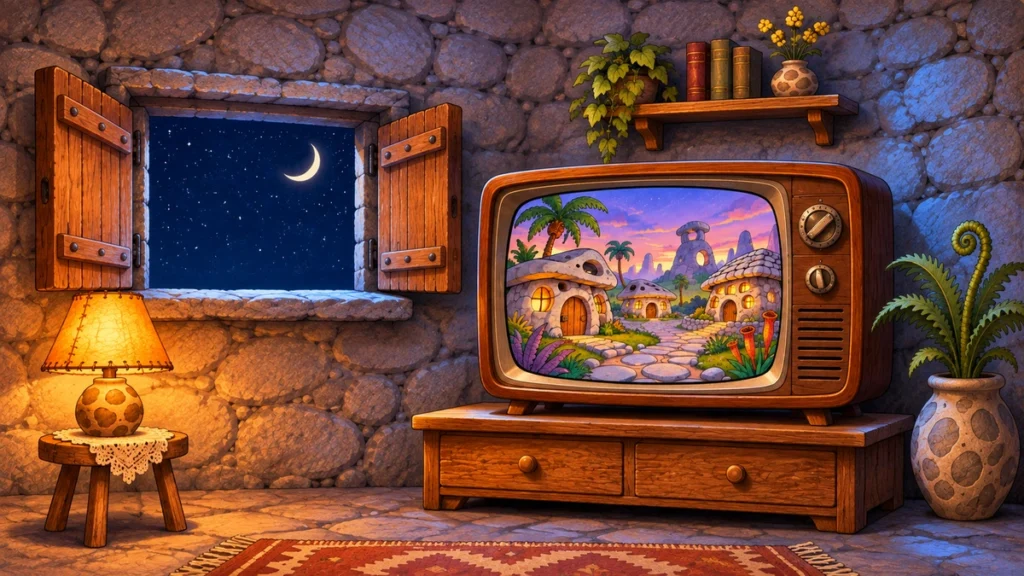
The Flintstones gives Fred a car powered by his feet and a record player with a bird for a needle. Getting to work and finding time for bowling still take some effort. Much of the humour comes from that familiar routine, carried out with the most ridiculous equipment imaginable.
The Flintstones started in prime time
Created by William Hanna and Joseph Barbera, the series premiered on ABC on 30 September 1960, at 8.30 p.m. The original run lasted until 1966 and produced six seasons, with 166 episodes.
It was the first animated sitcom made for US prime-time television. Families could watch together, with jokes about marriage, work and neighbours giving adults plenty to recognise. NBC began showing Saturday morning reruns in 1967.
Each episode followed a single story within a half-hour television slot. There was room for Fred's latest plan to become a proper mess. That gave the show a different rhythm from the short theatrical cartoons discussed in our article on why classic cartoons were only 7–10 minutes long.
Bedrock had some very modern neighbours
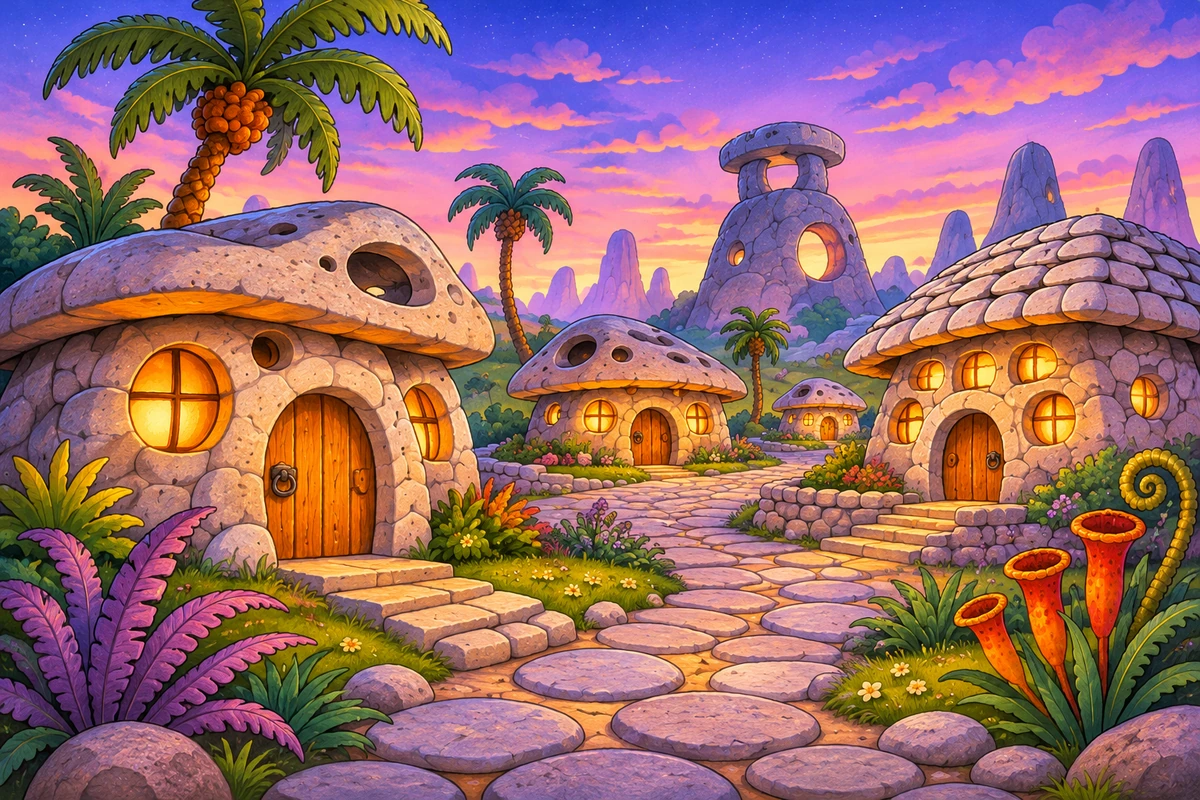
Fred and Wilma Flintstone live next door to Barney and Betty Rubble in Bedrock. Their world has stone wheels, dinosaurs and houses carved into rock. Its residents go to restaurants, listen to records and make plans for a night out.
One of the show's influences was The Honeymooners, the live-action comedy starring Jackie Gleason and Art Carney. That connection helps explain the familiar setup of two neighbouring couples, with friendship and domestic disagreements providing material for the stories.
Even the celebrity names got a rocky makeover. Ed Sullystone is a joke on television host Ed Sullivan, while Ann-Margrock points to Ann-Margret. Those references brought 1960s show business into the prehistoric setting.
An elaborate excuse to go bowling
The first episode, The Flintstone Flyer, gets straight to that sort of trouble. Barney has invented a flying machine. Fred sees a way to use it to get out of an opera night with Wilma and Betty and go bowling instead. He pretends to be ill as part of the plan.
A machine that can fly is quite an achievement. Fred's main concern is whether it can get him to the bowling alley without his wife finding out.
In the third episode, The Swimming Pool, Fred and Barney decide to build a pool together. It is a thoroughly suburban idea: two neighbours sharing a home improvement project.
Household appliances with a life of their own
The animal-powered gadgets follow the same logic. A small elephant serves as a vacuum cleaner, using its trunk for the job. A bird's beak takes the place of a record player's needle. You can recognise the appliance immediately, then enjoy the absurdity of how it works.
The animation and the voices behind it
Hanna-Barbera used limited animation to keep television production costs manageable. Movement was simplified and reduced, making a regular series more economical to produce. Our history of animation looks at the wider development of these techniques.
The original English voices included Alan Reed as Fred, Jean Vander Pyl as Wilma and Mel Blanc as Barney. Bea Benaderet voiced Betty from 1960 to 1964, followed by Gerry Johnson from 1964 to 1966. Blanc also supplied Dino's voice.
The conversations carry much of the comedy. Fred can talk himself into trouble while the other characters barely have to move. His confidence, Barney's replies and Wilma's reactions give a simple scene in the house plenty to work with.
Flintstones vitamins arrived after the original series
One of the stranger facts about The Flintstones concerns a product away from the television screen. According to the brand's own history, Flintstones multivitamins launched in 1968. That puts their arrival two years after the original series finished its run, while the cartoon was already reaching viewers through reruns.
For more stories behind familiar animated characters, explore our fun facts about classic cartoons.
Sources and further reading
- Television Academy: the show's format, influences, broadcast history and voice cast.
- The Paley Center for Media: premiere date and credits for The Flintstone Flyer.
- ELC Brands: the setting and the original series' 166 episodes.
- WVXU: animal-powered appliances and the show's television influences.
- Flintstones Vitamins: the brand's history and its 1968 launch.