
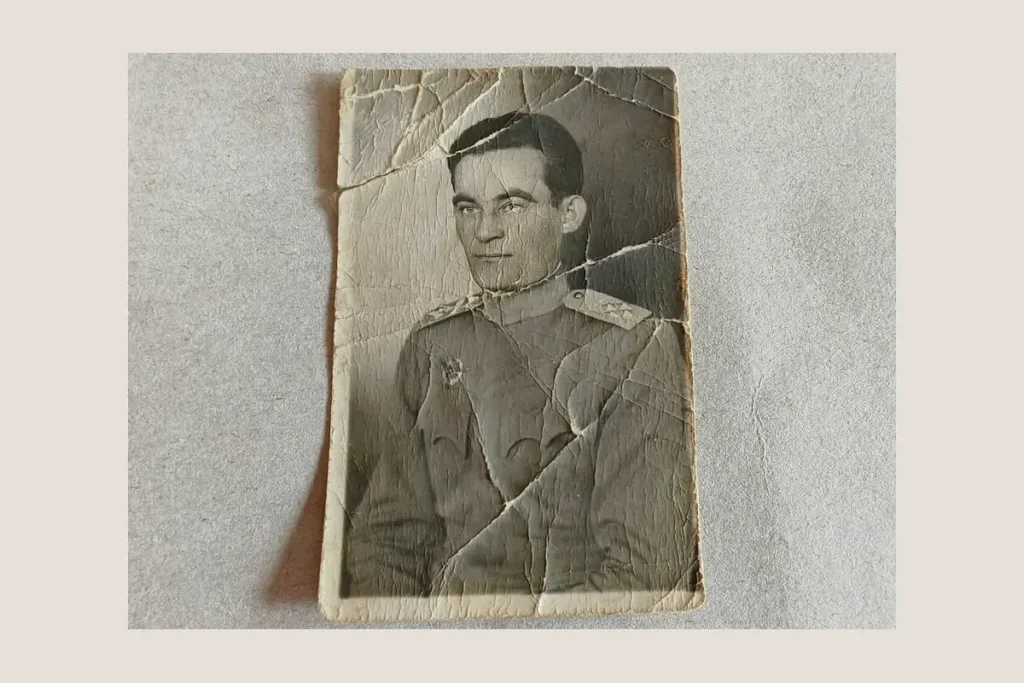
Some family stories remain unfinished. The story of Budimir Bosiljčić is one of them. His name, photographs and several documents have survived, but the most important question remains unanswered: what ultimately happened to him?
Budimir Bosiljčić was my great-grandfather, a military technical official and fighter pilot. Our family has never reliably established his fate after the Second World War.
In an earlier article, I told the story of my grandmother Slobodanka, Budimir’s daughter. My mother Slavica’s testimony formed the basis of that story. This continuation takes us one step further back. It follows the man whose photographs, letters and military documents Slobodanka preserved despite everything her family endured.
This article does not pass judgement on a difficult period or replace one political version of the past with another. Instead, it presents what remains in our family archive. I have clearly separated documented information from family accounts. The questions to which we still have no answers remain open.
The Traces Slobodanka Preserved
My mother Slavica told me how carefully Slobodanka kept her father’s documents and photographs. To her, they were not objects from some distant history. They were almost everything she had of a man she never had the chance to know as a child.
Thanks to her, our family still has Budimir’s business card and military identity card. We also have photographs from his training and service, a wedding photograph, and a letter he sent to his father. Each item confirms one part of his life. Yet none reveals how that life ended.
Slobodanka did not leave us a completed biography. She left us fragments. We are now using them to understand who her father was before the war and what kind of life he was building. They may also help explain why his fate remained a family mystery.
Family Roots in Banjani
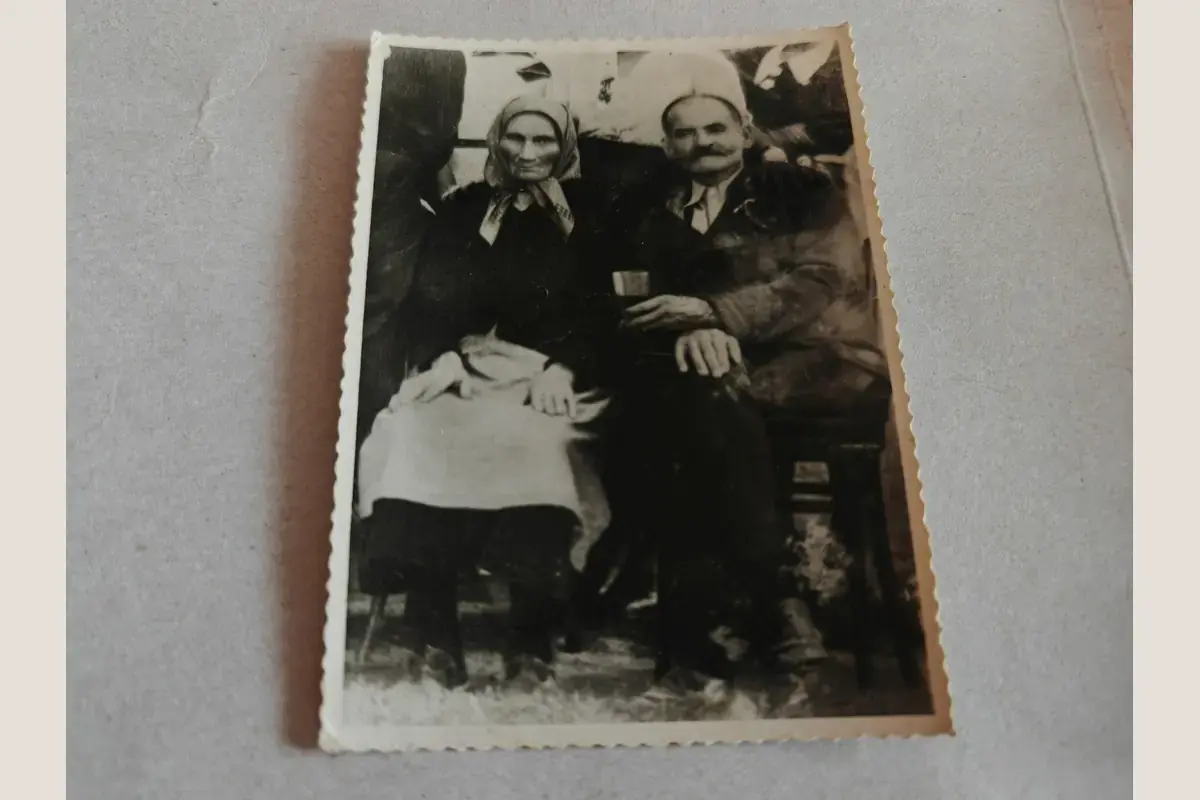
Budimir came from Banjani, near the town of Ub. The family archive contains an old photograph of his parents. We do not know exactly when it was taken. Still, it carries the story back to a time before military school and a pilot’s uniform. The events that later shaped the entire family had yet to unfold.
Budimir’s military identity card records 1905 as his year of birth. This brief detail places his life within a period of great change. He grew up during the first decades of the twentieth century. Later, he began his career in a rapidly developing aviation service.
Budimir Bosiljčić: From Military Service to Fighter Pilot
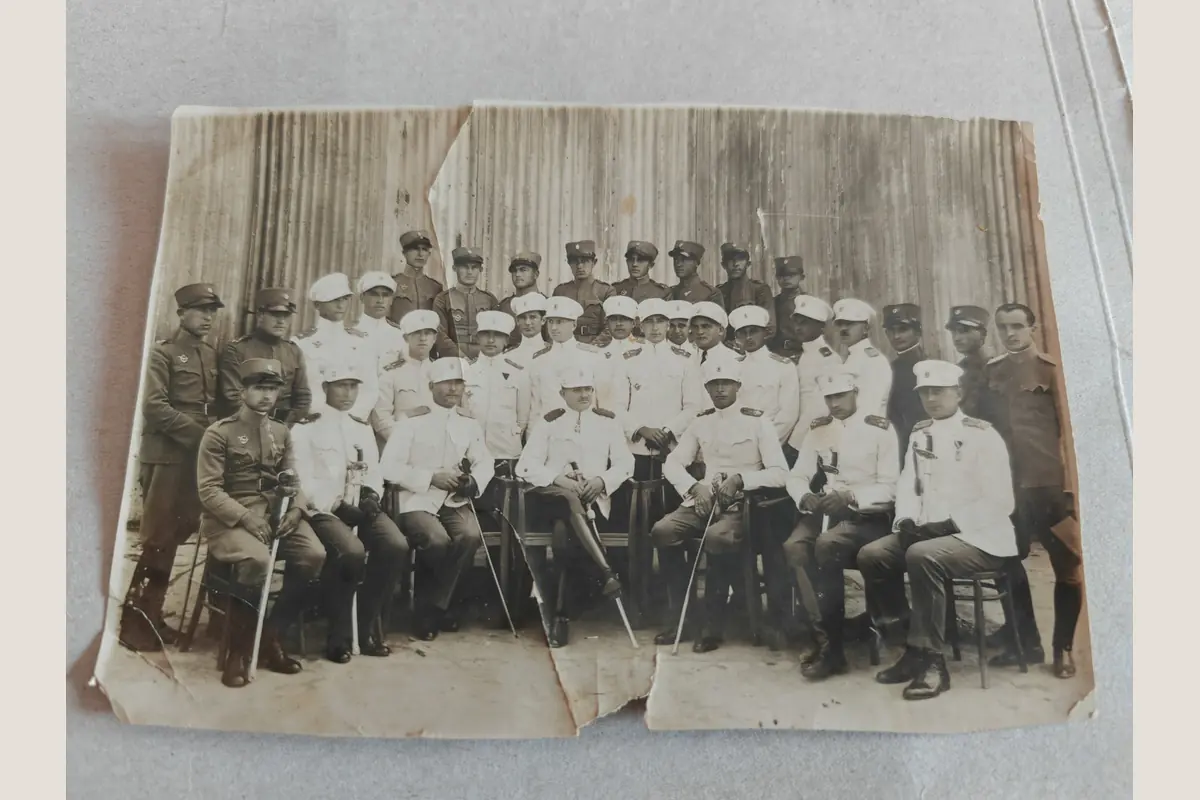
One preserved military group portrait shows Budimir in the back row, wearing a dark uniform. Family memory identified his position, and a separately marked crop shows where he stands. The original photograph contains no written list of names, so I present this identification as a family attribution.
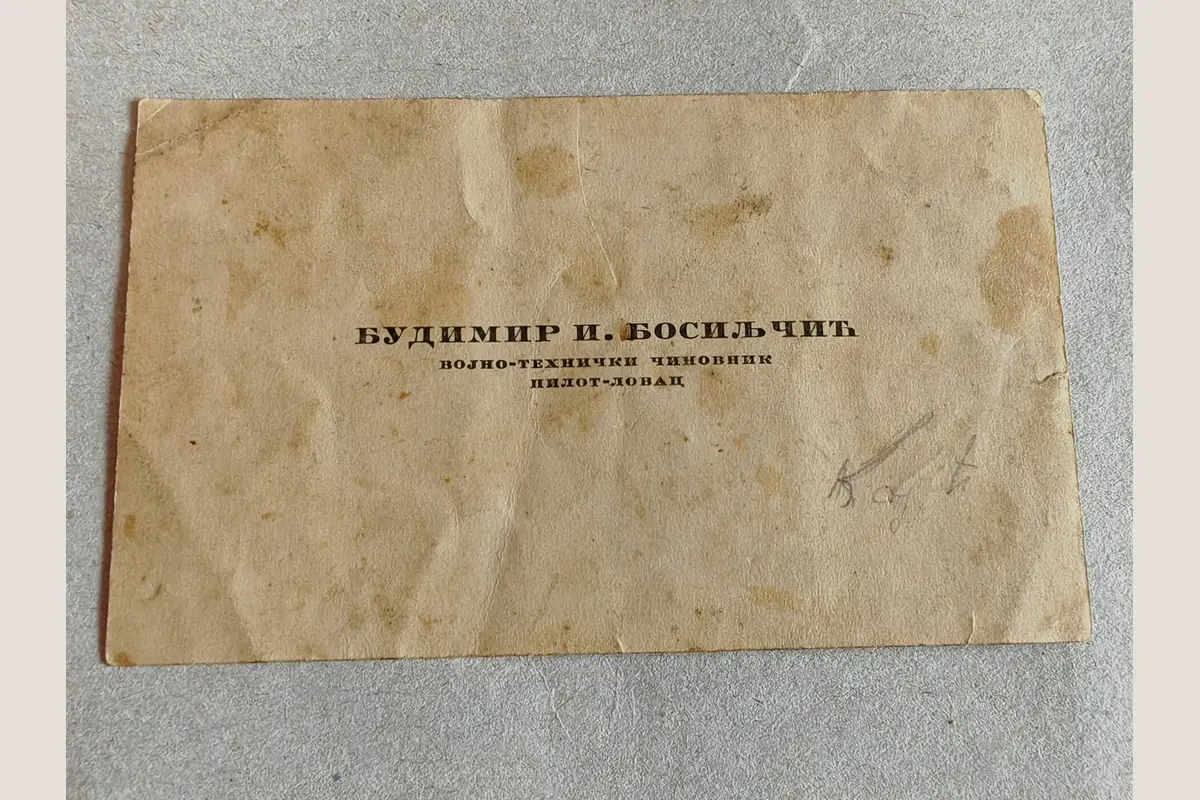
The clearest surviving evidence of his profession appears on his business card. It reads: “Budimir I. Bosiljčić, military technical official, fighter pilot.” These few printed words support a memory that the family preserved for decades.
His military identity card has also survived. It contains a portrait, personal description, stamps and official entries. Its pages show his full name, year of birth and changes in his posting during 1940. Some handwritten passages are difficult to read today. Therefore, I do not draw conclusions that the document itself cannot reliably support.
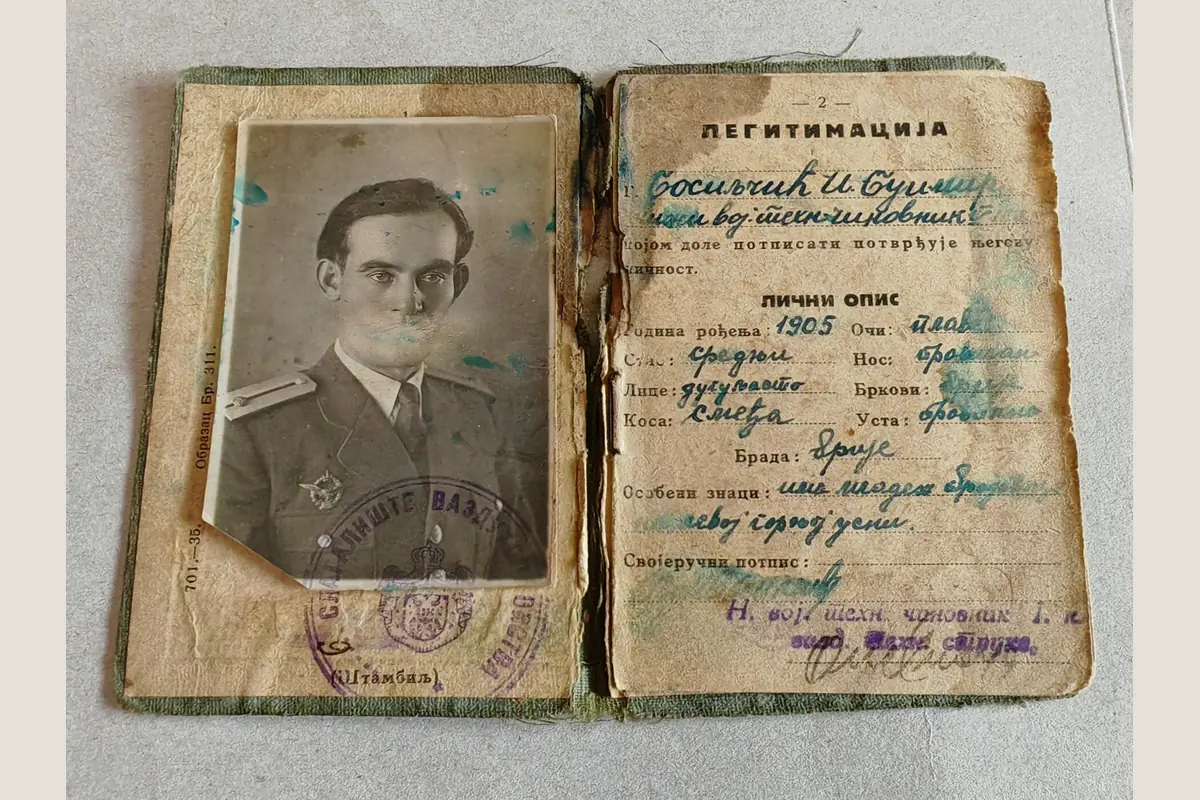
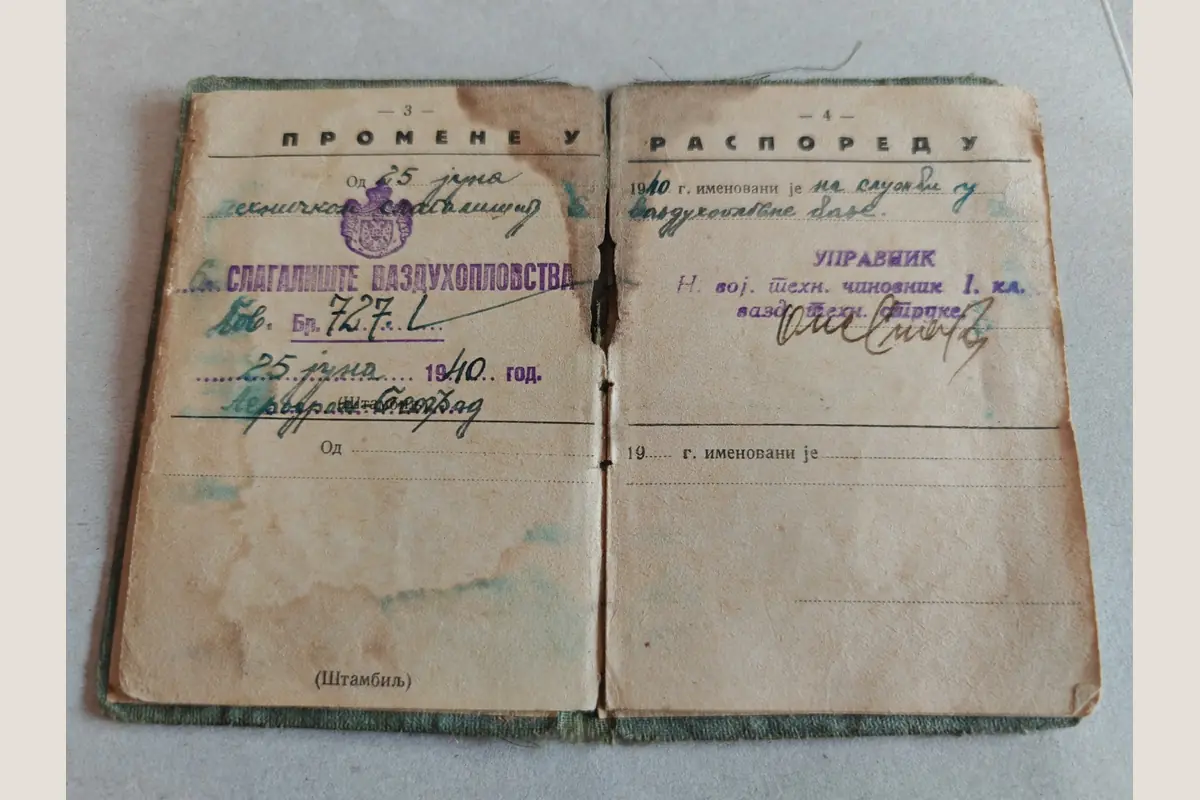
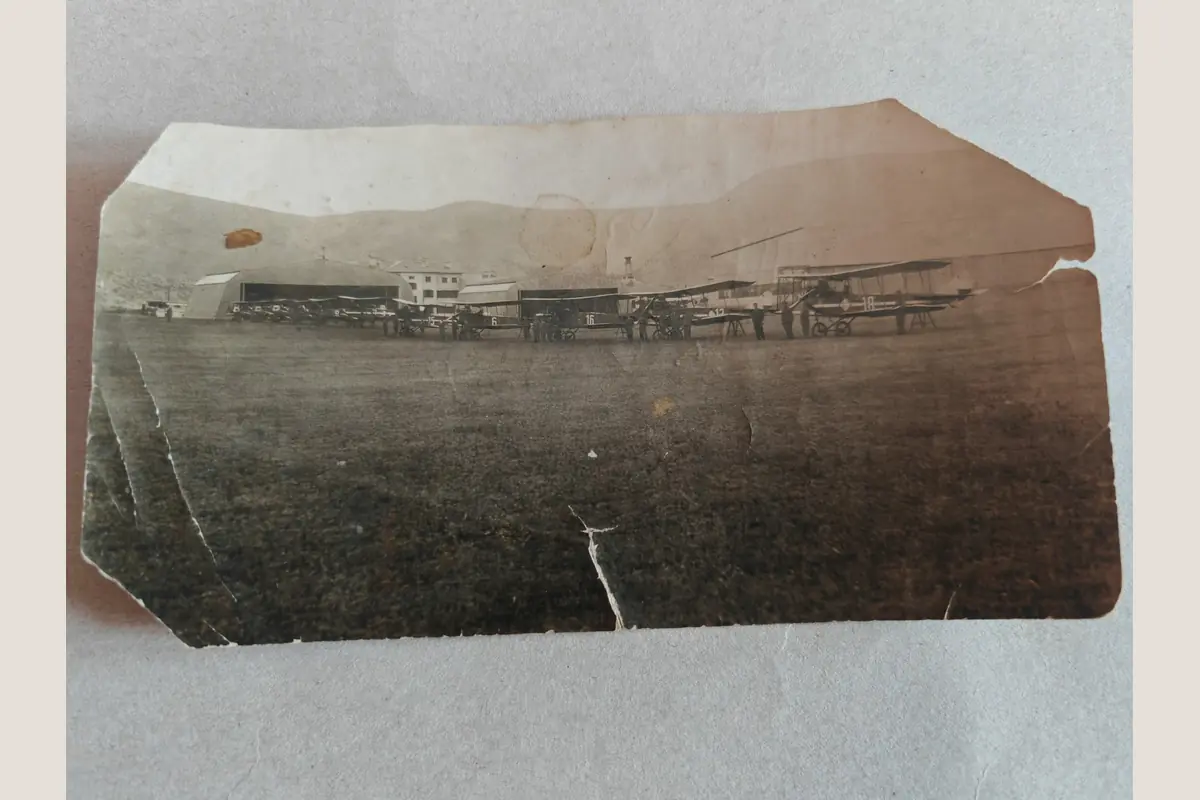
Family information indicates that Budimir completed pilot training in Novi Sad and served at the Pančevo airfield. Entries previously read in his military service book support that account. The archive also contains a photograph of the military airfield in Pančevo from 1939. It shows aircraft and groups of people, but no inscription identifies Budimir.
The Story of the Flight Beneath the Bridge
Our family preserved a story that Budimir was a highly skilled pilot. According to that account, he once flew an aircraft beneath King Alexander Bridge over the River Sava in Belgrade. Years later, my grandmother Slobodanka met a man while looking for work. He told her that he had witnessed the flight.
No independent document currently confirms when this happened, which aircraft he flew or who else witnessed it. I therefore present the episode as it reached us: a family account, not an established historical fact.
Nadežda and Life Before the War
The military documents show Budimir’s service. However, one surviving letter reveals a much more personal side of him. He wrote it to his father in Pančevo on 18 January 1938 and announced his engagement to Nadežda Arsenović.
In the letter, he writes about the young woman with whom he hoped to start a family. He describes her relatives and education, as well as his plans for their engagement and wedding. Budimir openly tells his father that he is not asking for financial help. He simply wants him to attend the wedding. The letter shows him beyond the uniform: a son, a fiancé and a man planning his future.
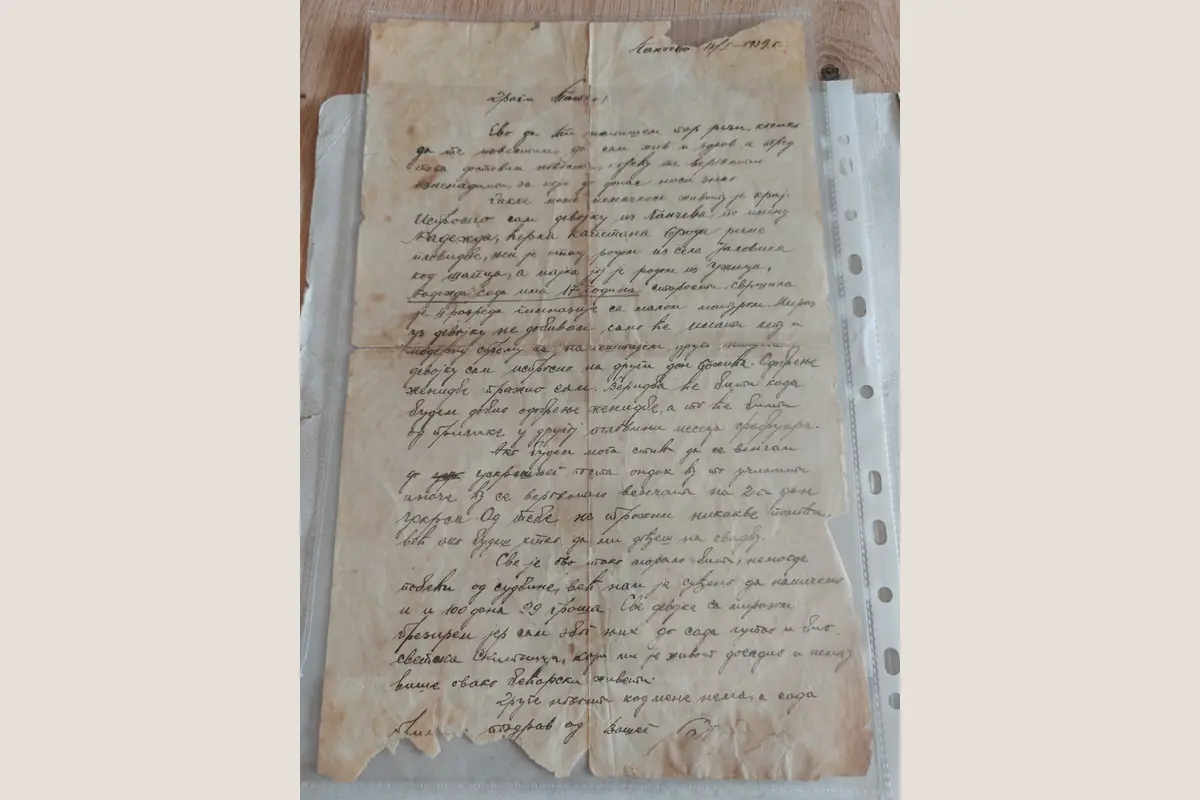
English Translation of Budimir’s Full Letter
The following is an English translation of the complete surviving letter. I have preserved Budimir’s wording, grammar and manner of expression as closely as possible. I have adjusted punctuation and paragraph breaks slightly for readability, while square brackets mark crossed-out and uncertain passages.
Pančevo, 18 January 1938
Dear Father!
I am writing you a few words, just to let you know that I am alive and well, and also to give you some news that will probably surprise you and which you did not know until today.
So, my bachelor life has come to an end.
I have asked for the hand of a girl from Pančevo named Nadežda, the daughter of a riverboat captain. Her father comes from the village of Jalovik near Šabac, and her mother comes from Zemun.
Nadežda is now 17 years old. She completed four years of secondary school and passed the junior graduation examination. I will receive no dowry with her; she will only have a nice, modern little room with furniture, and [crossed out].
I asked for her hand on the second day of Christmas. I have applied for permission to marry. The engagement will take place when I receive that permission, which should be around the second half of February.
If I am able to marry before Lent, then I will do so; otherwise, I will probably marry on the second day of Easter.
I am not asking you for any help, only that you come to my wedding if you wish.
All of this had to happen this way. There is no escaping fate; we are destined to [probably: scrape together] 99 groschen in 100 days.
I despise all girls with dowries, because they have caused me to wander until now and become a drifter in the world. I have grown tired of this life and no longer wish to live like a bachelor.
There is nothing else new with me. Now accept greetings from your
[signed: Budimir]
The preserved original allows us to read almost the entire letter with confidence. Only one word remains uncertain, and Budimir crossed out the word following “and.” He tells his father that he has asked for Nadežda’s hand and describes her family and education. He also explains that he has requested official permission to marry and invites his father to the wedding. Most movingly, he asks his father for no help—only to attend the wedding.
Budimir and Nadežda married in Pančevo in 1939. Photographs of the newlyweds and their family have survived. Nothing in them hints at the tragedy that would soon follow. We see two young people at the beginning of their life together.
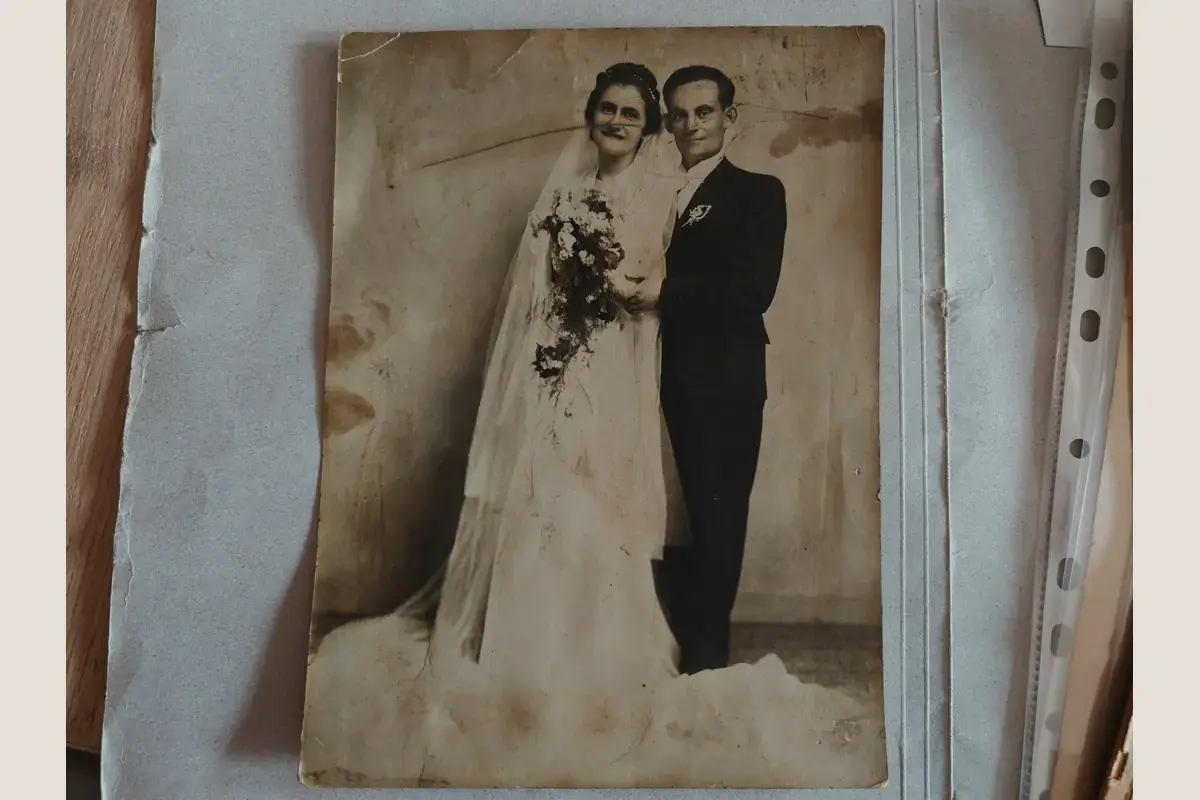
Their daughter Slobodanka was born in Pančevo on 8 February 1941. Less than a month later, on 4 March, Nadežda died of pulmonary tuberculosis. Family and church records preserve these dates.
Budimir faced the approaching war with a newborn daughter in his care. Slobodanka later told her children what happened after the bombing began in April 1941. Budimir took her to Banjani and placed her in the care of his mother, Hristina. For Slobodanka, this marked the beginning of a childhood without parents. For our family, it began a period in which reliable answers became increasingly scarce.
The War Years and the Limits of What We Know
Family accounts, later testimonies and historical literature describe the role Budimir Bosiljčić may have played during the war. However, documents in our family’s possession do not support every detail. For that reason, I will not repeat allegations, political labels or conclusions without confirmation from several sources.
The documents reliably establish Budimir’s identity, year of birth and profession as a fighter pilot. They also record part of his military service and family life before the war. Family testimony describes his departure for war and separation from his daughter. We still do not know where he spent the final war years, what happened after 1945 or where he is buried.
Our family believes that he was alive until the end of the war. Accounts of his later fate differ, and no document has yet confirmed any of them.
My mother Slavica believes that later political labels cannot define her grandfather’s entire life. She also believes that his fate deserves further research. I present this family conviction as part of a personal story, not as a historical or legal judgement.
A Family Search That Continues
When someone’s fate remains unresolved, a family does not always seek a grand historical explanation. Sometimes it seeks only a date, a record or a place to light a candle.
Somewhere there may still be a document we have not seen, a list or an archival record. A photograph may remain in another family’s album, or someone may remember a story heard from their parents. What one family has sought for decades may survive by chance in the possession of another.
If you have a photograph, document or verifiable information about Budimir I. Bosiljčić, you can contact us through our contact page. We are not seeking a political debate or a verdict reached in advance. We are looking for a trace that might help bring an unfinished family story to a close.
I can write this article thanks to my mother Slavica, who passed these family memories on to me. I also owe it to my grandmother Slobodanka, who preserved what might otherwise have disappeared forever. The photographs, letters and documents in our home keep Budimir’s name alive. As long as there is a chance of finding one more trace, our search is not over.
Our Family and Life Stories category contains more articles based on personal testimony, family photographs and preserved documents.
Note: This family-history article draws on documents and photographs from the family archive, as well as oral testimony. Throughout the text, I identify claims without independent confirmation as family accounts or family information. The article does not attempt to determine any person’s historical, political or legal responsibility.
The Last Surviving Trace
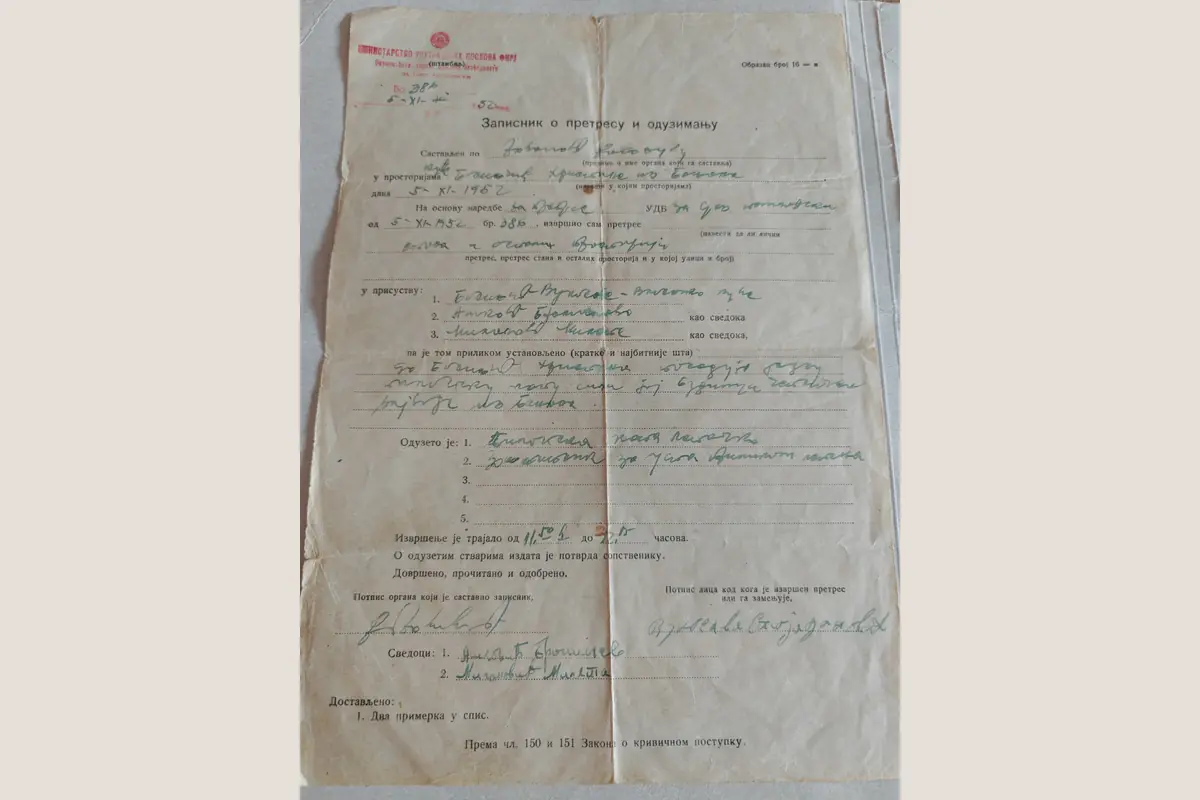
On 5 September 1952, the Ministry of the Interior of the Federal People’s Republic of Yugoslavia created a record that mentions Budimir’s belongings. It is the last such document in our family archive. The record concerns a search and seizure at the home of Hristina Bosiljčić in Banjani. The State Security Administration, commonly known as UDBA, ordered the search.
What the Record Says
The following passage presents the information relevant to Budimir’s story. I have omitted the names and signatures of the official and witnesses. Readers do not need them to understand the document.
The record states: “Hristina Bosiljčić possesses one pilot’s cap belonging to her son Budimir, a Chetnik voivode from Banjani.”
The record lists the following seized items:
- “Pilot’s flying cap”
- “Mouth protector used during flight”
According to the record, the search lasted from 11:50 to 12:55—a total of one hour and five minutes. The document lists what the officials found and seized. However, it does not show where Budimir was in 1952, whether he was still alive or what ultimately happened to him.
One important question remains: why did UDBA order a search of Hristina Bosiljčić’s home in 1952, more than seven years after the war had ended? At present, no other document reliably explains the immediate reason or wider context of the search.
This is the last surviving material trace we have today. Beyond it, only questions remain.