
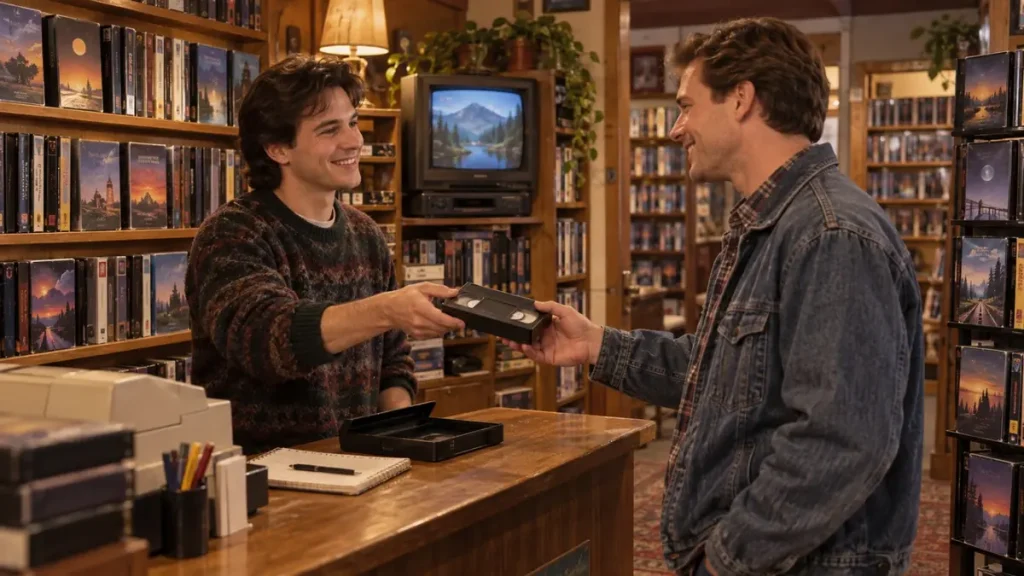
Before movie night became a menu on a screen, it often began with a trip outside the house. Renting a VHS tape meant walking into a neighborhood video store and looking along crowded shelves. You turned boxes over, read their summaries, and tried to choose the one movie worthy of the weekend.
The tape might be yours for only a night or two, yet it could shape the whole evening. Someone chose the film, someone prepared the snacks, and everyone knew the return date. The story of video rental is therefore about much more than an old format. It is about anticipation, small rituals, and the feeling that a movie had briefly become part of your home.
Renting a VHS Tape Began Long Before Movie Night
JVC introduced the first commercial VHS video cassette recorder in Japan on September 9, 1976. JVC and the IEEE later documented this milestone. Home video recorders soon changed the way people watched films. Viewers could record programs, buy tapes, and rent movies instead of relying only on cinemas and television schedules.
The British Film Institute notes that domestic video recorders helped create both retail and rental markets. Video stores expanded throughout the 1980s. By the 1990s, they had become a familiar part of everyday life in many countries. No single worldwide peak existed. Local prices, VCR ownership, film distribution, and new competing formats all affected the timing.
One Ritual, Different Local Names
Independent rental shops first served many American communities, and large national chains later joined them. Across Britain and much of Europe, neighborhood and high-street stores developed their own membership rules and collections.
In parts of the former Yugoslavia, people often called these shops “video clubs.” Many were small local businesses where the person behind the counter knew the regular customers. A later account of one of Belgrade’s surviving shops in NIN preserves a glimpse of that regional culture.
The stores varied greatly in size, style, and selection. Yet the basic ritual traveled well: enter, browse, ask for advice, carry a tape home, and return it after the weekend.
Choosing a VHS Tape from the Video Store Shelves
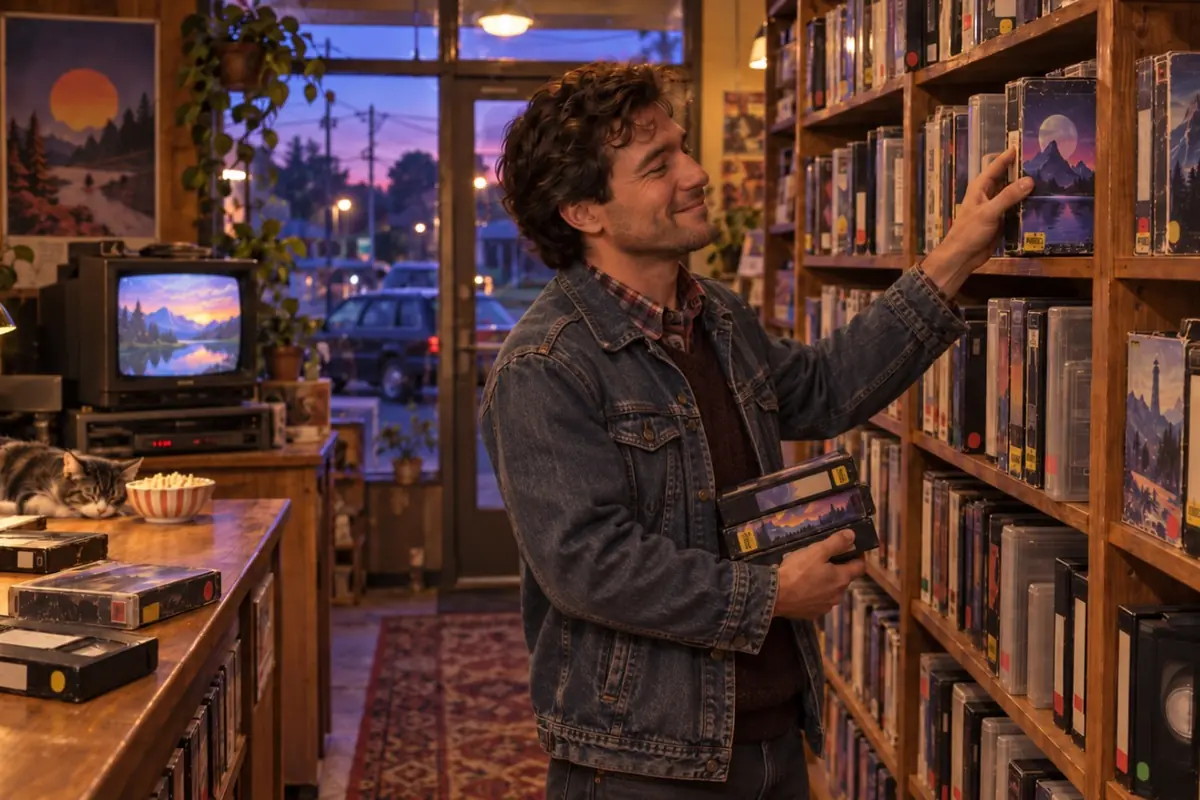
A video store did not offer an endless invisible catalog. Its choices stood in front of you in rows. Stores often gave new releases the most noticeable shelves. Comedy, action, horror, animation, drama, and family films usually had their own sections. The organization was not always perfect, but finding a movie was part of the pleasure.
Before trailers became available on demand, the cover had to do a great deal of work. A dramatic landscape or mysterious shadow could make an unfamiliar movie tempting. So could a painted explosion or a few carefully chosen lines on the back. Sometimes an actor’s name or a friend’s recommendation settled the decision.
The clerk could also help. A good clerk knew which film had just returned and which overlooked tape deserved another look. That brief conversation often made the store feel more personal than any automatic recommendation.
Popular titles introduced another kind of suspense. A box might remain on display even after other customers had rented every copy. Some stores accepted reservations or kept informal waiting lists. Others simply told customers when they expected a copy to return. These practices varied, but they gave a sought-after film a special importance. Today, thousands of titles may always seem only a click away.
Membership Cards, VHS Rental Dates, and Late Fees
Rental stores needed a way to track their tapes and customers. Depending on the shop and country, a customer might complete a membership form or show identification. The store could then issue a numbered card or add the customer to a handwritten or computerized record. The rules surrounding renting a VHS tape were local rather than universal.
Some early businesses even experimented with paid memberships. An archival Los Angeles Times account describes one striking example. Video Station offered a $50 annual membership or a $100 lifetime membership in the late 1970s. Customers still paid separately for individual rentals.
That was one early American model, not a worldwide standard. It shows how new and unsettled the rental business once was. Elsewhere, joining could be free, with customers paying only for each tape.
Rental periods also differed. A new release might be due the next day, while an older title could stay for several nights. A late return could bring a daily fee. Losing or damaging a cassette could cost much more. Some stores telephoned regular customers about overdue tapes, while others waited until the next visit.
The due date placed a small border around the experience. Customers needed to watch the film while it was briefly theirs. Then they had to return it so another person could have a turn.
Taking a Rented VHS Tape Home
Leaving the store with a VHS case in hand made the choice feel real. Back home, the cassette went into the VCR beneath a bulky CRT television. The picture might need a moment to settle. A tracking line could appear. The remote might be missing, and the VCR clock might still be blinking. Once the film began, however, the room changed.
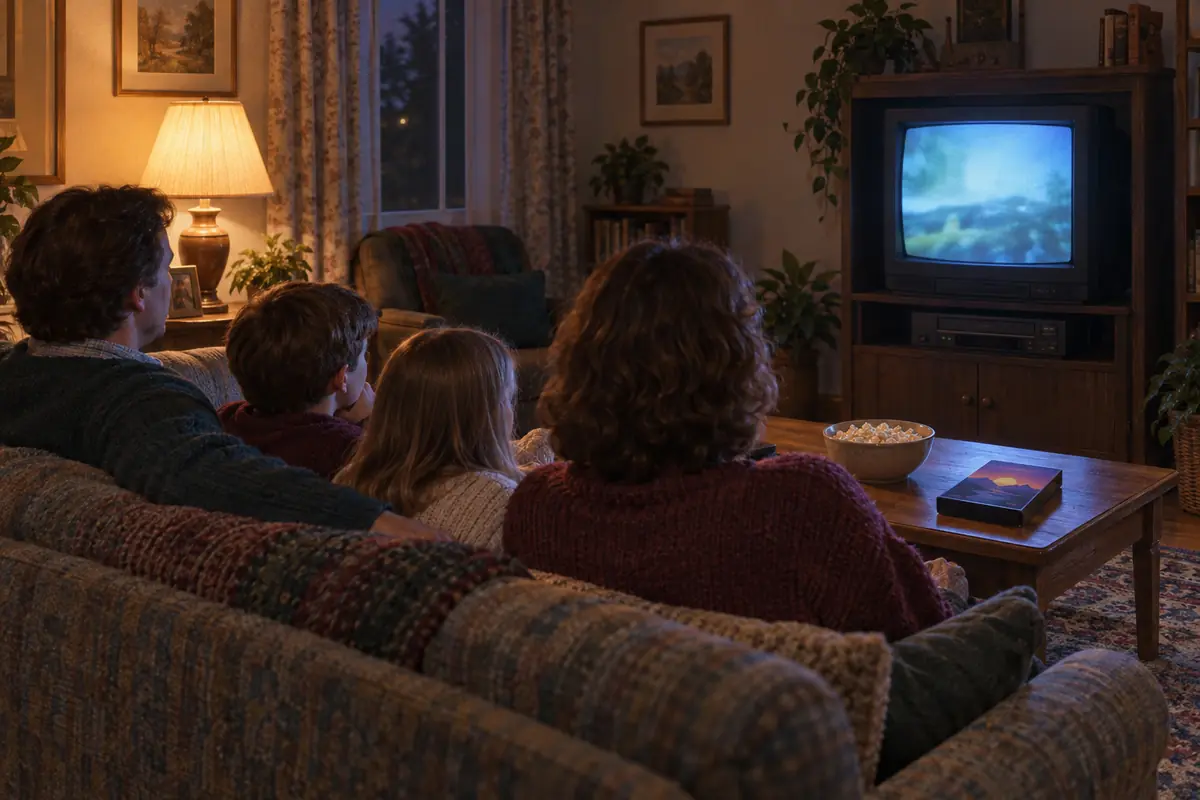
The setting was often as memorable as the movie. Someone drew the curtains but left a lamp glowing in the corner. Popcorn or snacks waited on the table. Family members or friends found their places before the opening scene.
It belonged to the same cozy world as the 1990s living room before streaming. In those homes, one shared television could become the center of the evening.
The short rental period kept the film from becoming background noise. Starting it was an event, and pausing it made everyone wait. Even a disappointing movie could become a story for later. After all, the group had chosen it together and given it a whole evening.
Rewinding a VHS Tape: “Be Kind, Rewind”
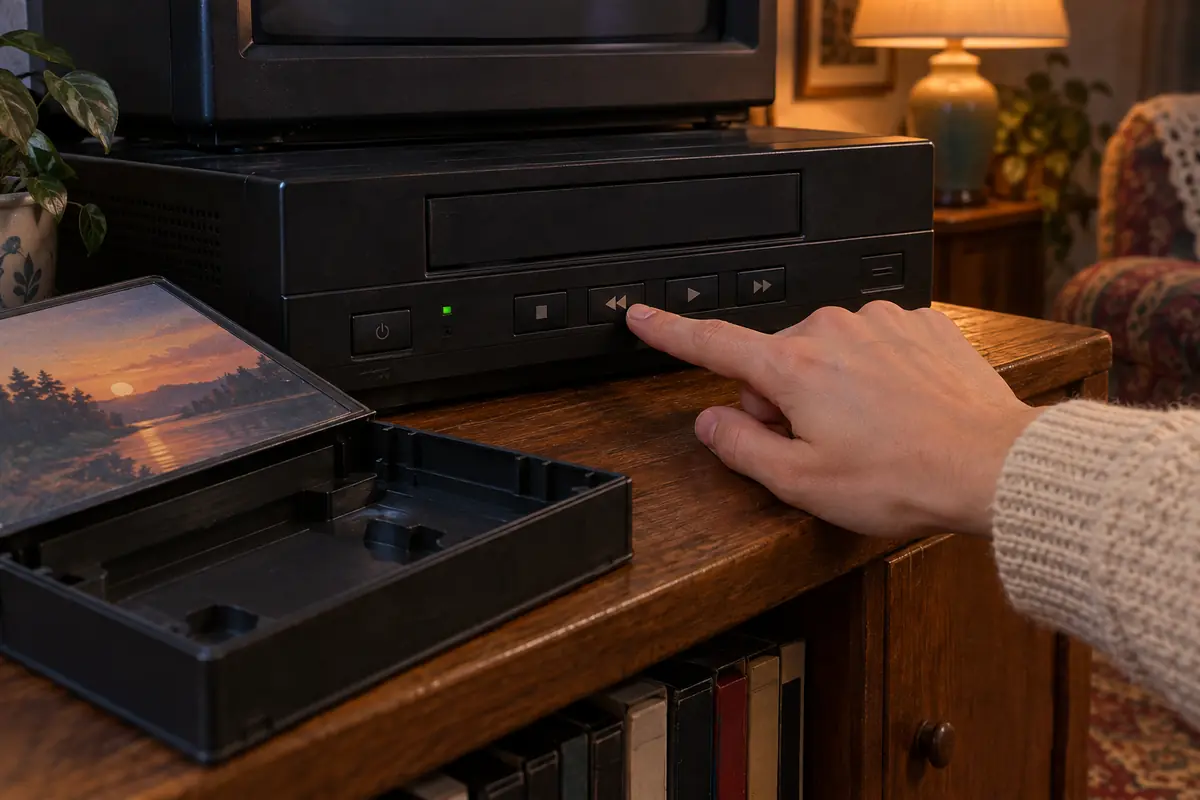
When a VHS movie finished, the tape usually sat near the end. Returning it that way made someone else wait. The next customer—or an employee preparing it for the shelf—had to rewind it before the film could begin.
That is why so many rental cases carried a reminder: Be Kind, Rewind. It asked customers to press the button marked with two left-pointing arrows. The cassette would then return to the beginning, ready for the next person.
Some stores rewound tapes behind the counter, sometimes with a separate rewinding machine. Others charged a small fee when customers returned a tape at the end. Policies varied, but customers everywhere understood the courtesy.
Rewinding also made the physical nature of VHS impossible to ignore. A film was not an abstract file. Magnetic tape stored the movie as it moved between two reels. The process required a little patience and care.
Anyone familiar with recording songs from the radio onto cassette will recognize the rhythm. You waited, pressed the correct button, and let the machine finish its work.
The soft mechanical whir marked the end of movie night and the start of the return journey. The film had finished, but the ritual continued. It ended only when the cassette sat safely in its case, ready for the store.
How DVD, the Internet, and Streaming Changed Video Rental
VHS did not disappear in a single moment. DVD first offered a smaller disc, a sharper picture, easier scene selection, and no need to rewind. For several years, rental stores carried both formats side by side. Customers gradually replaced their VCRs.
Blockbuster’s 2004 annual report described growing DVD rental revenue alongside declining VHS revenue. It also noted that stores still stocked VHS wherever customer demand remained.
The internet changed the habit in stages. Netflix began shipping DVDs in 1998, which allowed customers to choose online and receive discs by mail. The company launched streaming in 2007. Its histories of the DVD service and the arrival of streaming document that transition.
Broadband connections improved, and on-demand libraries grew. The trip to the store, the due date, and the late fee became easier to avoid. The transition unfolded at different speeds around the world.
Some neighborhood stores survived by specializing, selling used films, or relying on loyal regulars. Others closed as physical rentals declined. Convenience won for understandable reasons. A movie could begin immediately, with no travel and no risk that another customer had taken the last copy.
But convenience removed several parts of the old experience. There was no familiar clerk to ask and no cover to hold. The shared walk between the shelves disappeared. So did the cassette waiting by the door for its Monday return.
Why Renting a VHS Tape Felt So Special
The strongest memories of video rental are rarely about picture resolution. They are about the pause before choosing. A limited shelf encouraged attention, and a trusted recommendation helped shape the evening. The need to return the tape made the experience feel temporary and valuable.
That tactile relationship with entertainment also explains the lasting affection for cassette tapes and other analog memories. People could hold, lend, misplace, rewind, and return these objects. Their small inconveniences became part of their character.
Streaming gives us more films than any neighborhood store could have contained. Yet an endless library does not always create the same sense of occasion. Renting a VHS tape gave the weekend three clear stages. First came the visit to the store, then the movie at home, and finally the return of the rewound cassette.
What do you remember most: choosing by the cover, asking the clerk for advice, or hearing the VCR rewind?