
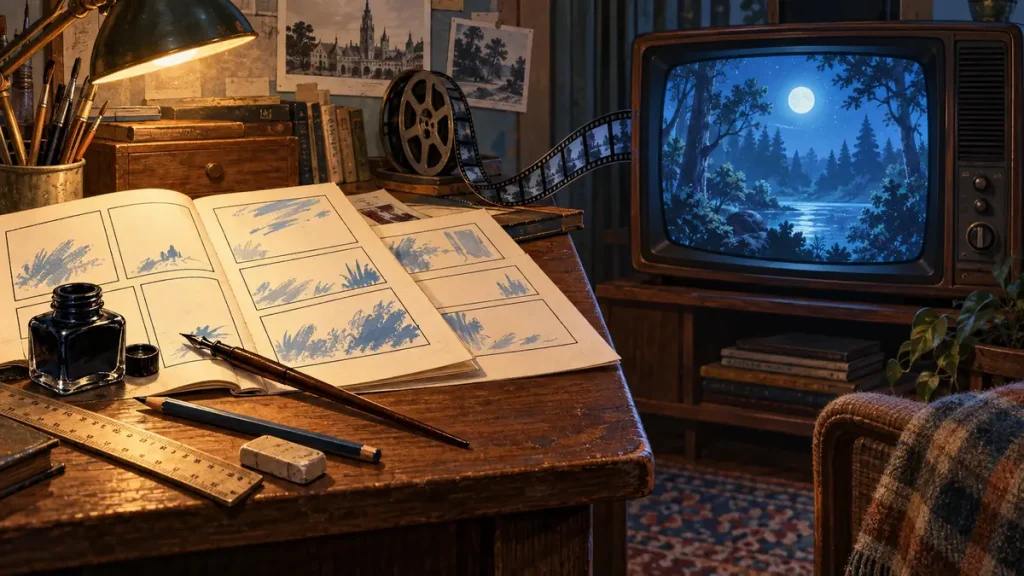
For many viewers, the Smurfs belong first to the world of television memories: a hidden village in the forest, mushroom-shaped houses, Papa Smurf, Smurfette and the endlessly frustrated Gargamel with his cat Azrael. Because the best-known classic animated series began in 1981, it is easy to assume that the little blue characters were created for television in the 1980s.
Their story is much older. By the time the Hanna-Barbera series reached television, the Smurfs already had 23 years of history in European comics, their own stories and several animated adaptations. Their journey from supporting characters in a medieval adventure to an international television classic is far more interesting than a simple list of fun facts.
Who Was Peyo, the Creator of the Smurfs?
The Smurfs were created by Belgian comics artist Pierre Culliford (1928–1992), better known by his pen name, Peyo. Born in Brussels, he began his working life as a cinema projectionist and later found a job at an animation studio. After the studio closed, he concentrated on drawing comic strips and eventually found success at the Belgian magazine Spirou.
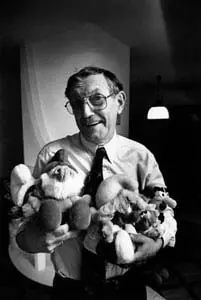
One of Peyo’s most successful creations was Johan and Peewit, a series of adventures set in a medieval world of knights, magic and strange creatures. It was inside that already established world that the Smurfs first appeared. They were not conceived as the centre of a future international franchise, but as supporting characters needed for one particular story.
The response from readers changed that plan. The mysterious little inhabitants of the forest quickly became popular enough to leave the background and receive adventures of their own.
How the Smurfs First Appeared in 1958
The Smurfs made their first appearance on 23 October 1958, during the serialisation of a Johan and Peewit adventure in Spirou. The story was originally titled La Flûte à six trous, or The Flute with Six Holes. It was later renamed La Flûte à six Schtroumpfs and became known in English as The Smurfs and the Magic Flute.
In the story, Peewit obtains a magical flute that forces anyone who hears it to dance. The search for the flute’s origins leads Johan and Peewit to a hidden community of tiny blue beings with their own village and an unusual way of speaking. At this stage, the Smurfs were visitors from an unexplored corner of the heroes’ larger medieval world.
Their popularity grew remarkably quickly. In 1959, they received their first independent short adventure, Les Schtroumpfs Noirs, in Spirou. Once the Smurfs had stories of their own, Peyo could develop the village, its rules and the individual personalities of its inhabitants without depending on Johan and Peewit.
How the Word “Smurf” Was Invented
According to an anecdote Peyo often told, the original French word schtroumpf was born during a meal with his friend and fellow comics artist André Franquin. Peyo temporarily forgot the word for the salt shaker and jokingly asked Franquin to pass him the “schtroumpf”. Franquin continued the game, and the two reportedly spent the rest of the evening replacing ordinary words with variations of the invented term.
The joke became one of the most recognisable features of the Smurfs’ world. In their language, “smurf” can act as a noun, a verb or part of a longer expression, with its meaning supplied by the situation. This gave Peyo and later writers a simple device for misunderstandings, wordplay and humour. The Dutch translation used the word Smurf, which was then adopted in English.
What Exactly Are the Smurfs?
The Smurfs are small blue fantasy beings who live in a hidden village in a magical forest. They are traditionally described as being “three apples high”, and their homes resemble colourful mushrooms. Although they may look similar at first, each Smurf is meant to have a distinct personality, ability, occupation or habit.
The village works like a miniature society. Papa Smurf provides experience and leadership, while other residents farm, build, cook, invent, repair or create problems that the community must solve. Their descriptive names allow readers and viewers to understand them quickly: Brainy talks as if he knows everything, Hefty relies on strength, Clumsy causes accidents and Grouchy objects to almost everything.
This clear organisation is one reason the Smurfs adapted so well to short comic stories and episodic television. A new adventure can begin with a familiar character trait, but the consequences usually affect the entire village.
How Many Fingers Do Smurfs Have?
Smurfs are usually drawn with four digits on each hand: three fingers and a thumb. Therefore, the short answer to “How many fingers do Smurfs have?” is four when the thumb is included, or three fingers plus one thumb in everyday wording.
This simplified hand design belongs to a much wider tradition in comics and animation. It makes small hands easier to draw clearly and repeatedly while keeping gestures readable. Our separate guide explains more about why so many cartoon characters have four fingers.
Smurfette’s Original Role
Smurfette was not originally introduced as an ordinary resident of the village. Gargamel created her as part of a plan to cause trouble and division among the Smurfs. Papa Smurf later used magic to transform her, after which she became part of the community.
Seen today, that original premise also reflects the gender conventions of an earlier period of children’s comics. For a long time, Smurfette was defined mainly by being the only female Smurf. Later comics and animated adaptations gradually expanded her role, presenting her as intelligent, capable, brave and increasingly independent. Understanding that development is more useful than treating every version of the character as if it had been written in the same way.
Before Hanna-Barbera: The Earliest Animated Smurfs
The Smurfs did not have to wait until the 1980s to move from the page to the screen. The official Smurfs timeline records a TVA short film based on Les Schtroumpfs Noirs as early as 1959.
Peyo Company separately documents a television series of five black-and-white episodes created by TVA-Dupuis in 1961. Film reels containing these episodes were found in the Smurfs archives in 2023, then cleaned and digitised. They offer a rare look at the characters during the early transition from printed comics to hand-drawn television animation.
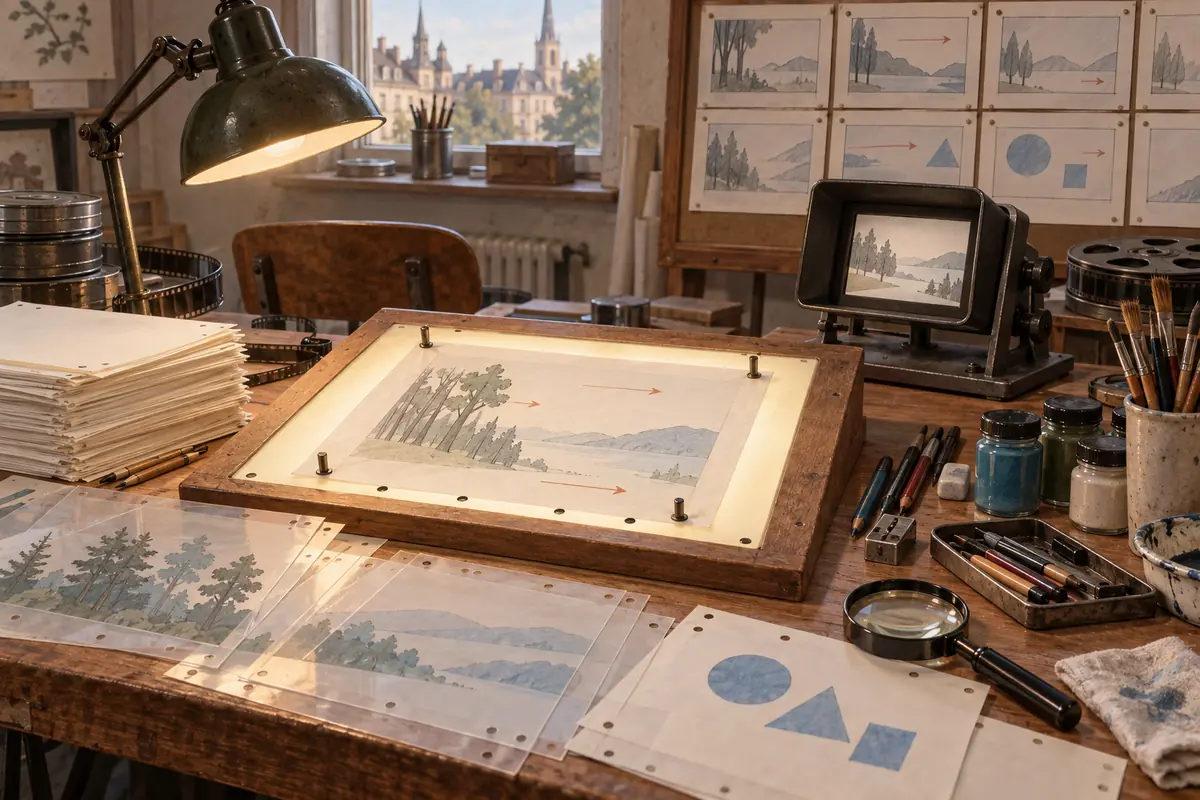
These early productions are important because they correct a common misconception. Hanna-Barbera did not create the Smurfs or produce their first screen appearance. Its later series greatly expanded their international television audience, but it arrived after more than two decades of European comics and animation.
The Smurfs and the Magic Flute
The next major screen landmark was the 1975 feature-length animated film The Smurfs and the Magic Flute, produced by Belvision. Rather than building its story around the format of the later television series, the film returned to the Johan and Peewit adventure in which the Smurfs had first appeared.
As a result, Johan and Peewit have a much larger role than viewers familiar only with the 1980s series might expect. The film preserves the connection between the Smurfs and Peyo’s earlier medieval world, while its music was composed by Michel Legrand.
The 1981–1989 Series That Made the Smurfs Television Icons
The first episode of Hanna-Barbera’s The Smurfs was broadcast by NBC in 1981. The series continued for nine seasons, ending in 1989. Peyo Company lists 272 episodes and translations into more than 42 languages, illustrating how far the characters travelled beyond their Belgian comic origins.
The series also received several Daytime Emmy nominations and won the award for Outstanding Children’s Entertainment Series for the 1982–1983 season. More importantly for its long-term popularity, television gave the village enough time to become a familiar place rather than simply the setting for a single adventure.
Not every episode needed a grand journey or a powerful villain. A story could begin with an argument, an impractical invention, a spell that went wrong, a character’s vanity or one of Gargamel’s unreliable plans. This structure was easy for younger viewers to follow but flexible enough to combine familiar characters in different ways.
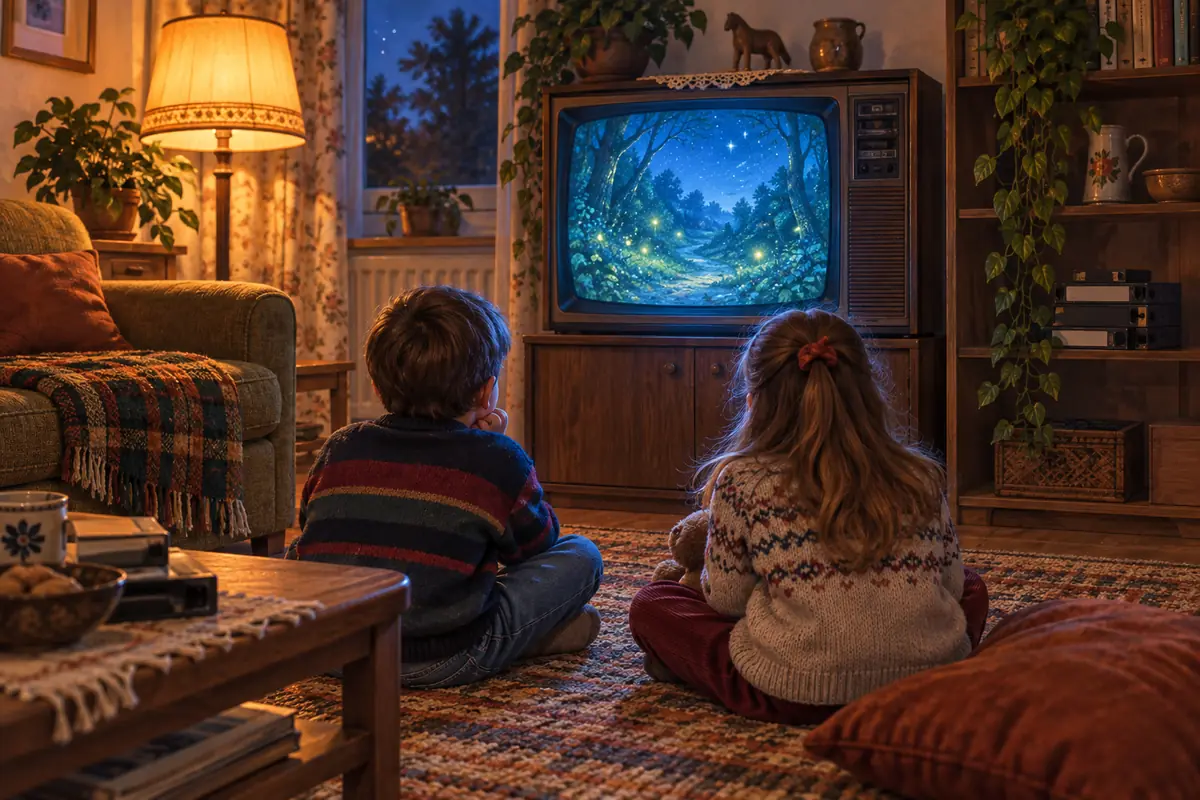
Audiences in different countries encountered the series at different times, through different broadcasters and in many languages. There is no single universal story of how everyone discovered the Smurfs, but the clear setting and easily recognised personalities allowed the programme to travel with relatively little explanation.
Why Smurf Village Worked So Well on Television
Smurf Village is small enough to understand almost immediately. It has homes, workshops, gardens, shared spaces and residents with familiar responsibilities. The surrounding forest creates a clear boundary: the village represents relative safety, while the unknown world outside can contain humans, magic, wild animals or Gargamel.
The village is not completely peaceful, however. A spell can change everyone’s behaviour, one Smurf’s weakness can create a problem for the whole community, and a well-intentioned plan can cause as much trouble as an openly selfish one. The setting can therefore return to normal at the end of an episode without feeling as though nothing meaningful happened.
One Clear Trait, One Instantly Recognisable Character
Many Smurfs are built around one exaggerated characteristic, habit or skill. This is especially practical in an episodic series: viewers do not need a long biography to understand why a particular character might complicate a situation or help resolve it.
That does not mean every character is only an empty caricature. Their defining traits become interesting when they interact with the community. Knowledge is useful when it helps others but irritating when it becomes arrogance. Strength can protect the village but cannot solve every problem. Confidence can turn into vanity, while caution can become fear.
The village survives because its residents are different, not because they always agree. Their differences create many of the conflicts, but they also provide the range of skills needed to solve them.
Gargamel and Azrael: The Threat Beyond the Village
Gargamel is a simple but effective recurring opponent. Depending on the story, he may want to capture the Smurfs, use them in an experiment, turn them into gold or take revenge for an earlier defeat. What remains constant is his obsession and his inability to learn from his failures.
Azrael adds another layer of danger and humour. He is a genuine threat to the tiny inhabitants of the forest, but he is also an expressive witness to Gargamel’s poor decisions. Together they bring an external threat into the stories, while many of the village’s internal problems arise from the Smurfs’ own mistakes. That combination gives the writers more possibilities than simply repeating the same chase.
More Than a List of Simple Lessons
It is easy to reduce the Smurfs to messages such as “everyone is special” or “we are stronger together”. Those ideas are present, but a list of lessons does not explain why the stories remained enjoyable for so long. The more interesting part is how the characters arrive at those conclusions.
Smurfs can be stubborn, jealous, vain, impatient or too certain of their own intelligence. Sometimes the entire village follows a poor idea because it has suddenly become popular. At other times, an attempt to impose order produces even greater confusion. Children can follow the adventure and humour, while older viewers may notice stories about responsibility, authority, conformity and the consequences of selfish behaviour.
The classic series also allowed time for a problem to develop through conversations, reactions and small decisions. Its episodes were not built entirely around constant movement. That gentler storytelling connects with the broader appeal of the slower pace of classic cartoons.
Why the Smurfs Still Connect Across Generations
The visual language of the Smurfs is exceptionally clear: blue characters, white hats, mushroom houses, a hidden forest and a village in which everyone has a recognisable place. A viewer needs to see only a small part of that world to identify it.
Nostalgia is certainly part of their lasting appeal, but it is not the whole explanation. Friendship, pride, jealousy, fear of the unknown, minor disagreements and the need to repair a shared mistake do not belong to one decade. New animation styles may change how the characters look, but successful adaptations keep returning to the community and personalities that Peyo established in the comics.
For older viewers, the Smurfs may also recall a time when an episode had to be watched when a broadcaster scheduled it. Cartoons became part of the rhythm of the day and were often watched on the family television rather than on a personal screen. That experience is explored further in our story about evening cartoons as a shared childhood ritual.
Other viewers first encountered the Smurfs through comics, recorded tapes, reruns or much later adaptations. Their history can accommodate all of those entry points without requiring everyone to share the same childhood memory.
A Short Smurfs Timeline
- 1958: The Smurfs first appear in a Johan and Peewit adventure published in Spirou.
- 1959: They receive their first independent short comic story, while the official timeline also records an early TVA animated short.
- 1961: TVA-Dupuis creates five black-and-white animated television episodes.
- 1975: Belvision releases the feature-length film The Smurfs and the Magic Flute.
- 1981–1989: Hanna-Barbera’s nine-season television series turns the characters into international television icons.
From Supporting Characters to a Television Classic
The Smurfs are therefore not simply “an eighties cartoon”. Their story begins with a few pages of a Belgian comic, continues through independent stories and early European animation, and eventually reaches a television series seen by audiences around the world.
Their village has remained recognisable because it is built on a simple but durable idea: a community is not interesting because everyone is the same. It becomes interesting because different personalities continually create both the problems and the solutions.
Did you first meet the Smurfs through the comics, the classic television series or a later adaptation? Which character do you remember most clearly?
Sources and Further Reading
- Official Smurfs website — A Little Smurfs History
- Official Smurfs timeline
- Peyo Company — The Smurfs
- Peyo Company — The Original Black-and-White Series
- Peyo Company — The Smurfs and the Magic Flute
- Peyo Company — The Classic Hanna-Barbera Series
- The Comics Journal — Behind the Blue: The Story of Peyo
- Official Smurfs television portal