
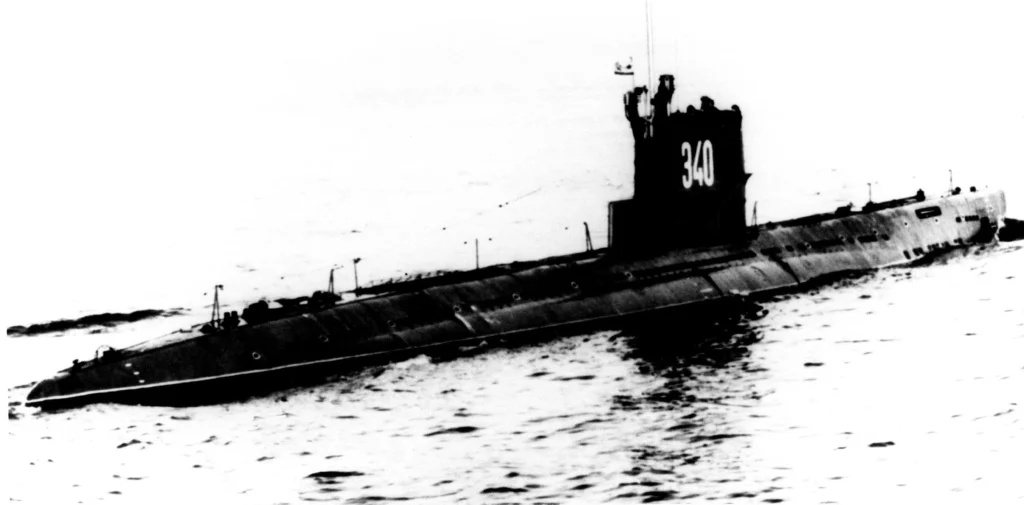
In 1989, Pepsi and Soviet submarines became part of the same business story. Reports described seventeen submarines and three surface warships being sold for scrap, with a soft-drink company involved in the arrangements. It was an unusual way to keep cola flowing into a country.
The story later acquired a more dramatic ending: Pepsi supposedly became the owner of the world's sixth-largest navy. That claim has travelled much further than the details of the deal. The surviving reports describe something more complicated, involving vodka sales, a currency problem and ships that had reached the end of their military usefulness.
A Cup of Pepsi in Moscow
The connection began thirty years earlier, at the American National Exhibition in Moscow in July 1959. The exhibition brought American consumer goods and technology to Sokolniki Park during the Cold War. Among the companies taking part was Pepsi-Cola.
Donald Kendall, then running Pepsi's international business, saw an opportunity. Coca-Cola already had a strong position in Western Europe. As he later explained in a Carnegie Council interview, he wanted to look towards Eastern Europe and the Soviet Union.
On 24 July, Soviet leader Nikita Khrushchev toured the exhibition with Richard Nixon, who was then the American vice president. Their argument beside a model American kitchen became known as the Kitchen Debate. During the visit, Khrushchev also stopped for a Pepsi.
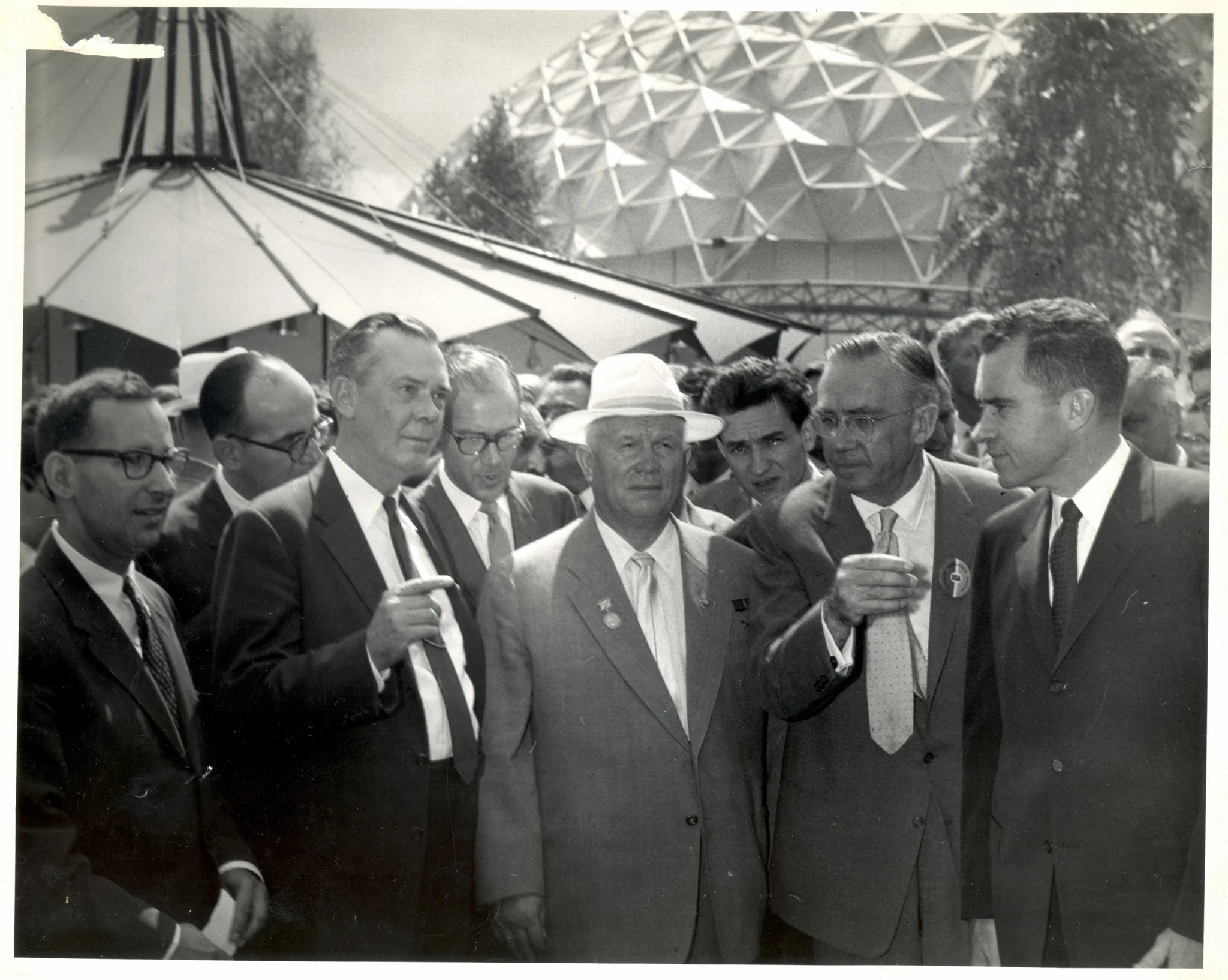
According to Kendall's later account, he had asked his friend Nixon to bring Khrushchev to the Pepsi stand. The resulting photographs were a publicity opportunity few advertisements could have matched: the Soviet leader sampling an American brand in Moscow.
Publicity, however, was only the beginning. It would take another fifteen years before Pepsi was being produced locally for regular sale.
Why Vodka Became Part of the Business
An agreement followed in 1972, under Soviet leader Leonid Brezhnev and Premier Alexei Kosygin. Kendall had continued working on the relationship, while Nixon, now president, supported closer trade links. Pepsi's first Soviet bottling plant opened in Novorossiysk in 1974.
Selling the drink presented a problem that an ordinary export contract could not easily solve. The Soviet rouble was not freely convertible into dollars or other international currencies. Earning money inside the country did not mean Pepsi could simply exchange it and take the proceeds home. The Soviet government also wanted to preserve its hard currency.
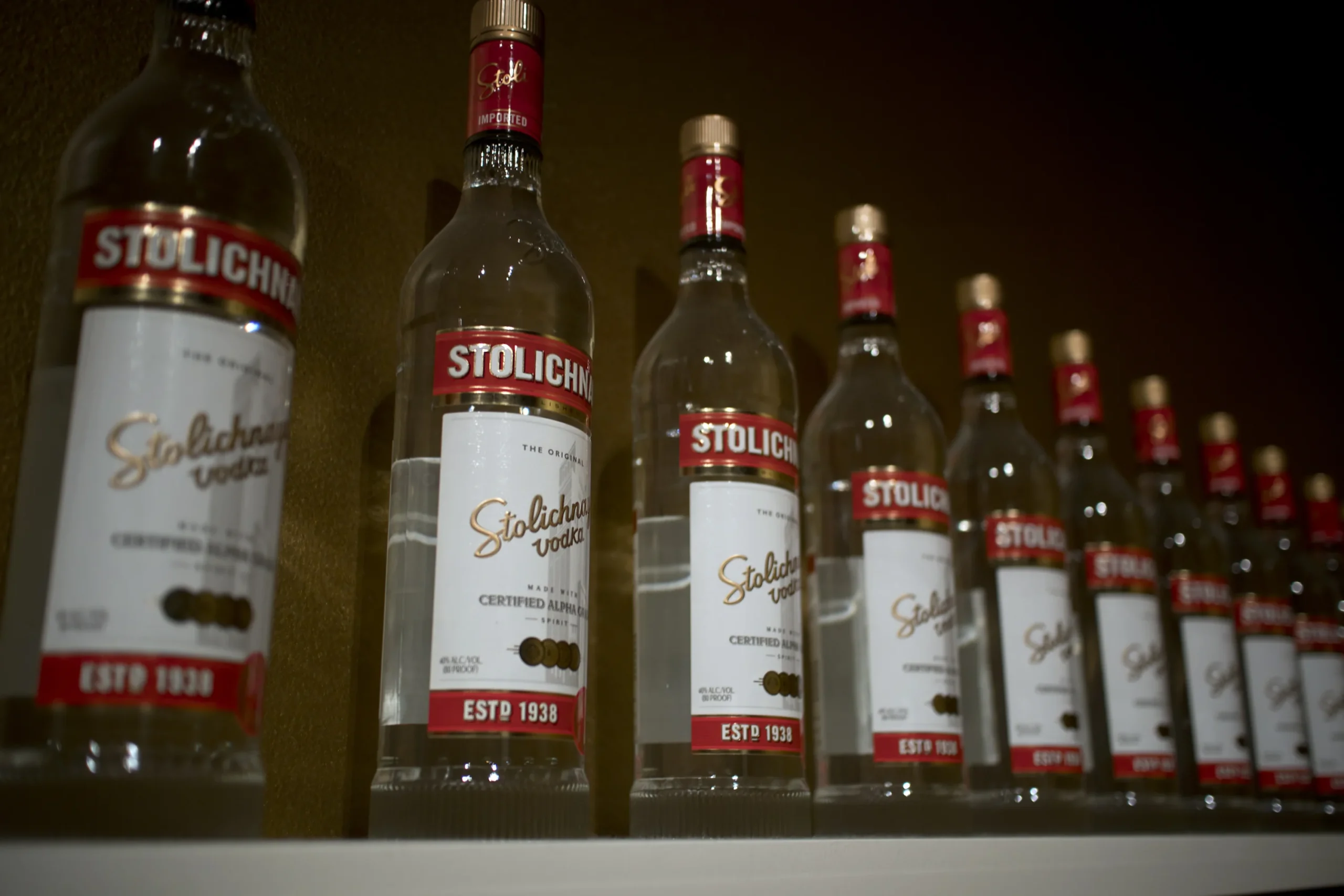
The solution was countertrade: connecting the supply of one product with the sale of another. Pepsi supplied concentrate for Soviet production, while the arrangement gave it rights to import and distribute Stolichnaya vodka in the United States. Selling the vodka brought in dollars.
That linked two different markets. Soviet customers bought Pepsi, while American customers bought Stolichnaya. The contracts and accounting were more involved than exchanging one bottle of cola for one bottle of vodka, but the principle made the business possible.
Pepsi and Soviet Submarines: What Happened in 1989?
As Pepsi sought to expand, vodka sales placed limits on how much trade the arrangement could support. An Associated Press report in April 1989 described the effects of American boycotts following the Soviet invasion of Afghanistan, alongside competition from other vodka brands. The business needed additional goods that could be sold internationally.
Norwegian shipping intermediaries and Soviet shipyards became involved in plans for new merchant vessels. Tankers and freighters could be sold or leased abroad, generating income to support further trade.
Alongside those plans came a separate opportunity involving obsolete naval vessels. Contemporary accounts listed 17 submarines, one cruiser, one destroyer and one frigate. That made twenty military vessels intended for the scrap market.
Norman Friedman discussed the package in the July 1989 issue of Proceedings, published by the U.S. Naval Institute. It also appears in the SIPRI Yearbook 1990. The submarines were part of a story being reported at the time, long before it became an internet curiosity.
Did Pepsi Actually Own the Warships?
The link between Pepsi and Soviet submarines is documented. The precise ownership arrangement is less clear. Some contemporary reports described Pepsi as receiving the vessels for resale or scrapping. Another gave a different account of its role.
In a report printed in The Waycross Journal-Herald on 18 July 1989, AP writer Sid Moody explicitly stated that Pepsi had not bought the warships. He described the company helping the Soviet side find a Norwegian scrap buyer.
That distinction matters. Arranging a buyer and briefly taking legal ownership are different transactions. Without the original contracts or a complete chain of transfer documents, the available reporting does not settle which legal arrangements applied to every vessel.
Their intended destination is clearer: they were being sold as scrap. The reports do not provide enough detail to identify the final dismantling date and yard for each individual ship. They also do not justify assigning a particular submarine photograph to the deal simply because it shows an old Soviet boat.
Where the $3 Billion Figure Comes From
The merchant ships belong to another part of the story, and this is where the dates become important. In April 1990, PepsiCo announced a much larger Soviet trade agreement, reported as worth approximately US$3 billion.
Vodka remained part of that arrangement. TIME also reported plans to sell or lease at least ten Soviet-built freighters and tankers. That was a combined number of commercial ships, rather than another ten warships. An announced programme should also be distinguished from a verified list of completed deliveries.
The $3 billion estimate covered retail sales through 2000. It was not a price tag for the twenty obsolete naval vessels.
Accounts of Pepsi and Soviet submarines often compress the 1989 scrap transaction and the 1990 expansion agreement into a single event. The result is a supposed naval acquisition worth billions. Keeping the two deals separate explains both the merchant ships and the much larger financial figure.
Kendall's Joke About Disarming the Soviet Union
The episode also produced a memorable line attributed to Kendall. He reportedly joked to Brent Scowcroft, national security adviser to President George H. W. Bush:
“We're disarming the Soviet Union faster than you are.”
The quotation has a traceable contemporary source. Michael H. Shuman and Hal Harvey reproduced it in Security Without War, citing Flora Lewis's New York Times column of 10 May 1989. Friedman's naval commentary that July also referred to the disarmament joke.
No recording or transcript of the conversation has been identified in the research behind this article. The wording is therefore best treated as a reported remark, with that attribution. It captures the absurdity of a cola business becoming involved in the disposal of Soviet warships.
Why the “Sixth-Largest Navy” Claim Falls Apart
The familiar claim gives Pepsi a place in a global naval ranking. Yet there is no reliable contemporary ranking establishing that position, and the transaction did not create an operational fighting force.
A navy requires usable vessels, trained crews, maintenance, weapons and a command structure. The ships in this story were intended for scrap. Even temporary commercial ownership, if established, would not turn those hulls into a functioning navy.
The “sixth-largest navy” is an exaggeration built around a real transaction. Repeating it as a historical fact obscures the more interesting question of how the business actually worked.
Pepsi and Soviet submarines ended up in the same story because selling an everyday drink across Cold War borders required unusual financial arrangements. The route ran from a Moscow exhibition stand to American vodka sales, Norwegian shipping contacts and Soviet shipyards. By 1989, it had brought Pepsi into a transaction involving twenty obsolete warships, even as contemporary reporters disagreed over the company's precise role.
For more stories from the consumer world of those decades, explore watching cartoons on a CRT television and the weekend ritual of renting a VHS tape.
Sources and Further Reading
- Carnegie Council interview with Donald Kendall, 7 August 2012; PepsiCo's retrospective on the 1959 exhibition, 1 July 2009.
- PepsiCo corporate history identifying the first Novorossiysk bottling plant, 20 March 2008.
- Associated Press, Midland Reporter-Telegram, 16 April 1989, page 4F: contemporary report on merchant-ship plans.
- Sid Moody, Associated Press, The Waycross Journal-Herald, 18 July 1989: contemporary report describing Pepsi's role in finding a buyer for twenty old warships.
- Norman Friedman, World Naval Developments, Proceedings, July 1989, page 118; SIPRI Yearbook 1990, page 354.
- Deseret News report on the 1990 agreement, 9 April 1990; TIME, Ship Me a Pepsi, Please!, 23 April 1990.
- Los Angeles Times, 10 April 1990.
- Flora Lewis, Soviets Buy American, 10 May 1989. The quotation and attribution were checked through Shuman and Harvey's Security Without War, note 30.
Featured photograph: U.S. Department of Defense / NARA, NAID 6363114, via Wikimedia Commons; public domain in the United States. Converted to WebP. The Whiskey-class submarine is shown for illustration; it has not been identified as one of the vessels involved in the Pepsi transaction.