
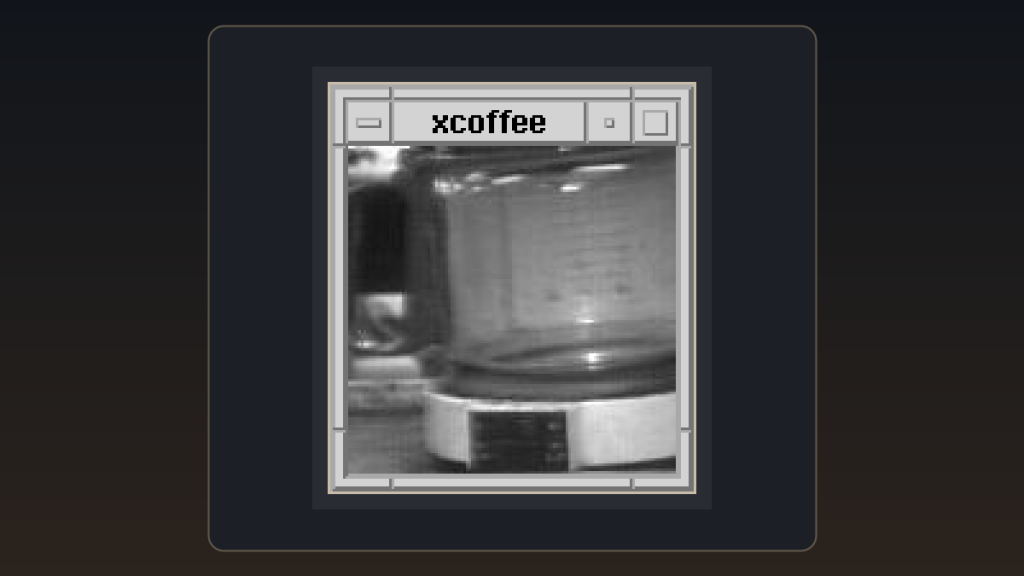
Twenty-five years have now passed since the world’s first webcam, the Trojan Room Coffee Pot camera, was switched off at the University of Cambridge.
It did not watch a busy street, a famous building or an important scientific experiment. It watched a coffee machine.
The picture was small, grainy and black and white. It had no sound, and it was not smooth video. Still, this simple system became known as the world’s first webcam and showed people that the Web could offer a live view of something happening far away.
Why Did Anyone Need a Camera to Watch Coffee?
The story began in late 1991 at the University of Cambridge Computer Laboratory.
About 15 researchers in the Systems Group shared a single coffee machine near a room known as the Trojan Room. Some of them worked close to it, while others were two or three flights of stairs away.
A fresh pot did not last long. Researchers would leave their desks, walk through the building and arrive only to discover that somebody else had already taken the last cup.
It was a very small problem, but it happened often enough to become annoying.
Instead of walking to the coffee machine every time, several researchers decided to point a camera at it. They could then check the picture from their computers and see whether there was any coffee left.
That was the whole purpose of the original system. It saved them a wasted walk.
The University of Cambridge’s original account of the coffee pot explains that the researchers built the first version using equipment already available in the laboratory.
What Was a Webcam in 1991?
Today, a webcam usually means a small camera built into a laptop or connected through USB. We use webcams for video calls, online meetings, security, teaching and live streaming.
In simple terms, a webcam allows one computer to show a current picture from a camera to people using another computer.
That sounds completely normal today. In 1991, it was unusual.
The World Wide Web was still very young, and most early web browsers could not even display images. There were no social networks, video platforms or everyday live streams. Most homes were not connected to the Internet at all.
The Trojan Room system therefore did not begin as a public website. At first, it worked only inside the Cambridge computer network.
It belonged to an era when computers, files and programs still felt very physical. Anyone who remembers that period may also enjoy our story about installing software from floppy disks in the 1990s.
How the World’s First Webcam Worked
The researchers used a video camera, a device known as a frame grabber and one of the laboratory’s test computers.
A frame grabber takes a picture from a video signal and turns it into an image that a computer can use.
The researchers attached the camera to a laboratory stand and pointed it towards the coffee machine. Its cables ran under the floor to the computer equipment in the Trojan Room.
Paul Jardetzky wrote the server software that captured pictures from the camera. Quentin Stafford-Fraser wrote the client program that displayed them.
Their program became known as XCoffee.
In simple words, one computer took the picture, while the XCoffee program placed that picture in a small window on the researchers’ screens.
The system updated the image about three times a minute. That was more than enough because the amount of coffee did not change very quickly.
It was not a live video stream as we understand one today. Instead, people saw a series of still pictures, refreshed every 20 seconds or so.
The image was also greyscale. As Quentin Stafford-Fraser later joked, that was fine because the coffee was greyscale too.
From a Local Camera to the World Wide Web
The first XCoffee system was useful, but only people with the correct software and access to the Cambridge network could see it.
That changed in 1993.
New graphical web browsers such as Mosaic made it possible to place images directly inside web pages. The Cambridge researchers realised that a web server did not have to send visitors the same saved image every time. It could send the newest picture from the camera instead.
In November 1993, Daniel Gordon modified the system so that it could answer requests from the Web. Working with Martyn Johnson, he made the current coffee-pot image available through an ordinary web page.
People no longer needed the special XCoffee application. Anyone with a suitable web browser and an Internet connection could look at the pot.
This was the moment when the office experiment became the world’s first webcam.
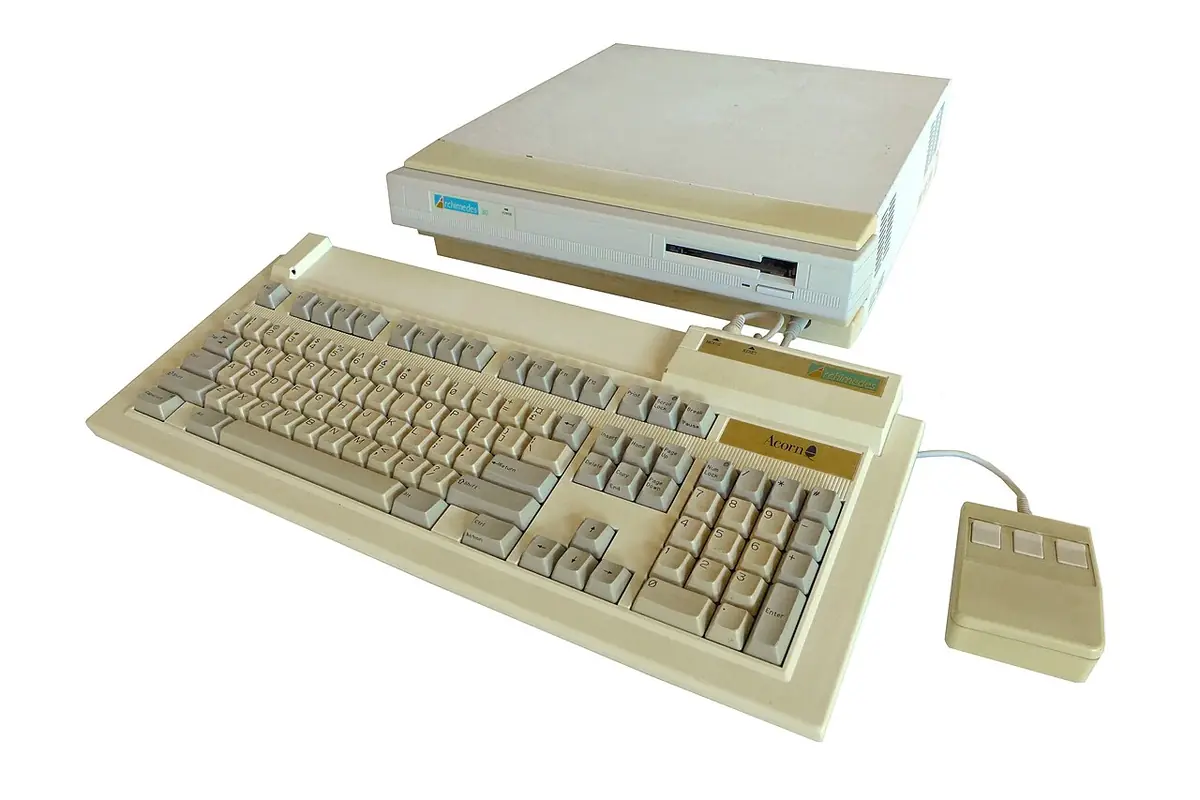
The web version used an Acorn Archimedes computer to capture the images. That machine continued doing the job for seven years and nine months.
The People Behind the First Webcam
The Trojan Room Coffee Pot was not the work of only one person.
Paul Jardetzky wrote the server for the original local system, while Quentin Stafford-Fraser created the XCoffee viewing program.
Daniel Gordon later changed the system so that it could respond to requests from the Web. Martyn Johnson helped connect it to the World Wide Web in November 1993.
Together, their work turned a practical office joke into a small piece of Internet history.

Why Did a Grainy Picture of a Coffee Pot Become Famous?
The Trojan Room camera may look almost meaningless today. It showed one coffee machine from one fixed angle, with a picture that changed only a few times a minute.
On the early Web, it felt different.
People could see a real place at almost the same moment something was happening there. The website did not simply show an old image saved hours or days earlier. The picture changed according to what was happening in the corridor at Cambridge.
Visitors could see whether the pot was full, half-empty or missing. Sometimes they saw people moving around it.
It was a tiny window into another place.
The official Cambridge timeline says that the image passed one million views around 1996 and two million by 1998. News reports around the world helped make the coffee pot even more famous.
People did not visit because the picture was beautiful. They visited because the idea was new.
Was It Really the First Webcam?
The Trojan Room Coffee Pot was not the first camera ever connected to a computer, and it was not the first experiment involving digital pictures.
Its importance comes from the way its changing image became publicly available through the World Wide Web.
That is why people generally describe it as the first webcam.
The difference matters. The 1991 XCoffee version was an internal network camera. The November 1993 version allowed ordinary web users outside Cambridge to request and view the latest image.
For many people, it was their first experience of seeing the physical world through a web page.
Why the Camera Was Switched Off
By 2001, the equipment behind the camera was old and increasingly difficult to maintain.
The University of Cambridge Computer Laboratory was also moving to a new building in West Cambridge. The original Trojan Room would no longer exist, so the team decided it was the right time to end the project.
The coffee machine operating in 2001 was not the same pot used when the experiment began. Several machines had worn out over the years.
In August 2001, the researchers sold the longest-serving pot through eBay. Spiegel Online bought it for £3,350, with the money helping to pay for coffee facilities in the new laboratory.
At 10:54 local time on Wednesday, 22 August 2001, the camera captured its final picture.
The dark and difficult-to-read image shows the fingers of Daniel Gordon, Martyn Johnson and Quentin Stafford-Fraser pressing the power switch on the Acorn Archimedes computer.
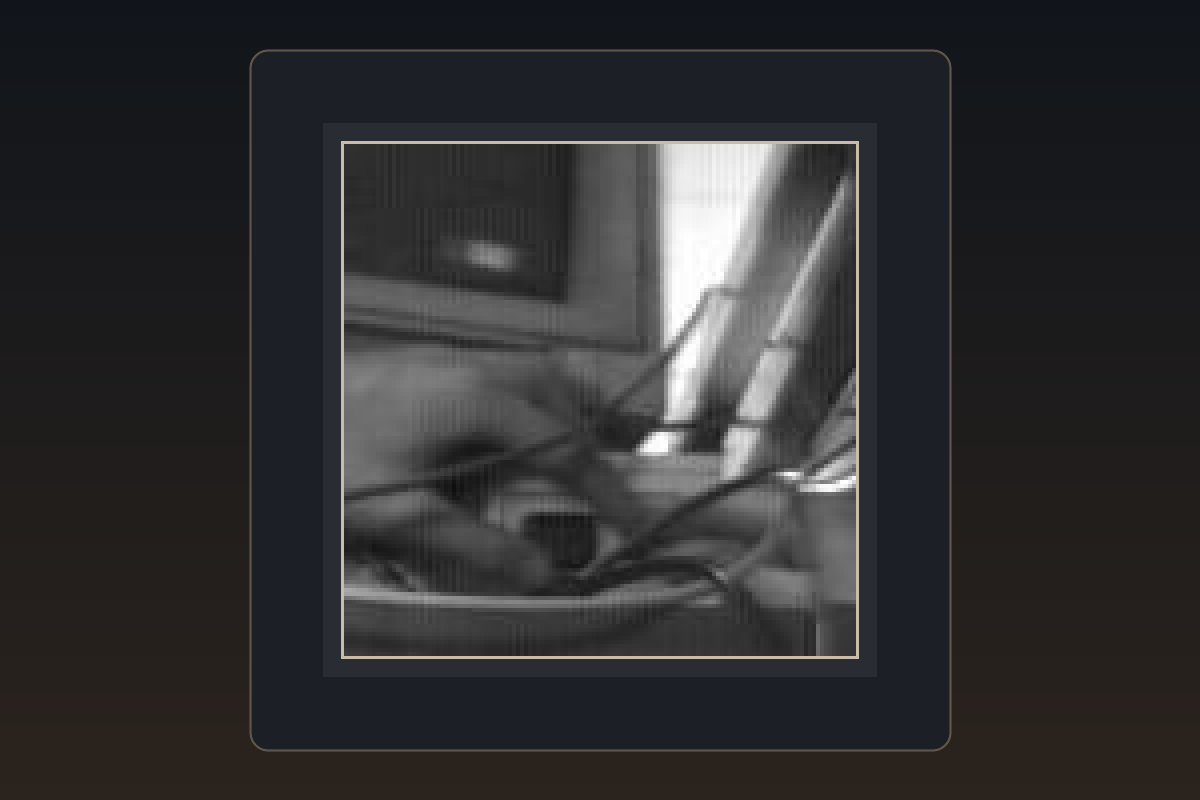
The University’s short record of the final shutdown confirms that the Acorn computer had captured the webcam images for the previous seven years and nine months.
Why the Trojan Room Camera Still Matters
Modern webcams provide colour video, sound and smooth movement. They are built into laptops, phones, doorbells, baby monitors and security systems.
The Trojan Room camera could do almost none of that.
Its importance was not the quality of the picture. Its importance was the idea behind it.
It showed that the Web could connect people to a real object in another place. A web page did not have to contain only text or a picture saved days earlier. It could show something changing in the real world.
That simple idea can now be seen everywhere: traffic cameras, weather cameras, wildlife streams, home security systems and live video calls.
The coffee-pot camera did not create all of those technologies by itself. It simply offered one of the earliest and clearest examples of what a connected camera could do.
A Small Problem That Helped Shape the Web
The researchers did not create the first webcam as a major commercial product. Nobody began the project with a plan to change the Internet.
A group of researchers simply wanted to know whether there was coffee downstairs.
That is what makes the story so memorable. A small everyday problem led to a useful experiment, and that experiment became part of Internet history.
Twenty-five years after its final image, the Trojan Room Coffee Pot still reminds us how quickly technology can change. What once required a video camera, special hardware, custom software and a university network can now be done with a cheap camera or an old phone.
The picture may have been tiny, slow and grey, but the idea behind it was much bigger.
If you enjoy stories about old computers and the technology that shaped everyday life, you can also read about the Commodore 64C Ultimate and the return of a classic computer or explore more stories in our Retro News section.
Featured image credit
Trojan Room Coffee Pot displayed in XCoffee. Author: Quentin Stafford-Fraser via Wikimedia Commons, CC BY-SA 3.0. Resized and placed on a background by Good Old Cartoons.